
Wet Ones Sued Over ‘Hypoallergenic’ Wipes That Allegedly Contain Hidden Skin Allergens (December 2025 Filing)
Edgewell Personal Care Brands faces a class action lawsuit claiming Wet Ones Antibacterial Hand Wipes labeled as “hypoallergenic” actually contain two fragrance allergens linked to skin irritation and allergic contact dermatitis. Filed December 19, 2025, the lawsuit alleges independent laboratory testing revealed d-Limonene and Linalool in the wipes—allergens not disclosed on product labels—raising concerns for consumers who rely on hypoallergenic claims to avoid skin reactions.
What the Wet Ones Lawsuit Alleges
A California consumer filed a proposed class action lawsuit against Edgewell Personal Care Brands LLC on December 19, 2025, in the U.S. District Court for the Central District of California (Case No. 3:25cv3692). The 30-page complaint alleges that Wet Ones Hand Wipes marketed as hypoallergenic contain known skin allergens hidden within generic “fragrance” ingredients, misleading consumers who purchased the products specifically to avoid allergic reactions.
The lawsuit centers on a fundamental contradiction: products claiming to be hypoallergenic should contain fewer irritation-causing ingredients, yet the wipes allegedly contain two common fragrance allergens identified by the Food and Drug Administration as having an increased risk of causing skin irritation and allergic contact dermatitis.
Allergic contact dermatitis is a skin condition that occurs when your skin comes into contact with a substance that triggers an allergic reaction, causing redness, itching, swelling, and sometimes blistering. For consumers with sensitive skin or known allergies, products marketed as hypoallergenic represent a safer choice—making accurate labeling critical.
Which Wet Ones Products Are Named in the Lawsuit
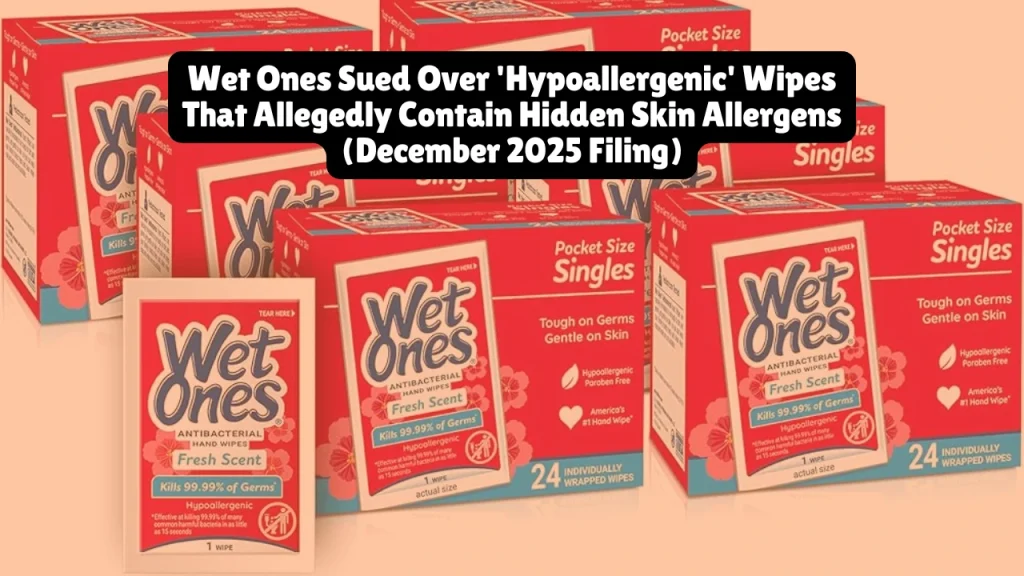
The lawsuit specifically targets three varieties of Wet Ones Antibacterial Hand Wipes marketed as hypoallergenic: Fresh Scent, Eucalyptus & Mint, and Tropical Splash.
All three product varieties prominently display “hypoallergenic” claims on their packaging, which the plaintiff argues influenced purchasing decisions and justified premium pricing compared to non-hypoallergenic alternatives.
What Allergens Are Allegedly in the Wipes
According to the complaint, independent laboratory testing commissioned by the plaintiff in September 2025 revealed the presence of d-Limonene and Linalool in multiple retail lots of Wet Ones hypoallergenic wipes. Both compounds are among 26 common fragrance allergens identified by the FDA as carrying increased risk of skin irritation and allergic contact dermatitis.
The critical issue, according to the lawsuit, is that these allergens are not disclosed on Wet Ones packaging or ingredient lists. Instead, they’re hidden under the generic term “fragrance,” which federal regulations allow manufacturers to use without revealing specific constituent chemicals.
Related article: MyPillow Class Action Alleges Fake Discounts and Hidden “Shipping Protection” Fee Deceive Customers
The complaint states: “Since manufacturers need only list ‘fragrances’ generically on a product label, without further revealing the sub constituents of such fragrances, consumers have no way of knowing whether a product also contains hidden allergens.” This regulatory loophole means consumers who specifically seek hypoallergenic products to avoid known allergens cannot make informed choices based on ingredient lists alone.
Legal Claims Being Made
The lawsuit brings multiple causes of action under California state law, including violations of the California Unfair Competition Law, California Consumers Legal Remedies Act, and California False Advertising Law. The plaintiff also alleges breach of express warranty and unjust enrichment.
The core legal theory is that by marketing the wipes as hypoallergenic while allegedly including known skin allergens, Edgewell engaged in false advertising that allowed the company to charge premium prices and increase sales without fully disclosing product contents to consumers.
While “hypoallergenic” has no formal FDA definition or regulatory standard, the FDA has recognized the term as synonymous with products designed to produce fewer allergic reactions than regular alternatives. The lawsuit argues that reasonable consumers understand hypoallergenic to mean a product avoids common allergens, particularly hidden ones in fragrances, preservatives, and dyes.
Current Status and Class Membership
The lawsuit was filed on December 19, 2025, and is in its early stages. No class certification hearing has been scheduled yet. The plaintiff seeks to represent all consumers who purchased any of the three affected Wet Ones varieties in states with express warranty laws, including California, during the maximum time allowed by law.
If class certification is granted, consumers who purchased Wet Ones Fresh Scent, Eucalyptus & Mint, or Tropical Splash wipes marketed as hypoallergenic during the relevant time period would automatically become class members unless they choose to opt out.
There is currently no settlement or claim process available. Consumers do not need to take any action at this time to preserve their rights as potential class members.
What You Must Know About This Lawsuit
Similar Lawsuits Have Had Mixed Results
This is not the first time Wet Ones has faced hypoallergenic claims. In 2020, a California federal court dismissed a similar lawsuit (Souter v. Edgewell Personal Care Co.) after concluding that no reasonable consumer would interpret “hypoallergenic” to mean completely free of allergens. The court found consumers would more likely understand the term to indicate lower risk rather than zero risk of skin irritation.
However, the December 2025 lawsuit differs by including independent laboratory testing that allegedly proves specific FDA-identified allergens are present in the products. This scientific evidence could strengthen the plaintiff’s case compared to earlier litigation that relied primarily on ingredient analysis and regulatory arguments.
“Hypoallergenic” Has No Legal Standard
The FDA does not regulate use of the term “hypoallergenic” for cosmetics or personal care products. Companies can make hypoallergenic claims without meeting specific testing requirements or allergen thresholds. The FDA simply expects companies using the term to have some basis for the claim and not to mislead consumers.
This regulatory gap means consumers must rely heavily on manufacturer representations when choosing hypoallergenic products. When those representations allegedly prove false, class action lawsuits become one of the few mechanisms for accountability.
Fragrance Allergens Are Common But Hidden
Current FDA regulations allow manufacturers to list fragrance ingredients generically without disclosing individual chemical components. This creates a transparency problem for consumers with allergies who need to know exactly what’s in products they use on their skin.
The 26 fragrance allergens identified by the FDA as high-risk for causing skin reactions include not just d-Limonene and Linalool but also compounds like citronellol, geraniol, and eugenol. Without detailed disclosure, consumers cannot identify which specific allergens products contain.
What to Do Next
Determine If You Purchased Affected Products
Check your purchase history for Wet Ones Antibacterial Hand Wipes in Fresh Scent, Eucalyptus & Mint, or Tropical Splash varieties marketed as hypoallergenic. Save receipts, credit card statements, or online order confirmations showing your purchases.
If you experienced skin reactions after using these products, document your symptoms with photographs and medical records if you sought treatment.
Monitor the Lawsuit
The case is Koutoufidis v. Edgewell Personal Care Brands LLC, Case No. 3:25cv3692, in the U.S. District Court for the Central District of California. You can monitor the court docket through PACER (Public Access to Court Electronic Records) at pacer.gov for updates on class certification, settlement discussions, or trial dates.
Class action notices are typically published if the court certifies a class or approves a settlement. Watch for notices on ClassAction.org or through legal news sources.
When to Consult an Attorney
If you experienced significant medical harm from allergic reactions to Wet Ones wipes, including severe dermatitis requiring treatment, scarring, or lost work time, consider speaking with a consumer protection attorney about individual claims separate from the class action.
For questions about your consumer rights under California false advertising laws or similar protections in your state, contact your state attorney general’s consumer protection division or a qualified attorney.
Last Updated: January 17, 2026
Disclaimer: This article provides general information only and does not constitute legal advice. Consult a qualified attorney for advice about your specific situation.
Call to Action: If you purchased Wet Ones hypoallergenic wipes and experienced skin reactions, save your receipts and monitor the lawsuit for class action notices. For significant medical harm, consider consulting a consumer protection attorney about your legal options.
Stay informed, stay protected. — AllAboutLawyer.com
About the Author

Sarah Klein, JD, is a licensed attorney and legal content strategist with over 12 years of experience across civil, criminal, family, and regulatory law. At All About Lawyer, she covers a wide range of legal topics — from high-profile lawsuits and courtroom stories to state traffic laws and everyday legal questions — all with a focus on accuracy, clarity, and public understanding.
Her writing blends real legal insight with plain-English explanations, helping readers stay informed and legally aware.
Read more about Sarah