
Heidi Feek Lawsuit, Faith-Based Community Sues Musician for Defamation After Family Custody Dispute Over Sister With Down Syndrome
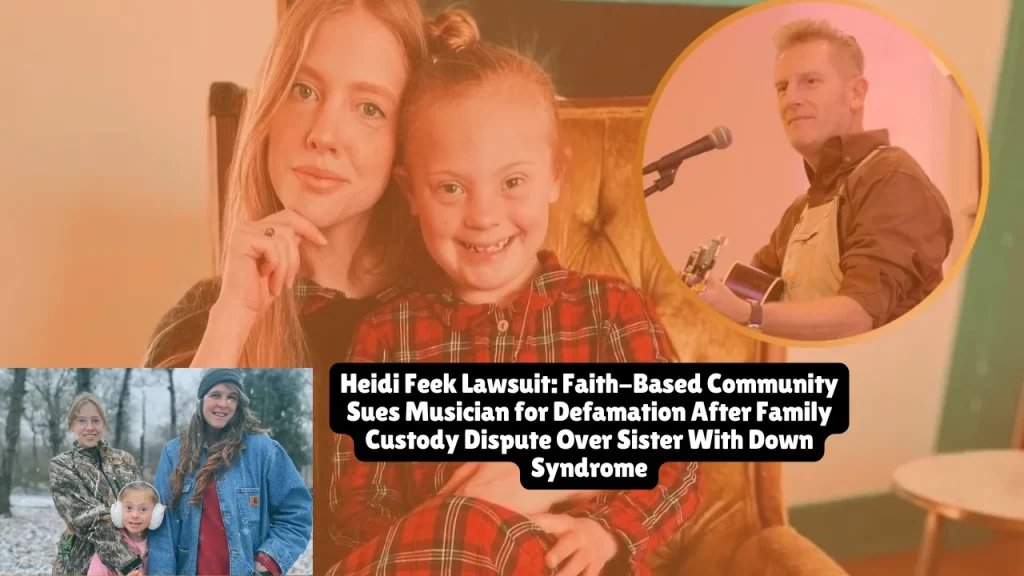
Heidi Feek, daughter of country singer Rory Feek, was sued for defamation by Homestead Heritage and several members after she publicly claimed the faith-based organization has a troubling history of child abuse. The federal lawsuit filed September 16, 2024, in Alabama’s Northern District Court seeks at least $250,000 in damages and comes amid an explosive family dispute over the care of Heidi’s 10-year-old sister Indiana.
Who Is Heidi Feek and Why Is She Being Sued?
Heidi Caroline Feek is an Americana singer-songwriter born October 3, 1986, who performs with her husband Dillon Hodges as the musical duo “firekid.” She’s the eldest daughter of Rory Feek, one half of the Grammy-nominated country music duo Joey + Rory. Heidi won a Daytime Emmy in June 2024 for an original song featured on PBS’s Reconnecting Roots.
The lawsuit targets statements Heidi made during a highly publicized family dispute with her father. After Rory married Indiana’s schoolteacher Rebecca in July 2024, Heidi discovered her youngest sister was being raised within Homestead Heritage, a Christian agrarian community based in Waco, Texas. Heidi publicly voiced concerns about Indiana’s safety, citing what she called the organization’s “troubling history of child abuse.” Homestead Heritage vehemently denies these allegations and responded by filing a federal defamation lawsuit.
What Are the Legal Claims in the Homestead Heritage Lawsuit?
Heritage Ministries, Heritage Barns LLC, and individuals Daniel Brandstadt, Matthew Brandstadt, and Brian Brandstadt filed their complaint with jury demand on September 16, 2024, in the U.S. District Court for the Northern District of Alabama (Case No. 3:2024cv01267). The lawsuit names three defendants: Heidi Caroline Feek, journalist Carena Elizabeth Liptak, and Townsquare Media Inc., which owns Taste of Country.
The plaintiffs assert four legal claims. Defamation is the primary claim—alleging Heidi and the other defendants made false statements that damaged Homestead Heritage’s reputation. A complaint is the formal document that starts a lawsuit and outlines the plaintiff’s allegations against the defendant. Unjust enrichment alleges Heidi financially benefited from increased social media engagement after making her public statements. Intentional infliction of emotional distress claims the defendants’ conduct was so extreme it caused severe emotional harm to Homestead Heritage members. False light invasion of privacy alleges the defendants portrayed the organization in a false, offensive manner.
According to the complaint, Homestead Heritage sent Townsquare Media a demand to retract their August 29, 2024 article about the Feek family dispute. Heidi received a similar demand approximately one week later. Neither complied with the retraction demands. The article and Heidi’s social media posts remain publicly available.
Related article: Evenflo Recalls Over 74,000 Child Seats Due to Recline Issue That Could Fail in a Crash
What Specific Wrongdoing Does Homestead Heritage Allege?
The lawsuit centers on statements Heidi made on social media and in a Taste of Country article published August 29, 2024. Heidi claimed Homestead Heritage has “a troubling history of child abuse” and stated she did not believe her sister Indiana was safe under her father’s care because of his association with the organization.
Homestead Heritage characterizes these statements as “unequivocally false” and maintains they have “caused significant damage to our reputations and well-being.” The complaint alleges these statements “amplified negative effects extending to every part of their members’ lives beyond the reputational harm and actual losses to Homestead Heritage itself.”
In their public response, Homestead Heritage spokesperson Dan Lancaster stated: “These articles and the social media postings they are based on contain multiple falsehoods that misrepresent our church family and the values we uphold.” The organization describes itself as a “Christian community that celebrates its faith by pursuing a simple, agrarian lifestyle” with approximately 1,200 members and 240 families.
What Laws and Legal Standards Apply to This Case?
Defamation law requires plaintiffs to prove four elements: a false statement of fact was made, the statement was published to third parties, the statement caused reputational harm, and the defendant acted with fault. In federal court, the case applies Alabama state defamation law since the lawsuit was filed in Alabama where Heidi resides.
The critical legal question is whether Homestead Heritage qualifies as a “public figure.” If so, the organization must prove Heidi acted with “actual malice”—meaning she either knew her statements were false or showed reckless disregard for their truth. This is the standard established by the U.S. Supreme Court in New York Times Co. v. Sullivan (1964). If Homestead Heritage is considered a private figure, they face a lower burden of proof, needing only to show Heidi was negligent in making false statements.
Unjust enrichment claims require proving the defendant received a benefit at the plaintiff’s expense under circumstances that make it unjust for the defendant to retain that benefit without paying. The lawsuit alleges Heidi’s social media following and engagement increased after she made her public statements about Homestead Heritage.
What Damages and Relief Is Homestead Heritage Seeking?
The plaintiffs seek at least $250,000 in compensatory damages and request a trial by jury. Compensatory damages are intended to compensate the plaintiffs for actual losses they’ve suffered, including reputational harm, emotional distress, and any financial losses to their organization and businesses.
The complaint does not specify whether plaintiffs are also seeking punitive damages, which are designed to punish defendants for particularly egregious conduct and deter similar behavior in the future. The lawsuit also does not request injunctive relief—a court order requiring Heidi to remove her statements or refrain from making additional statements about Homestead Heritage.
Has a Settlement Been Reached in the Heidi Feek Lawsuit?
As of January 2026, no settlement has been announced. The case remains actively litigated in federal court. According to public court records, the last docket entry was retrieved November 14, 2024, from PACER (Public Access to Court Electronic Records), the federal court’s electronic filing system.
Heidi has publicly stated she believes the lawsuit “is an attempt to scare us into submission.” In a video statement posted to Instagram in September 2024, she said: “If that is the case, it didn’t work. We’re confident that this lawsuit will open the door for others to share their stories.” Her husband Dillon Hodges added that defending against the federal case could cost them “well exceed six figures” in legal fees.
What Is the Current Status of the Lawsuit?
The case is in the early stages of federal litigation. The procedural timeline typically follows this sequence: complaint filed (completed September 16, 2024), defendants file answer or motion to dismiss (deadline would have passed by early 2025), discovery phase where both sides exchange evidence and documents, potential settlement negotiations, summary judgment motions, and trial if the case doesn’t settle.
Discovery is the pre-trial phase where parties exchange information through written questions (interrogatories), document requests, and depositions—sworn testimony taken outside of court. Most civil cases settle during or after discovery once both sides understand the strength of the evidence.
Federal court rules generally require cases to proceed to trial within 18 to 24 months of filing, though complex cases may take longer. The Northern District of Alabama operates under the Federal Rules of Civil Procedure, which govern the timeline for federal civil litigation.
What Other Legal Actions Are Connected to This Case?
The Heidi Feek defamation lawsuit emerged from a broader family dispute involving custody and visitation of Indiana Feek. Heidi and her sister Hopie filed separate legal documents against their father Rory Feek in early September 2024 seeking changes to Indiana’s custodial agreement. The specific details of these custody proceedings remain confidential because they involve a minor child.
The custody dispute began after Rory married Rebecca (Indiana’s former schoolteacher) on July 14, 2024, at Greycliff Ranch in Montana—a property affiliated with Homestead Heritage’s Montana branch. Following the wedding, Rory and Rebecca left Indiana with a family connected to Homestead Heritage while they went on their honeymoon. Heidi claimed she and Hopie had been progressively cut off from contact with Indiana over the preceding two years.

Rory has publicly defended his association with Homestead Heritage, writing in a blog post that calling it a “cult” is easier than understanding their way of life. He maintains Indiana “has never been more loved or better cared for than she is right now.”
What Are the Potential Outcomes of This Lawsuit?
Several outcomes are possible. Settlement is the most common resolution—approximately 95% of civil cases settle before trial. A settlement might involve Heidi issuing a statement, removing certain social media posts, paying monetary compensation, or a combination of these remedies. Settlement terms are typically confidential.
Dismissal could occur if the court grants a motion to dismiss finding the plaintiffs failed to state valid legal claims. Heidi’s attorneys could argue her statements constitute protected opinion under the First Amendment or that Homestead Heritage cannot prove the statements were false.
Summary judgment happens when the court decides no genuine dispute of material fact exists and one party is entitled to judgment as a matter of law. This requires examining all evidence in the light most favorable to the non-moving party.
Trial would involve presenting evidence to a jury, which would determine whether Heidi’s statements were false, whether they caused harm, and whether she acted with the requisite level of fault. The jury would also decide the amount of damages if they find in favor of the plaintiffs.
Appeal is available to whichever party loses at trial. Appeals in federal court go to the U.S. Court of Appeals for the Eleventh Circuit, which covers Alabama, Florida, and Georgia.
What Makes This Lawsuit Legally Significant?
This case intersects family law, First Amendment rights, and defamation law in the context of child welfare concerns. It raises important questions about when public statements regarding child safety cross the line into actionable defamation.
The lawsuit tests whether expressing concerns about a child’s safety within a particular organization constitutes protected speech or defamatory statements. Courts generally recognize a qualified privilege for statements made to protect children from harm, but this privilege can be lost if the speaker acts with malice or reckless disregard for the truth.
The case also highlights the tension between freedom of speech and reputation protection. The First Amendment protects robust public debate on matters of public concern, including child welfare and the practices of organizations caring for children. However, this protection has limits when statements are provably false and cause genuine reputational harm.
What Hidden Rules Apply to Defamation Cases Like This?
Understanding defamation litigation requires knowing several important legal principles. The anti-SLAPP statute (Strategic Lawsuit Against Public Participation) exists in many states to protect speakers from frivolous lawsuits designed to silence them. Alabama does not have a comprehensive anti-SLAPP law, which means Heidi cannot use this procedural tool to quickly dismiss the case or recover attorney’s fees.
Truth is an absolute defense to defamation. If Heidi can prove her statements about Homestead Heritage’s history are substantially true, the lawsuit fails regardless of any harm caused. This is why discovery will likely focus heavily on Homestead Heritage’s historical records, any past investigations, and documentation of incidents involving children.
The opinion doctrine protects statements that cannot be proven true or false. Pure opinions based on disclosed facts receive First Amendment protection. However, statements implying undisclosed defamatory facts (“He’s a terrible person” versus “He stole money from the charity”) may still be actionable even if phrased as opinion.
How Might This Case Affect Similar Situations?
The outcome could establish precedent for how courts handle defamation claims arising from family custody disputes where one party raises child safety concerns about religious or alternative lifestyle communities. A ruling in favor of Homestead Heritage might discourage parents from publicly voicing such concerns for fear of litigation.
Conversely, a ruling in Heidi’s favor could reinforce the principle that parents have a protected right to speak publicly about child welfare concerns, even when those statements damage the reputation of organizations or individuals.
The case may also influence how media outlets report on family disputes involving allegations against faith-based communities. Townsquare Media’s inclusion as a defendant signals that publishers face defamation liability risk even when reporting newsworthy allegations made by others.
What 2025-2026 Legal Developments Are Relevant?
Federal courts have seen increased scrutiny of defamation claims in 2025-2026, particularly cases involving social media statements and family disputes. Several high-profile defamation cases are proceeding through federal courts during this same period, including the Mizkif Emiru Asmongold lawsuit filed in November 2025, and the Stefon Diggs defamation lawsuit involving allegations made on social media.
Courts are increasingly wrestling with how to apply traditional defamation principles to the modern social media landscape where statements reach millions instantly and public discourse often involves heated rhetoric. The Heidi Feek case represents this evolving legal frontier where family disputes, child welfare concerns, and social media intersect.
In 2025, several states considered legislation to strengthen protections for speakers accused of defamation when their statements concern child welfare. While Alabama has not enacted such legislation, the broader legal climate increasingly recognizes the public interest in protecting children may warrant greater First Amendment protection for those who speak out about safety concerns.
How Can You Stay Informed About the Heidi Feek Lawsuit?
Official court documents provide the most reliable information about case developments. PACER (pacer.uscourts.gov) allows the public to access federal court filings for a small fee. Search for case number 3:2024cv01267 in the U.S. District Court for the Northern District of Alabama.
Court dockets show all filings, motions, orders, and hearing dates. The Northern District of Alabama maintains its CM/ECF (Case Management/Electronic Case Files) system at alnd.uscourts.gov, which provides access to the same information as PACER.
Legal databases like Justia Dockets (dockets.justia.com) and PacerMonitor offer free access to some federal court records, though coverage may be delayed compared to PACER. These services track the Heritage Ministries et al. v. Feek et al. case.
Reputable news sources that have reported on this case include People Magazine, Taste of Country, and American Songwriter. Avoid relying solely on social media posts or unverified sources for legal information.
Where Can You Find Resources About Defamation Law?
The First Amendment Center (firstamendmentcenter.org) provides educational resources about free speech and defamation law. Their materials explain how courts balance reputation protection against First Amendment rights.
State bar associations offer public legal information. The Alabama State Bar (alabar.org) maintains a lawyer referral service and consumer legal information. Their resources cover Alabama defamation law and federal civil procedure.
Legal aid organizations may assist individuals facing defamation claims who cannot afford private counsel. The Legal Services Alabama (legalservicesalabama.org) helps qualifying low-income residents with civil legal matters.
Court self-help centers in the Northern District of Alabama provide information about federal court procedures, though they cannot provide legal advice about specific cases.
When Should You Consult a Lawyer About Defamation?
Individual legal counsel becomes necessary when you’re facing a defamation lawsuit, considering filing a defamation claim, or worried statements you’ve made might expose you to liability. An attorney can evaluate whether your statements are protected opinion, whether you have defenses available, and what your litigation risks are.
Defamation cases require specialized expertise. Look for attorneys experienced in First Amendment law, media law, or civil litigation. The initial consultation typically costs $200-$500, though some attorneys offer free consultations.
If you’re involved in a custody dispute where you’re considering making public statements about child safety concerns, consult an attorney first. They can advise you on how to voice concerns without creating defamation liability while still protecting the child’s interests.
Time limits matter. Alabama’s statute of limitations for defamation is generally two years from when the statement was published, though the “discovery rule” may extend this in some circumstances. Don’t delay seeking legal advice if you believe you have a claim or defense.
Frequently Asked Questions
What is the Heidi Feek lawsuit about?
Homestead Heritage, a Christian faith-based community, sued Heidi Feek for defamation in September 2024 after she publicly claimed the organization has a troubling history of child abuse. The lawsuit seeks at least $250,000 in damages and was filed in federal court in Alabama.
Who is Heidi Feek?
Heidi Feek is an Americana singer-songwriter and Daytime Emmy winner who performs as part of the duo “firekid” with her husband Dillon Hodges. She’s the eldest daughter of country singer Rory Feek from the duo Joey + Rory.
Who is suing whom in this case?
Heritage Ministries, Heritage Barns LLC, and three individuals (Daniel Brandstadt, Matthew Brandstadt, and Brian Brandstadt) are suing Heidi Caroline Feek, journalist Carena Elizabeth Liptak, and Townsquare Media Inc. in federal court.
What are the specific legal claims?
The lawsuit alleges four claims: defamation (making false statements that damaged reputation), unjust enrichment (Heidi allegedly benefited from increased social media engagement), intentional infliction of emotional distress, and false light invasion of privacy.
What is the current status of the lawsuit?
As of January 2026, the case remains actively litigated in the U.S. District Court for the Northern District of Alabama (Case No. 3:2024cv01267). No settlement has been announced. The case is likely in the discovery phase where both sides exchange evidence.
When will the lawsuit be resolved?
Most defamation cases settle before trial, typically within 12-18 months of filing. If the case goes to trial, resolution could take 18-24 months or longer from the September 2024 filing date, meaning a potential resolution in mid-to-late 2026.
What could the outcome be?
Possible outcomes include settlement (most likely), dismissal if the court finds Heidi’s statements were protected opinion or substantially true, summary judgment for either party, or trial where a jury decides whether the statements were false and defamatory.
Where can I find more information about this lawsuit?
Access official court records through PACER (pacer.uscourts.gov) by searching case number 3:2024cv01267. Justia Dockets and PacerMonitor offer free access to some federal court records. Follow coverage from reputable news outlets like People Magazine and Taste of Country.
Last Updated: January 16, 2026
Disclaimer: This article is for informational purposes only and does not constitute legal advice. For specific legal guidance regarding defamation, custody disputes, or related matters, consult with a qualified attorney.
If you’re involved in a defamation dispute or custody matter involving child welfare concerns, consult an experienced attorney to understand your rights and options. Stay informed about this case by checking official court records and following coverage from reputable sources.
Stay informed, stay protected. — AllAboutLawyer.com
About the Author

Sarah Klein, JD, is a licensed attorney and legal content strategist with over 12 years of experience across civil, criminal, family, and regulatory law. At All About Lawyer, she covers a wide range of legal topics — from high-profile lawsuits and courtroom stories to state traffic laws and everyday legal questions — all with a focus on accuracy, clarity, and public understanding.
Her writing blends real legal insight with plain-English explanations, helping readers stay informed and legally aware.
Read more about Sarah