
Toyota Car Tracking Lawsuit, Federal Judge Orders Arbitration as Privacy Case Moves Forward
A Florida driver’s lawsuit against Toyota over alleged unauthorized vehicle data collection must proceed to arbitration, a federal judge ruled in December 2025. If you own a 2018 or newer Toyota equipped with connected services, this ongoing case raises critical questions about your privacy rights.
What Is the Toyota Car Tracking Lawsuit About?
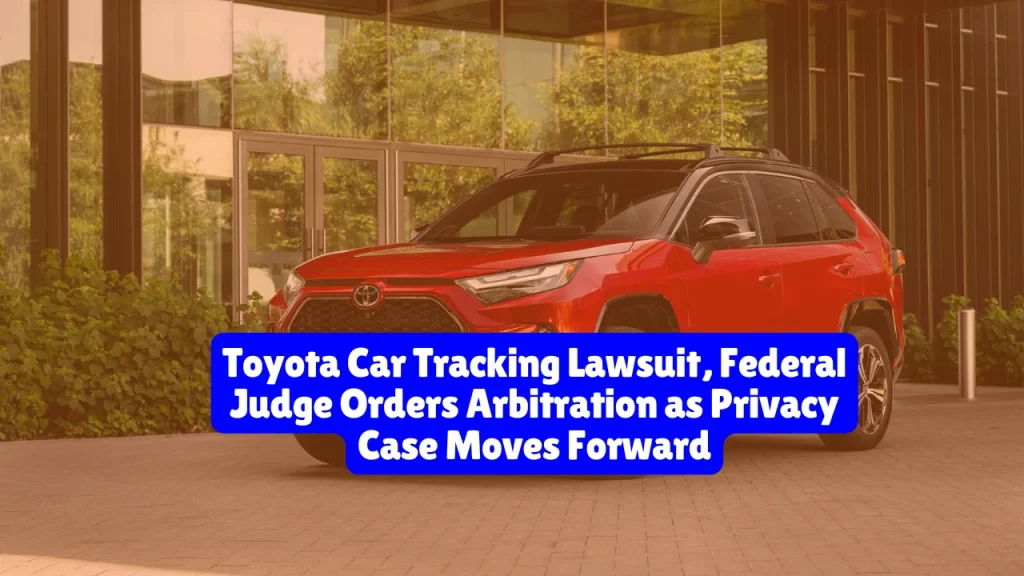
The Toyota car tracking lawsuit alleges that Toyota Motor North America and its affiliate Connected Analytic Services illegally collected detailed driving data from vehicle owners and sold it to third parties—including Progressive Insurance—without proper consent. Philip Siefke, a Florida resident who owns a 2021 Toyota RAV4, filed the class action in April 2025 in the U.S. District Court for the Eastern District of Texas (Case No. 4:25-cv-00406) after discovering Progressive already had a comprehensive driving profile on him despite never enrolling in their Snapshot tracking program.
The Allegations and Affected Vehicles
Connected vehicle services—technology that wirelessly transmits data about driving habits, location, and vehicle usage—are at the lawsuit’s center. The complaint alleges Toyota vehicles from 2018 forward with telematics collected: GPS location, speed, hard braking, swerving, nighttime driving frequency, seatbelt status, image and voice data, and vehicle health information.
Siefke discovered the collection in January 2025 when applying for Progressive insurance. After opting out of Snapshot, a pop-up revealed Progressive already possessed his driving data through January 20, 2025. When contacting Toyota on January 21, 2025, he learned he unknowingly enrolled in a trial data-sharing program when purchasing his RAV4 in March 2021. His app showed he opted out, yet Toyota continued sharing his information.
Affected models potentially include RAV4, Camry, Highlander, Tacoma, Tundra, 4Runner, and Corolla with connected services. Toyota’s 2022 partnership with Connected Analytic Services allegedly enabled systematic data collection from hundreds of thousands of owners nationwide.
December 2025 Arbitration Ruling and Current Status
On December 2, 2025, Chief Judge Amos Mazzant granted Toyota’s motion to compel arbitration, finding Siefke accepted Toyota’s terms—including an arbitration agreement and class action waiver—when activating the app and connected services. The case cannot proceed as a class action. Siefke must pursue claims through individual arbitration, though his legal team at Morgan & Morgan is exploring options to continue the case benefiting other Toyota owners.
The lawsuit alleges violations of the Federal Wiretap Act, Computer Fraud and Abuse Act, invasion of privacy, breach of contract, and unjust enrichment, with damages exceeding $5,000,000 for the proposed class.
What You Must Know
“Opting Out” May Not Stop Data Sharing
Opting out in your Toyota app may not actually stop data collection and sales. Toyota argues that accepting connected services terms—which disclosed vehicles “wirelessly transmit location, driving and vehicle health data to Toyota and its affiliates”—authorized data sharing regardless of later opt-out attempts. Accepting services like emergency assistance or remote start may automatically authorize data collection for other purposes.
2025 Regulatory Developments
In January 2025, the FTC settled with GM, banning disclosure of geolocation and driver behavior data to consumer reporting agencies for five years. Texas AG Ken Paxton filed lawsuits against GM, Ford, Hyundai, and FCA for allegedly selling private driving data. Mozilla Foundation’s 2023 research called modern cars “a privacy nightmare.”
Impact on Insurance Premiums
Insurers use telematics data to create risk profiles even for consumers who never enrolled in usage-based insurance. Despite no tickets since 2017, Progressive logged Siefke’s “hard brake” before he applied. Some Toyota owners may have paid hundreds more in insurance based on data obtained without explicit consent.
Related Article: Supreme Court Approves Election Lawsuit, Candidates Can Challenge Mail Ballot Laws Without Proving Harm
What to Do Next
Check Your Data Sharing Status
If you own a 2018+ Toyota with connected services: Open the Toyota app and review privacy settings. Note app settings may not provide complete protection. Request your driving data report from Toyota Customer Service at 1-800-331-4331. State privacy laws like California Consumer Privacy Act may grant rights to request collected information disclosure.
Monitor the Case
The lawsuit is stayed pending arbitration (Case No. 4:25-cv-00406, Eastern District of Texas). Court documents are at https://www.pacer.gov. Morgan & Morgan represents the plaintiff (1-800-906-2901). Track FTC automotive data privacy actions at https://www.ftc.gov.
Review similar cases including the Kaiser class action lawsuit and Facebook class action lawsuit payout.
When to Consult an Attorney
Consider legal advice if you: experienced unexplained premium increases with a clean record, received notification insurers obtained your driving data without enrollment, attempted to opt out but discovered continued collection, or suffered damages like insurance denial. Consumer privacy attorneys often offer free consultations.
Frequently Asked Questions
Which Toyota models are included in the lawsuit?
The lawsuit potentially includes Toyota vehicles from 2018 or later with telematics tracking and connected services, covering RAV4, Camry, Highlander, Tacoma, Tundra, 4Runner, and Corolla models with connected features. The determining factor is whether your vehicle can wirelessly transmit driving data to Toyota.
What is the deadline to file a claim?
No settlement or claim deadline exists as of January 2026. The December 2, 2025 ruling requires individual arbitration rather than class action. No claim forms are available currently. Future legal developments could create settlement opportunities with announced deadlines.
How much compensation can I receive?
No compensation is available without a settlement. The lawsuit seeks damages exceeding $5,000,000. Similar data privacy settlements have ranged from $20 to $100+ per consumer, varying based on settlement terms and documented damages.
Do I need proof of purchase or vehicle ownership?
If a future settlement occurs, you would likely need vehicle registration, lease agreement, VIN, or title documents demonstrating ownership during 2018 forward when data was allegedly collected. Keep Toyota purchase documents, connected services enrollment materials, and insurance premium increase records.
Can I still participate if I’ve sold my Toyota?
Former owners may remain eligible if they owned an affected Toyota when data was allegedly collected (2018 forward). Eligibility depends on ownership timing, not current ownership. Specific requirements haven’t been established without a settlement.
What legal violations is Toyota accused of?
The lawsuit alleges Federal Wiretap Act violations (intercepting communications without consent), Computer Fraud and Abuse Act violations (unauthorized access to vehicle systems), invasion of privacy, breach of contract (violating privacy policies), and unjust enrichment. Toyota denied allegations and successfully argued the plaintiff agreed to arbitration through connected services terms.
Will this affect my current car insurance?
The lawsuit itself won’t directly change rates. However, if you own a Toyota with connected services, your data may have been shared with insurers or brokers, potentially affecting premiums. Request information from your insurer about what driving data they have and its source. Consider insurers that don’t use telematics data or only collect through voluntary programs.
Last Updated: January 15, 2026
Disclaimer: This article provides general information about the Toyota car tracking lawsuit for educational purposes only and does not constitute legal advice. For specific questions about your rights or potential claims, consult with a qualified attorney.
Stay informed about your eligibility and protect your privacy rights. Understanding how your vehicle data is being used is essential for protecting your privacy and insurance costs.
Stay informed, stay protected. — AllAboutLawyer.com
About the Author

Sarah Klein, JD, is a licensed attorney and legal content strategist with over 12 years of experience across civil, criminal, family, and regulatory law. At All About Lawyer, she covers a wide range of legal topics — from high-profile lawsuits and courtroom stories to state traffic laws and everyday legal questions — all with a focus on accuracy, clarity, and public understanding.
Her writing blends real legal insight with plain-English explanations, helping readers stay informed and legally aware.
Read more about Sarah