
Florida’s Natural Grapefruit Juice Class Action, Mexican Fruit Allegedly Sold Under Florida Brand
Florida Natural Growers faces a class action lawsuit alleging it falsely advertised grapefruit juice as Florida-sourced when it actually contained Mexican grapefruit. The lawsuit, filed December 31, 2025, claims the company violated consumer protection laws by using the “Florida’s Natural” brand and “Owned By Florida Farmers” label while selling juice blended with Mexican fruit.
A University of Florida study found 46% of consumers specifically prefer Florida grapefruit and 32% pay premium prices for it—exactly the consumer preference the lawsuit claims Florida’s Natural exploited through deceptive marketing.
This Matters If You Bought Florida’s Natural Grapefruit Juice
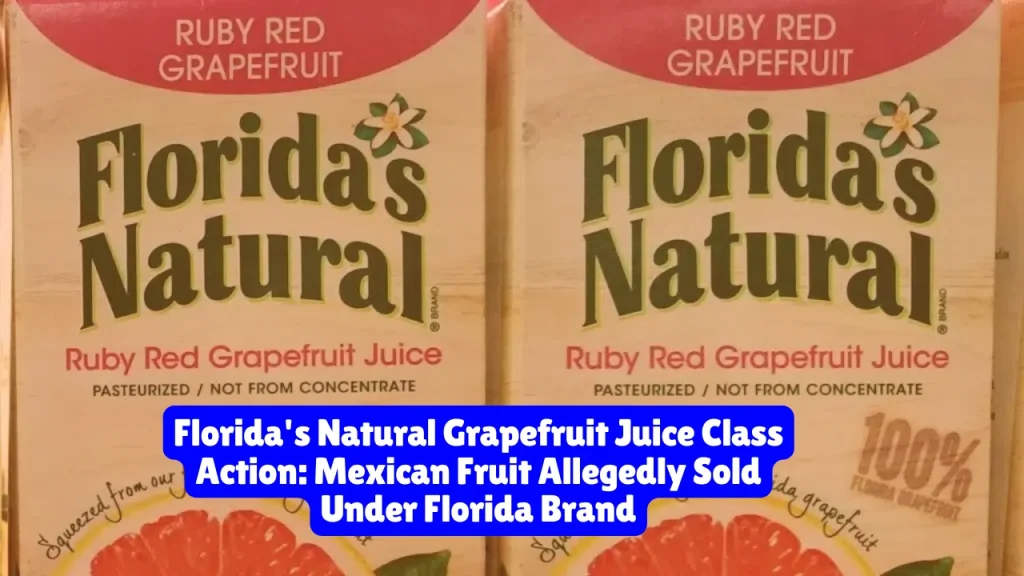
You paid extra believing you were getting 100% Florida grapefruit. The brand name creates that expectation. The packaging shows Florida farms and an American flag with “Owned By Florida Farmers.”
But starting May 2022, Florida’s Natural allegedly blended Mexican grapefruit into products while marketing them as Florida-sourced. No disclosure appeared on labels about non-Florida fruit. You paid premium prices for juice that wasn’t what you thought.
What the Florida’s Natural Class Action Alleges
What Are the Specific Violations?
Plaintiff Marcus Simpson Morgan filed the lawsuit representing all U.S. consumers who purchased Florida’s Natural grapefruit juice for personal use during the last four years. The case is Marcus Simpson Morgan v. Florida Natural Growers Inc., Case No. 2:25-at-01848, in the U.S. District Court for the Eastern District of California.
The complaint alleges violations of California’s Consumer Legal Remedies Act, which prohibits deceptive business practices. California’s False Advertising Law makes misleading product statements illegal. The Unfair Competition Law forbids fraudulent business practices.
The lawsuit claims breach of express warranty—when Florida’s Natural marketed juice as Florida-sourced, that created a guarantee about origin. Fraud means intentionally deceiving consumers. Unjust enrichment means profiting unfairly by selling less valuable products at premium prices.
What Laws Prohibit False Food Origin Claims?
The Federal Trade Commission Act Section 5 (15 U.S.C. § 45) prohibits deceptive acts in commerce. FDA food labeling regulations (21 CFR Part 101) require truthful claims. The Lanham Act (15 U.S.C. § 1125) prohibits false advertising about geographic origin.
Every state has consumer protection statutes prohibiting deceptive practices. These laws recognize origin claims influence purchasing decisions—people choose products based on where they come from.
Related Article: Crocs Sent “Today Only” Email Sale That Ran For Days, Washington Lawsuit Claims
What Does “Falsely Advertised as Florida-Sourced” Mean?
The brand name “Florida’s Natural” suggests Florida juice. “Owned By Florida Farmers” with an American flag reinforces this. Reasonable consumers expect Florida grapefruit based on this branding.
The lawsuit alleges this is material misrepresentation—an important fact influencing purchases. Consumers seeing “Florida’s Natural” expect Florida fruit, not Mexican imports.
What Florida’s Natural Allegedly Did
What Did Labels Say?
Products display “Florida’s Natural” prominently on bottles and cartons. This isn’t just a company name—it’s an origin statement consumers rely on.
Packaging features “Owned By Florida Farmers” with a U.S. flag image. Marketing emphasizes Florida roots. For decades, Florida’s Natural was the only national juice brand using exclusively U.S.-grown Florida fruit from cooperative members.
Nowhere does packaging disclose Mexican grapefruit content. Consumers see Florida branding and assume 100% Florida sourcing.
What Was Actual Sourcing?
The complaint alleges Florida’s Natural began using Mexican grapefruit juice starting May 2022. The juice is “blended with grapefruit juice from Mexico,” not exclusively from Florida despite branding.
This occurred as Florida’s citrus industry faced severe challenges. Citrus greening disease devastated groves. Florida grapefruit production dropped 97% over 25 years. Many growers abandoned citrus entirely.
Florida’s Natural likely turned to Mexican fruit to meet demand as Florida production declined. However, the lawsuit argues the company should have disclosed this instead of continuing Florida-only marketing.
Why Were Consumers Deceived?
The University of Florida study found 60% of respondents preferred juice made with fresh Florida grapefruit. These preferences reflect Florida’s reputation for high-quality citrus built over generations.
“Florida’s Natural” directly appeals to these preferences. Consumers pay more believing they’re getting premium Florida fruit. The lawsuit alleges Florida’s Natural charged premium prices while using less expensive Mexican grapefruit.
Who Can Join the Florida’s Natural Lawsuit
Who Qualifies?
The proposed class includes “anyone in the United States who purchased the Florida Natural grapefruit juice for personal or household use during the last four years”—approximately January 2022 through December 2025.
You qualify regardless of which state you live in. Federal class actions represent consumers nationwide when the same misconduct affected people across multiple states. The class covers personal or household use, not commercial purchases.
How Do You Know If You’re Affected?
You’re potentially affected if you purchased Florida’s Natural grapefruit juice believing it was Florida-sourced based on branding. You likely paid premium prices compared to generic brands. If you wouldn’t have bought the product—or paid less—knowing it contained Mexican fruit, you were harmed.
What About Proof of Purchase?
No claim process exists yet. Many food false advertising class actions allow claims based on attestation—swearing under oath you purchased during the class period—without requiring receipts.
However, save receipts, credit card statements, or loyalty card records showing purchases. Take photos of products you have. Document when, where, and how often you bought the juice.
What Compensation Might Be Available?
No settlement exists yet. The lawsuit seeks class certification, monetary damages, attorneys’ fees, and a jury trial.
False advertising compensation typically includes purchase price refunds. California’s Consumer Legal Remedies Act allows actual damages plus potential statutory damages. Restitution may include the difference between what you paid and actual product value.
Unjust enrichment claims seek profits Florida’s Natural made charging premium prices based on false advertising. Past food false advertising settlements provided payments ranging from a few dollars to over $100 per claimant depending on settlement size and purchase frequency.
Your Rights When Companies Make False Origin Claims
What Consumer Protection Laws Apply?
Every state prohibits deceptive trade practices. California’s Consumer Legal Remedies Act prohibits misrepresenting product characteristics. The False Advertising Law makes untrue advertising statements unlawful. The Unfair Competition Law prohibits fraudulent business practices.
The FTC Act gives the Federal Trade Commission authority to prevent deceptive practices. Individual consumers sue under state laws based on the same conduct.
Why Food Origin Matters
Geographic origin affects perceived quality and value. Florida is synonymous with premium citrus. Consumers support regional agriculture by choosing specific origins. Premium pricing is justified when products truly come from advertised regions.
Environmental and ethical considerations matter. Some consumers prefer shorter supply chains or supporting U.S. agriculture. Origin claims influence these decisions.
What Companies Must Disclose
If product names create false impressions about origin, companies must provide corrective disclosure. If “Florida’s Natural” contains Mexican grapefruit, labels should disclose that clearly.
Silent omissions constitute deceptive advertising when consumers reasonably expect certain information. Companies must substantiate advertising claims before making them.
How False Advertising Class Actions Proceed
Typical Stages
After complaint filing, defendants move to dismiss. If the case survives, discovery begins—both sides exchange documents. In false advertising cases, discovery reveals internal sourcing and marketing documents.
Plaintiffs file for class certification. The court evaluates whether the case meets class action requirements. If certified, settlement negotiations intensify. Most food false advertising class actions settle before trial.
Why Class Certification Matters
Certification determines whether one lawsuit represents all affected consumers. For small individual claims, class actions provide the only practical remedy. Without certification, Florida’s Natural faces single-plaintiff claims. With certification, potential liability covers millions of purchases.
Class certification drives settlement. Companies settle avoiding trial risk. For class members, certification means you don’t hire your own lawyer—class attorneys handle everything.
What to Do If You Purchased the Product
Gather Documentation
Locate receipts from stores where you bought Florida’s Natural grapefruit juice. Check credit card and bank statements. Review loyalty card records—many retailers maintain online purchase histories.
Take photos of products you have. Note purchase dates, locations, and frequency. Estimate total spending. Consider why you chose Florida’s Natural—did you specifically want Florida grapefruit?
Find Out About the Lawsuit
Check for class action websites established for the case. Contact Smith Krivoshey PC, the plaintiff’s law firm (attorneys: Yeremey O. Krivoshey, Brittany S. Scott, Joel D. Smith).
Monitor court filings through PACER at pacer.uscourts.gov—search Case No. 2:25-at-01848, Eastern District of California. If you’re a potential class member, you’ll receive notice by mail or email.
Do You Need to Act Now?
You’re automatically included if you meet class definition unless you opt out. Preserve documentation now—receipts fade and records get deleted.
When class certification and settlement occur, you’ll receive notice with claim filing instructions. Watch for deadlines. Missing deadlines forfeits compensation rights.
Understanding Your Legal Options
Can You File Individual Lawsuits?
You can sue individually even if a class action exists. Individual lawsuits sometimes result in higher damages. To pursue individual cases, opt out of the class action.
Individual lawsuits require hiring your own attorney. Consumer protection attorneys often work on contingency fees—paid from recovery percentages. Consider whether individual litigation makes sense based on your purchase amounts.
What Are Time Limits?
State consumer protection statutes of limitations vary, typically 2-4 years from purchase or fraud discovery. California’s fraud limitation is three years. Breach of warranty and unfair competition claims have four-year limits.
Class actions may extend individual deadlines. However, if considering individual lawsuits, consult attorneys promptly. Some laws measure limitations from when you discovered deception rather than purchase dates.
Potential Compensation Types
Compensation aims to make you whole—refunding what you paid or compensating overpayment. Refunds return purchase prices. Overpayment damages reflect price premiums paid because of false advertising.
Restitution recovers profits Florida’s Natural made through false advertising. Some state laws provide multiple damages for willful violations. Class settlements typically result in lower per-person amounts but require no individual attorney costs.
Where to Find Reliable Information
Official Sources
Access federal court filings through PACER. Smith Krivoshey PC may post updates on their website. Check FTC resources at ftc.gov for false advertising guidance. FDA regulates food labeling under 21 CFR Part 101.
State attorneys general offices have consumer protection divisions. The National Consumer Law Center publishes false advertising materials.
Verify Information
Confirm information comes from legitimate sources—court documents, law firm websites, government agencies. Be skeptical of websites requesting upfront fees. Legitimate class actions never require payment to join.
Confirm settlement notices come from court-approved administrators. Cross-reference information across multiple sources.
Frequently Asked Questions
What is this lawsuit about?
Florida Natural Growers is sued for allegedly falsely advertising grapefruit juice as Florida-sourced when it contains Mexican grapefruit, violating consumer protection laws. Filed December 31, 2025, in California federal court.
Can I join if I bought the juice?
If you purchased Florida’s Natural grapefruit juice for personal use during the last four years anywhere in the U.S., you’re potentially part of the proposed class. You’re automatically included if the court certifies the class unless you opt out.
How much compensation is possible?
No settlement exists yet. In similar cases, class members typically receive refunds or partial refunds based on purchases, ranging from a few dollars to over $100 depending on frequency and settlement terms.
Do I need receipts?
Requirements haven’t been determined. Many food false advertising class actions allow attestation claims without receipts. However, proof like receipts, statements, or loyalty card records strengthens claims.
When will this settle?
The lawsuit was just filed, so timing is uncertain. False advertising class actions typically take 2-4 years. Most settle after discovery but before trial.
Pro Tip: When buying premium food products marketed with geographic origins, check labels for “Product of” statements explicitly confirming sourcing rather than relying on brand names alone.
Disclaimer: This article about Florida’s Natural class action claims that grapefruit juice was falsely advertised as Florida-sourced is informational only, based on publicly available information. Case details may change as litigation proceeds. AllAboutLawyer.com doesn’t represent any party or provide legal services. This isn’t legal advice. Consult qualified consumer protection attorneys about your specific situation.
What to Read Next: Learn about class action lawsuits
Stay informed, stay protected. — AllAboutLawyer.com
Last Updated: January 13, 2026 — We keep this current with the latest legal developments
About the Author

Sarah Klein, JD, is a licensed attorney and legal content strategist with over 12 years of experience across civil, criminal, family, and regulatory law. At All About Lawyer, she covers a wide range of legal topics — from high-profile lawsuits and courtroom stories to state traffic laws and everyday legal questions — all with a focus on accuracy, clarity, and public understanding.
Her writing blends real legal insight with plain-English explanations, helping readers stay informed and legally aware.
Read more about Sarah