
Your Rights When ICE Stops You, Citizens, Green Card Holders, and Undocumented
When ICE stops you, your rights depend on your immigration status, but everyone—citizens, green card holders, and undocumented immigrants—has constitutional protections including the right to remain silent, refuse searches without a warrant, and ask if you’re free to leave. As of January 2026, US citizens cannot be detained for immigration violations but can be stopped if ICE suspects criminal activity, green card holders must carry their permanent resident card and can be detained for immigration violations, and undocumented immigrants retain Fourth and Fifth Amendment rights even though ICE can arrest them for being unlawfully present.
On January 7, 2026, ICE agent Jonathan Ross fatally shot Renee Nicole Good, a 37-year-old US citizen and mother of three, in Minneapolis during an immigration enforcement operation. Good’s killing sparked over 1,000 protests nationwide and renewed urgent questions about what rights people have when ICE stops them—particularly after hundreds of citizens have been wrongfully detained by ICE between 2003 and 2019, with ICE now making over 1,000 arrests daily across the country.
Understanding Your Rights During ICE Stops Could Save Your Freedom
This affects you if you or family members have immigration-related concerns, live in areas with increased ICE enforcement activity, work in industries ICE targets, participate in protests or community activism, or simply want to know what ICE can legally do during a stop. With 2,000 federal agents deployed to Minneapolis alone in January 2026 and 737 agreements across 40 states deputizing local police as immigration agents, understanding your specific rights based on your status has never been more critical.
Understanding ICE stop rights by immigration status matters because recent policy changes eliminated “protected areas” where ICE previously avoided enforcement, the September 2025 Supreme Court ruling allowed ICE to use appearance and language as factors in reasonable suspicion, and 73.6% of people in ICE detention have no criminal convictions. You need to know what you must do versus what you can refuse to protect yourself and your family.
Your Rights as a US Citizen When ICE Stops You
Can ICE Legally Stop or Detain US Citizens?
ICE cannot detain US citizens for immigration violations—you cannot be illegally present in your own country or subject to deportation. However, ICE can stop citizens if they have reasonable suspicion you’re involved in criminal activity, during criminal investigations where ICE has jurisdiction like drug trafficking or human smuggling, or if you’re present during an immigration operation and allegedly interfere with agents.
The Fourth Amendment protects you against unreasonable searches and seizures. ICE needs probable cause—specific facts suggesting you committed a crime—to arrest you. They cannot stop you solely based on how you look, where you’re from, or because you’re in an area with immigrants, though the September 2025 Supreme Court ruling allows appearance and language as factors combined with other evidence.
Between 2003 and 2019, hundreds of US citizens were wrongfully detained by ICE due to misidentification, outdated records, or confusion about citizenship. If ICE stops you as a citizen, you have stronger protections than non-citizens, but you still need to assert your rights clearly.
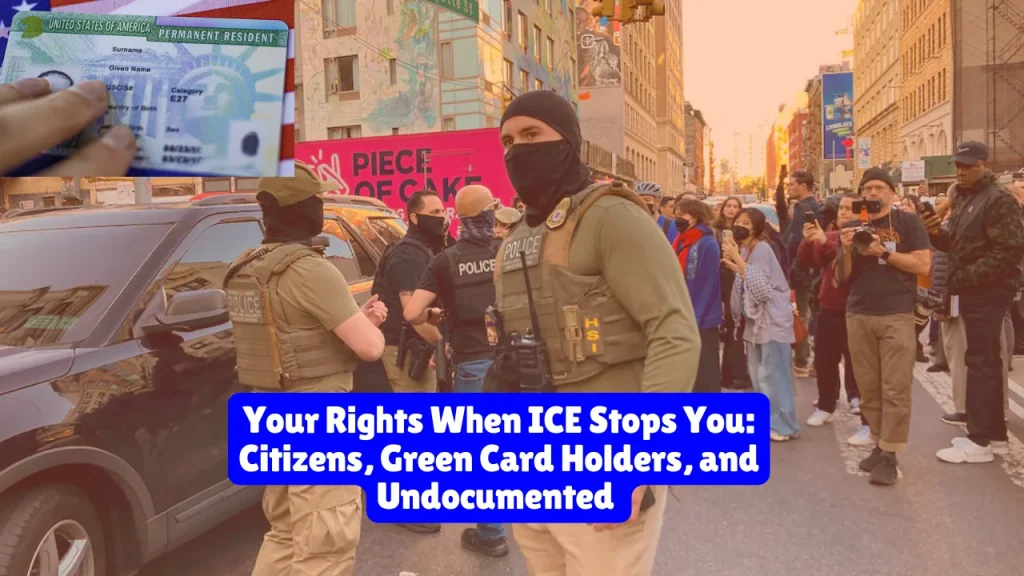
What Should Citizens Do If ICE Stops Them?
Stay calm and ask “Am I being detained or am I free to leave?” If they say you’re free to go, calmly walk away. If detained, clearly state “I am a US citizen” and “I want to speak with a lawyer.”
Show documentation proving citizenship if you have it—US passport, birth certificate, naturalization certificate, or state ID. However, you’re generally not required to carry citizenship documents unless you’re at the border or a transportation checkpoint. If you don’t have documents immediately available, provide your name and birthdate so ICE can verify citizenship through databases.
Do not answer questions about where you were born, your parents’ citizenship, or immigration history beyond stating you’re a US citizen. Invoke your Fifth Amendment right to remain silent. Do not consent to searches of your person, vehicle, or home without a judicial warrant signed by a judge.
If ICE wrongfully detains you despite your citizenship, document everything—officer names, badge numbers, what they said, and any witnesses. Contact family immediately and request a lawyer. Report the incident to civil rights organizations like the ACLU or National Immigration Law Center for potential legal action.
Your Rights as a Green Card Holder When ICE Stops You
Do Green Card Holders Have the Same Rights as Citizens?
Green card holders (lawful permanent residents) have most constitutional protections but fewer rights than citizens during ICE encounters. You can be detained and deported for immigration violations, certain criminal convictions, or fraud in your green card application, whereas citizens cannot face immigration consequences.
The Fourth Amendment protects you against unreasonable searches—ICE needs reasonable suspicion to stop you and probable cause to arrest you. The Fifth Amendment gives you the right to remain silent about most questions. However, under the Immigration and Nationality Act Section 264(e), you’re legally required to carry your green card at all times if you’re 18 or older and must show it to immigration officers when requested.
Recent cases highlight the risks. In March 2025, Mahmoud Khalil, a Columbia University student and green card holder, was detained by ICE and later charged with fraud related to his green card application. Fabian Schmidt, a German engineer with a green card, was detained for a decade-old DUI misdemeanor. The Trump administration in 2025 expanded enforcement targeting green card holders with criminal records and political activists.
What Should Green Card Holders Do During an ICE Stop?
Show your green card immediately when ICE requests it—this is legally required. Also provide a second form of ID like a driver’s license. If you don’t have your physical green card with you, explain this calmly and provide your Alien Registration Number (A-number) if you know it.
You must answer basic questions confirming your identity and lawful permanent resident status. However, you can refuse to answer questions about where you were born, your travel history, political activities, or criminal history beyond what’s on official records. State clearly: “I am exercising my right to remain silent” for questions beyond identity verification.
Do not consent to searches without a warrant. If ICE has a judicial warrant signed by a judge, they can enter your home, but an administrative immigration warrant (Form I-200) does not authorize forced entry. Ask to see the warrant and verify it’s signed by a judge, not an ICE supervisor.
If detained, immediately request a lawyer and do not sign any documents without legal counsel. You have the right to a bond hearing before an immigration judge and cannot be deported without due process. Contact family and tell them to locate your immigration documents including your green card, passport, and any court papers.
Your Rights as an Undocumented Immigrant When ICE Stops You
What Constitutional Rights Do Undocumented Immigrants Have?
Undocumented immigrants have Fourth Amendment protection against unreasonable searches and seizures and Fifth Amendment right to remain silent, even though ICE has authority to arrest you for being unlawfully present under 8 U.S.C. § 1357(a). These constitutional protections apply to all persons in the United States regardless of immigration status.
ICE can stop you if they have reasonable suspicion you’re unlawfully present or involved in criminal activity. They can arrest you without a warrant if they have probable cause to believe you lack lawful immigration status. However, they still need reasonable suspicion to initiate the stop—they cannot randomly stop people without specific facts suggesting immigration violations.
The right to remain silent means you don’t have to answer questions about where you were born, when you entered the US, your nationality, or immigration status. The right to refuse consent to searches means ICE needs a warrant signed by a judge to search your home, and you can refuse to allow searches of your person or vehicle beyond what’s legally required.
What Should Undocumented Immigrants Do During an ICE Stop?
Ask “Am I being detained or am I free to leave?” If they say you’re free to go, leave calmly. If detained, immediately invoke your rights: “I am exercising my right to remain silent” and “I want to speak with a lawyer.”
Do not answer questions about your immigration status, nationality, where you were born, when you entered the US, or provide any documents about your immigration history. Do not lie about your identity or provide false documents—this can result in additional criminal charges and eliminate future immigration relief options.
Do not consent to searches. If ICE asks to search you, your belongings, vehicle, or home, clearly state “I do not consent to a search.” If they have a judicial warrant, you cannot physically resist, but your statement preserves your legal rights.
Do not sign any documents without speaking to a lawyer, especially voluntary departure forms or documents waiving your right to a hearing. These can eliminate your ability to fight deportation or apply for relief. If ICE pressures you to sign, repeat “I want to speak with my lawyer before signing anything.”
If detained, you have the right to contact your consulate, make phone calls to family and a lawyer, and appear before an immigration judge before deportation. Memorize important phone numbers including family, a lawyer if you have one, and the ICE detainee hotline. Use the ICE Detainee Locator at https://locator.ice.gov/odls/#/search so family can find you.
Universal Rights During Any ICE Stop (Regardless of Status)
Your Right to Remain Silent and Refuse Searches
Every person in the United States has Fifth Amendment protection against self-incrimination. You can refuse to answer questions beyond confirming your identity. This applies whether you’re a citizen, green card holder, or undocumented.
Use clear language: “I am exercising my right to remain silent.” Do not explain why you’re remaining silent or provide partial answers. Silence cannot be used as evidence of guilt. If ICE continues questioning, repeat “I am exercising my right to remain silent and I want to speak with a lawyer.”
You have the right to refuse consent to searches under the Fourth Amendment. If ICE asks “Can we search your car/bag/home?” say clearly “I do not consent to a search.” This applies to searches of your person, belongings, vehicle, and home. However, there are exceptions: ICE can search without consent at borders and international entry points, if they have a judicial warrant signed by a judge, under the automobile exception if they have probable cause your vehicle contains contraband or evidence, or if they have a valid warrant for your arrest and search incident to that arrest.
How to Handle Different Types of ICE Encounters
Street or vehicle stops: Ask “Am I being detained or am I free to leave?” If free to go, leave calmly. If detained, remain silent and request a lawyer. Do not run or resist physically. Citizens and green card holders should show appropriate ID. Undocumented individuals should remain silent about immigration status.
Home visits (knock-and-talks): Do not open the door. ICE cannot enter without your consent or a judicial warrant. Ask through the closed door “Do you have a warrant?” If they say yes, ask them to slide it under the door or hold it to a window. Verify it’s signed by a judge—an administrative immigration warrant (Form I-200) does not authorize entry. If they don’t have a judicial warrant, say “I do not consent to you entering my home” and do not open the door.
Workplace enforcement: If ICE enters your workplace, stay calm and ask “Am I free to leave?” Do not answer questions about immigration status or where you were born. You have the right to refuse to show documents beyond what your employer requires. ICE needs a judicial warrant to enter private workplace areas but can enter public areas like lobbies. Do not run, as this can lead to additional charges.
Checkpoints: You must stop at official checkpoints, but your rights still apply. At immigration checkpoints away from borders, you can ask “Am I free to leave?” and may not be required to answer citizenship questions. At border checkpoints, you must answer basic questions about citizenship. Citizens and green card holders should have documentation available.
What You Must Know About ICE Stops in 2026
Different Types of ICE Stops and What They Mean for Your Rights
ICE operates under different legal standards depending on the type of encounter. Street stops require reasonable suspicion—specific facts suggesting immigration violations or criminal activity. Home entries require your consent or a judicial warrant except in emergencies. Workplace raids need judicial warrants for non-public areas. Border and functional equivalent checkpoints have broader search authority under the border exception.
Your rights are strongest at home, where the Fourth Amendment provides maximum protection. The Supreme Court has repeatedly held that the home is the most protected space. ICE cannot enter without consent or a judicial warrant except in true emergencies like hot pursuit of a fleeing suspect.
Your rights are more limited at actual international borders and ports of entry, where customs and immigration officers have broad authority to question and search without warrants or probable cause. However, this “border search exception” does not eliminate all constitutional rights—excessive force and discrimination remain prohibited.
Common Mistakes That Hurt Your Case During ICE Encounters
Lying about your identity or status is one of the worst mistakes. Providing false names, documents, or information can result in criminal charges under 18 U.S.C. § 1001 (false statements) and eliminate future immigration relief options. If you cannot answer truthfully, remain silent instead of lying.
Consenting to searches waives your Fourth Amendment protections. Many people consent because ICE asks or implies you must agree. You can refuse searches unless ICE has a judicial warrant. Simply saying “Yes, okay” or stepping aside allows ICE to search without a warrant.
Signing documents without understanding them is extremely dangerous. ICE may present voluntary departure forms, stipulated removal orders, or waivers of rights. These documents can result in immediate deportation without a hearing before a judge. Never sign anything without speaking to a lawyer first.
Resisting physically leads to additional criminal charges including assault on a federal officer under 18 U.S.C. § 111, which carries significant prison time. Even if ICE violates your rights, physical resistance is never the answer—assert your rights verbally and comply physically, then challenge violations later through legal channels.
Recent Legal Changes Affecting Your Rights (2025-2026)
The September 2025 Supreme Court ruling held ICE can use appearance, language, and accent as factors in reasonable suspicion for stops, though not as the sole basis. This controversial decision expanded ICE’s stop authority and increased profiling concerns, particularly affecting Latino communities and anyone perceived as foreign.
The January 2026 killing of Renee Nicole Good sparked renewed scrutiny of ICE operations and use of force policies. Minneapolis Mayor Jacob Frey called ICE’s actions “reckless” and told ICE to leave Minneapolis. The incident raised questions about state prosecution of federal agents and accountability when ICE uses deadly force during operations.
The January 2025 expansion of expedited removal means ICE can now deport people without immigration judge hearings if they cannot prove they’ve been continuously present in the US for at least two years. Previously, this authority only applied within 100 miles of borders and 14 days of entry. Carry evidence of continuous US presence if possible—leases, utility bills, employment records.
The 2025 elimination of “sensitive locations” policy means ICE can now conduct enforcement at schools, hospitals, and churches where they previously avoided operations. This increases the likelihood of ICE encounters in places previously considered safe. The expansion of 287(g) agreements deputizing local police as immigration agents in 737 jurisdictions across 40 states means local traffic stops can turn into immigration enforcement.
What to Do If ICE Stops You: Step-by-Step Actions
Immediate Actions for Different Scenarios
If ICE approaches you on the street:
- Stay calm, do not run
- Ask “Am I being detained or am I free to leave?”
- If free to go, leave calmly without answering questions
- If detained, state “I am exercising my right to remain silent” and “I want to speak with a lawyer”
- Show citizenship/green card documentation if applicable
- Do not consent to searches
- Document officer names/badge numbers if safe
If ICE comes to your home:
- Do not open the door
- Ask through closed door “Do you have a warrant?”
- Request they slide warrant under door or show through window
- Verify it’s a judicial warrant signed by a judge
- If only administrative warrant, say “I do not consent to you entering”
- If they have judicial warrant, you must allow entry but still have right to remain silent
- Do not answer questions, request lawyer immediately
If ICE comes to your workplace:
- Ask “Am I being detained or am I free to leave?”
- If free to go, leave work area calmly if possible
- Exercise right to remain silent
- Do not answer immigration questions or show documents beyond employment requirements
- Do not run or physically resist
- Document the encounter and contact lawyer immediately
Where to Find Help and Resources
Immediate hotlines for ICE encounters:
- COPAL (Minneapolis): 612-255-3112
- National Immigration Law Center: Resources at nilc.org
- ACLU Immigrants’ Rights: Know Your Rights materials at aclu.org
- National Immigrant Justice Center: immigrantjustice.org/for-immigrants/know-your-rights
Finding detained family members:
- ICE Detainee Locator: https://locator.ice.gov/odls/#/search
- Immigration court information: EOIR hotline 1-800-898-7180
Legal assistance:
- Immigration Advocates Network: immigrationadvocates.org/nonprofit/legaldirectory
- American Immigration Lawyers Association referral: aila.org
- Legal Aid Society (NYC): legalaidnyc.org
- Local immigrant rights organizations in your community
Reporting rights violations:
- DHS Office of Civil Rights and Civil Liberties: Report constitutional violations
- ACLU: Document and report civil rights violations
- Local civil liberties organizations
How to Prepare Your Family for Potential ICE Encounters
Create a family emergency plan including: designated emergency contacts who can pick up children, location of important documents (passports, birth certificates, green cards, leases, utility bills proving residence), immigration attorney contact information if you have one, memorized phone numbers for family and lawyers, signed child care authorization forms allowing others to pick up children from school.
Carry appropriate documentation: Citizens should carry passport or birth certificate, green card holders must carry permanent resident card and secondary ID, undocumented individuals should carry proof of continuous US residence if claiming expedited removal protection but avoid carrying documents showing nationality or country of origin that could be used against you.
Train family members on their rights: Teach children age-appropriate information about what to do if ICE comes, ensure everyone knows “I am exercising my right to remain silent” and “I want to speak with a lawyer,” practice remaining calm during hypothetical scenarios, keep copies of important documents with trusted family/friends.
Consider carrying a “Know Your Rights” card with your lawyer’s number and key phrases in your language. Organizations like the ACLU and National Immigration Law Center provide free printable cards. However, do not carry anything that confirms unlawful presence if you’re undocumented.
Frequently Asked Questions
Can ICE stop me on the street without a warrant?
Yes. ICE can stop you on the street if they have reasonable suspicion that you’ve violated immigration laws or are involved in criminal activity under their jurisdiction. They don’t need a warrant for stops, only for arrests in most cases and for entering private property. However, the stop must be based on specific facts, not random targeting. Always ask “Am I being detained or am I free to leave?”
Do I have to show my green card to ICE?
Yes. Federal law requires lawful permanent residents (green card holders) age 18 and over to carry their green card at all times and show it to immigration officers when requested under Immigration and Nationality Act Section 264(e). Failure to carry your green card can result in fines or brief detention. Citizens and undocumented immigrants are not legally required to carry immigration documents unless at borders or checkpoints.
What happens if I refuse to answer ICE questions?
You can refuse to answer questions by invoking your Fifth Amendment right to remain silent, and this cannot be used as evidence of guilt. However, ICE can still detain you if they have other evidence of immigration violations or criminal activity. Remaining silent is always better than lying, which can result in criminal charges and eliminate future immigration relief options.
Can ICE search my car during a traffic stop?
ICE needs probable cause to search your vehicle under the Fourth Amendment “automobile exception”—specific facts suggesting your car contains contraband or evidence of a crime. You should clearly state “I do not consent to a search.” If they search anyway, your statement preserves your legal rights to challenge the search later. At border checkpoints, ICE has broader search authority without probable cause.
What’s the difference between a citizen’s rights and an undocumented person’s rights with ICE?
Citizens and undocumented immigrants both have Fourth Amendment protection against unreasonable searches and Fifth Amendment right to remain silent. The key difference is ICE has no authority to detain citizens for immigration violations—you cannot be deported. Undocumented immigrants can be arrested and deported for unlawful presence, but still retain constitutional rights during the process and have the right to a hearing before an immigration judge.
Can ICE come to my home without a warrant?
ICE cannot enter your home without your consent or a judicial warrant signed by a judge, except in emergencies. An administrative immigration warrant (Form I-200) does not authorize forced entry into private homes—this has been consistently upheld by courts. Ask to see the warrant through a window or under the door, verify it’s signed by a judge, and if they only have an administrative warrant, clearly state “I do not consent to you entering my home.”
What should I do if ICE stops me at work?
Ask “Am I being detained or am I free to leave?” If free to go, calmly leave the area if possible. Exercise your right to remain silent about immigration status and where you were born. Do not show immigration documents beyond what your employer requires for employment verification. Do not run or physically resist. ICE needs judicial warrants to enter private workplace areas but can enter public spaces like lobbies. Contact a lawyer immediately after the encounter.
Last Updated: January 13, 2026 — We keep this current with the latest legal developments.
Pro Tip: The Power of Three Words: “Am I Free to Leave?”
No matter your immigration status, asking this simple question can clarify your legal situation immediately. If ICE says yes, calmly walk away. If they say no, you’re being detained—invoke your right to remain silent and request a lawyer. Never guess about your legal status in the moment. This one question cuts through confusion and protects your rights while keeping you safe.
Disclaimer: This article provides general information about your rights when ICE stops you and rights during immigration encounters for educational purposes only. Legal situations vary significantly based on specific circumstances, your immigration status, location, and individual facts. The information presented does not constitute legal advice, and AllAboutLawyer.com does not provide legal services or representation. Immigration law and constitutional protections are complex areas requiring professional legal expertise. If you face an ICE stop, detention, or immigration enforcement action, consult a qualified immigration attorney immediately for advice specific to your situation. Do not rely solely on this information when making legal decisions affecting your immigration status or freedom.
Related Resources: For more information about ICE law enforcement authority and your constitutional protections, explore our articles on
Can ICE Agents Shoot Someone Trying to Run Them Over?
No, ICE Cannot Legally Arrest or Deport US Citizens, Here’s What Federal Law Actually Says
ICE Arrest Powers Beyond Immigration, When Federal Agents Can Detain Citizens
Stay informed, stay protected. — AllAboutLawyer.com
About the Author

Sarah Klein, JD, is a licensed attorney and legal content strategist with over 12 years of experience across civil, criminal, family, and regulatory law. At All About Lawyer, she covers a wide range of legal topics — from high-profile lawsuits and courtroom stories to state traffic laws and everyday legal questions — all with a focus on accuracy, clarity, and public understanding.
Her writing blends real legal insight with plain-English explanations, helping readers stay informed and legally aware.
Read more about Sarah