
ICE Arrest Powers Beyond Immigration, When Federal Agents Can Detain Citizens
ICE agents can legally detain U.S. citizens for non-immigration offenses when they have authority under Title 18 federal criminal law, through cross-designation agreements with other agencies, or during 287(g) task force operations. As of January 2026, ICE’s Homeland Security Investigations (HSI) division enforces over 400 federal statutes including drug trafficking, human smuggling, customs violations, money laundering, and terrorism—giving them arrest powers over citizens that extend far beyond immigration enforcement.
On January 7, 2026, an ICE officer shot and killed 37-year-old Renee Nicole Good in Minneapolis during a law enforcement operation. This tragedy sparked nationwide protests and renewed questions about ICE’s expanding role. With ICE making over 1,000 arrests daily and receiving $75 billion in funding over four years, understanding when federal agents can legally detain citizens has never been more critical.
Why This Matters to You Right Now
This affects you if you live near enforcement hotspots, participate in protests, travel across borders frequently, or simply want to know your rights during federal encounters. Recent policy changes eliminated “protected areas” like schools and churches, 737 agreements across 40 states deputized local police as immigration agents, and ProPublica documented 170+ incidents where citizens were detained by ICE—130 for alleged “obstruction” during operations. You need to know when federal agents can legally stop you and what constitutional protections apply.
Understanding ICE’s Legal Authority Beyond Immigration
What is ICE and What’s Changed in 2025-2026?
ICE was created in 2003 after September 11 by merging immigration enforcement with customs investigations. The agency operates two distinct divisions with very different powers.
Enforcement and Removal Operations (ERO) focuses on immigration violations, detention, and deportation under Title 8—this is traditional “immigration enforcement.” Homeland Security Investigations (HSI) is a criminal investigative division with broad authority to enforce federal crimes under Title 18, Title 19 (customs), and Title 21 (drugs)—making HSI agents general federal law enforcement officers similar to FBI agents.
The 2025-2026 administration dramatically expanded ICE operations. In January 2025, DHS invoked 8 U.S.C. § 1103(a)(10) for the first time, allowing mass influx emergency powers. DHS rescinded the “protected areas” policy that previously limited enforcement at schools and hospitals. Congress provided $75 billion over four years, enabling a goal of 3,000 arrests daily.
Title 8 vs. Title 18 Authority: The Critical Difference
Understanding this distinction is essential to knowing when ICE can detain citizens.
Title 8 authority covers immigration law—entering illegally, overstaying visas, deportation proceedings. ICE officers can arrest non-citizens without warrants for immigration violations under 8 U.S.C. § 1357(a). They can also arrest anyone—including citizens—without a warrant for any criminal offense committed in their presence under § 1357(a)(4).
Title 18 authority covers general federal crimes—drug trafficking, human trafficking, money laundering, weapons violations, terrorism, genocide, child exploitation. HSI special agents have full authority to investigate and arrest for Title 18 crimes, functioning as general federal police officers.
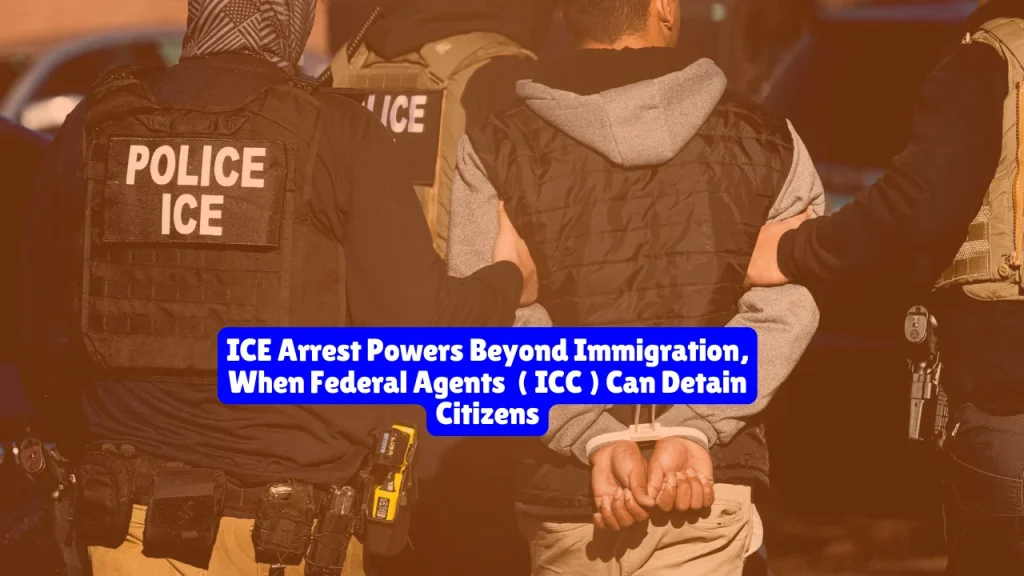
Here’s what matters: If you’re a U.S. citizen, ICE has no immigration authority over you under Title 8. However, HSI agents absolutely can arrest you under Title 18 for federal crimes. They can also temporarily detain you under § 1357(a)(4) if you commit any offense in their presence, including “obstruction.”
Cross-Designation and Task Force Authority
Cross-designation allows federal agents from one agency to exercise another agency’s powers. ICE uses this extensively to expand enforcement.
Under customs cross-designation (19 U.S.C. § 1401), ICE officers enforce customs and trade laws including narcotics smuggling and export violations. The 287(g) program (8 U.S.C. § 1357(g)) deputizes state and local officers to perform immigration enforcement. As of June 2025, 737 agreements across 40 states exist.
The Task Force Model—resurrected in 2025—deputizes local officers to perform full field enforcement including stops and arrests. Officers receive four weeks of training at the Federal Law Enforcement Training Center. Once cross-designated, local police become ICE agents with federal immigration arrest powers.
ICE also participates in FBI Joint Terrorism Task Forces, Organized Crime Drug Enforcement Task Forces, and High Intensity Drug Trafficking Area task forces, further blurring lines between immigration enforcement and general criminal policing.
When Can ICE Arrest or Detain U.S. Citizens?
Can ICE Legally Detain Citizens for Non-Immigration Offenses?
Yes, but only under specific circumstances complying with Fourth Amendment protections.
ICE cannot detain citizens for immigration violations—citizens cannot violate immigration law. However, ICE agents can arrest citizens for federal crimes under Title 18 when they have probable cause, for any criminal offense committed in the agent’s presence under § 1357(a)(4) including state crimes, and for felonies committed outside their presence if there’s reason to believe the person might escape under § 1357(a)(5).
ICE can also briefly detain citizens during investigations under reasonable suspicion standards from Terry v. Ohio. The September 2025 Supreme Court ruling held ICE can consider appearance, language, and behavior in reasonable suspicion—meaning agents can use ethnicity as one factor, though not solely based on race.
What Federal Crimes Give ICE Jurisdiction Over Citizens?
HSI enforces over 400 federal statutes, giving arrest authority for numerous federal crimes.
Drug trafficking and narcotics smuggling under Title 21 and Title 18 drug offenses—ICE investigates international trafficking organizations. Human trafficking and smuggling under 18 U.S.C. Chapters 77 and 117—forced labor, sex trafficking, smuggling operations. Customs violations under Title 19—smuggling goods, evading duties, intellectual property crimes.
Child exploitation under 18 U.S.C. § 2251—ICE operates the Cyber Crimes Center investigating child abuse material. Money laundering under 18 U.S.C. Chapter 95 and bulk cash smuggling. Terrorism offenses under 18 U.S.C. Chapter 113B—material support to terrorist organizations, weapons of mass destruction crimes.
Additional crimes include weapons smuggling across borders, export control violations, genocide under 18 U.S.C. § 2442, document fraud schemes, cybercrime with transnational elements, and gang-related offenses. The connecting thread is transnational crime—offenses with international or border-related elements.
The “Obstruction” Loophole: When Citizens Get Detained
The most controversial arrests occur under obstruction theories during enforcement operations.
Under § 1357(a)(4), ICE can arrest any person for “any offense” committed in their presence, including 18 U.S.C. § 111 (interference with federal officers). ProPublica’s November 2025 investigation documented 130 citizens held for alleged “infractions” like interfering with operations—not immigration violations or serious federal crimes.
Examples include citizens questioned despite providing identification, family members detained while officers arrested relatives, bystanders arrested for recording operations, protesters arrested for alleged interference, and residents detained during wrong-address raids. What constitutes “interference” is often subjective, creating controversy when citizens exercise First Amendment rights to observe enforcement.
Constitutional Protections During Federal Arrests
Fourth Amendment Rights: Warrants and Probable Cause
The Fourth Amendment protects against unreasonable searches and seizures. This applies to all persons—citizens and non-citizens—and constrains ICE powers.
Probable cause is required for arrests—specific facts that would lead a reasonable person to believe you committed a crime. ICE cannot arrest citizens for immigration violations at all. Warrants from judges are generally required before entering private homes, with exceptions for consent, exigent circumstances, arrests in public places, and the automobile exception.
Administrative warrants issued by ICE supervisors (Form I-200) authorize taking non-citizens into custody but do not authorize entering homes without consent. Judicial warrants issued by judges based on probable cause can authorize home entry. If ICE knocks with only an administrative warrant, you can refuse entry.
First Amendment and Due Process Protections
You have First Amendment rights to observe, record, and protest ICE operations in public spaces. Courts recognize a right to record government officials performing public duties. However, you cannot physically interfere with officers, must obey lawful orders, and cannot trespass.
You have Fifth Amendment rights to remain silent and Sixth Amendment rights to an attorney if arrested. You can state “I am exercising my right to remain silent” and “I want to speak with an attorney.” Officers must articulate why you’re detained and cannot hold you indefinitely without charges.
What You Must Know About ICE’s Expanded Role
Evolution From Immigration Enforcement to Federal Policing
ICE’s mission has expanded significantly since 2003. Originally focused on immigration violations, HSI now investigates transnational crimes with over 7,000 special agents worldwide. The 2025-2026 budget increase—nearly triple previous funding—enabled unprecedented enforcement capacity with agents operating in tactical gear and unmarked vehicles.
Recent developments include the January 2025 mass influx authority invocation, elimination of protected area policies, 287(g) Task Force Model resurrection, and participation in numerous federal task forces. These changes mean ICE increasingly functions as a general federal police force beyond immigration enforcement.
Recent Court Rulings and Legal Developments
The September 2025 Supreme Court decision on racial profiling in ICE stops allowed using ethnicity as one reasonable suspicion factor. The January 2026 Minneapolis shooting sparked state-federal jurisdiction battles over whether state prosecutors can charge federal agents. Multiple legal challenges in 2026 are testing ICE’s expanded authority and accountability mechanisms.
Civil liberties organizations including ACLU documented concerns about mission creep, constitutional violations during large-scale operations, and wrongful citizen detentions. Courts continue wrestling with balancing federal enforcement authority against individual constitutional rights.
What to Do If ICE or Federal Agents Approach You
Your Rights During a Federal Agent Encounter
Stay calm and do not run or physically resist. Ask “Am I free to leave?” If yes, calmly walk away. If no, you’re being detained—you can remain silent except for providing identification in states requiring it.
Ask what authority they’re operating under—HSI for criminal investigations or ERO for immigration enforcement. Ask if they have a warrant and what type—administrative or judicial. Do not consent to searches or entry into your home without a judicial warrant.
Clearly state “I am exercising my right to remain silent” and “I want to speak with an attorney.” Do not answer questions about your citizenship, where you were born, or provide explanations without legal counsel. Document everything including officer names, badge numbers, and what occurred.
Where to Find Information and Legal Help
Official resources include the Department of Homeland Security website (dhs.gov), ICE official website (ice.gov), and the Department of Justice (justice.gov). These provide information on federal arrest powers and agency policies.
For legal assistance, contact the American Civil Liberties Union (aclu.org) for Know Your Rights materials, Immigrant Defense Project for detention assistance, National Immigration Law Center for legal resources, and local legal aid societies. If detained, immediately request to speak with an attorney and do not sign any documents without legal counsel.
To report constitutional violations, file complaints with DHS Office of Civil Rights and Civil Liberties, contact the ACLU or other civil liberties organizations, and document incidents thoroughly with dates, locations, officer information, and witness details.
Frequently Asked Questions
Can ICE arrest US citizens for crimes other than immigration violations?
Yes. HSI special agents have full federal law enforcement authority under Title 18 and can arrest citizens for federal crimes including drug trafficking, human smuggling, customs violations, terrorism, and over 400 federal statutes. ERO officers can also arrest citizens for offenses committed in their presence under 8 U.S.C. § 1357(a)(4).
What federal crimes give ICE arrest authority over citizens?
Transnational crimes including drug trafficking, human trafficking and smuggling, customs violations, child exploitation, money laundering, terrorism offenses, weapons smuggling, export control violations, and organized crime. The connecting element is international or border-related criminal activity within HSI’s investigative jurisdiction.
What’s the difference between ICE and FBI arrest powers?
HSI special agents have similar federal criminal authority as FBI agents for crimes within their jurisdiction. The difference is jurisdictional focus—FBI investigates domestic federal crimes broadly while HSI focuses on transnational crimes, border-related offenses, and immigration-related criminal activity. Both can arrest citizens for federal crimes.
Do I have the same constitutional rights with ICE as with local police?
Yes. Fourth Amendment protections against unreasonable searches and seizures, Fifth Amendment right to remain silent, Sixth Amendment right to counsel, and First Amendment rights all apply fully to federal agent encounters. ICE must have probable cause for arrests and warrants for home entry just like state police.
Can ICE enter my home without a warrant for non-immigration matters?
No, with limited exceptions. The Fourth Amendment requires judicial warrants for home entry. Administrative immigration warrants (Form I-200) do not authorize forced entry. ICE can enter with your consent, with a judicial arrest or search warrant, or under exigent circumstances. You can refuse entry if they only have an administrative warrant.
What is cross-designation and how does it expand ICE powers?
Cross-designation allows ICE agents to exercise other agencies’ law enforcement powers. Through customs cross-designation, ICE enforces trade and narcotics laws. Through 287(g) agreements, local police receive federal immigration enforcement authority. Through task forces, ICE exercises whatever powers the multi-agency team requires, significantly expanding enforcement reach beyond core immigration functions.
What should I do if ICE detains me for a non-immigration offense?
Remain calm and do not resist physically. Clearly invoke your right to remain silent and request an attorney immediately. Do not answer questions or sign documents without legal counsel. Ask what charges you face and what authority they’re using. Document everything and contact family members or legal organizations as soon as possible to report the detention and seek assistance.
Last Updated: January 13, 2026 — We keep this current with the latest legal developments.
Pro Tip: Know the Difference Between HSI and ERO
ICE has two divisions with different powers. Homeland Security Investigations (HSI) agents are criminal investigators with authority to enforce federal crimes under Title 18, including drug trafficking, human smuggling, and terrorism. Enforcement and Removal Operations (ERO) focuses on immigration violations under Title 8. If you encounter ICE, ask which division they’re from—it matters for understanding their legal authority over you.
Disclaimer: This article provides general information about ICE arrest powers and federal agent authority for educational purposes only. Legal situations vary significantly based on specific circumstances, jurisdiction, and individual facts. The information presented does not constitute legal advice, and AllAboutLawyer.com does not provide legal services or representation. Immigration law, federal criminal law, and constitutional protections are complex areas requiring professional legal expertise. If you face detention by ICE or other federal agents, consult a qualified immigration attorney or criminal defense lawyer immediately for advice specific to your situation. Do not rely solely on this information when making legal decisions affecting your rights or freedom.
Related Resources: For more information on your constitutional protections during law enforcement encounters, visit the Department of Homeland Security website at dhs.gov or explore our article on,
Do ICE Have the Same Rights as Police? Legal Authority
Can ICE Force You Out of Your Car? Your Rights
No, ICE Cannot Legally Arrest or Deport US Citizens, Here’s What Federal Law Actually Says
Stay informed, stay protected. — AllAboutLawyer.com
About the Author

Sarah Klein, JD, is a licensed attorney and legal content strategist with over 12 years of experience across civil, criminal, family, and regulatory law. At All About Lawyer, she covers a wide range of legal topics — from high-profile lawsuits and courtroom stories to state traffic laws and everyday legal questions — all with a focus on accuracy, clarity, and public understanding.
Her writing blends real legal insight with plain-English explanations, helping readers stay informed and legally aware.
Read more about Sarah
Thank you for this article. It provided some great information, especially the disctinction between the administrative and judicial warrants. I did have one point of clarification to ask. Towards the end, you recommend clarifying if an officer is HSI or ERO. Earlier in the article, it seems you suggest that all ICE officers can arrest under title 8 and title 18 offenses. Are ERO officers specifically prohibited from arresting under title 18 offenses? In other words, if there are no HSI officers present during an enforcement action, does this limit the enforcement powers of ICE to title 8 offenses plus any crimes they personally witness?