
Forward Farms Grass-Fed Beef Recalled In 6 States—E. Coli Found, Check Your Freezer NOW Before You Eat It
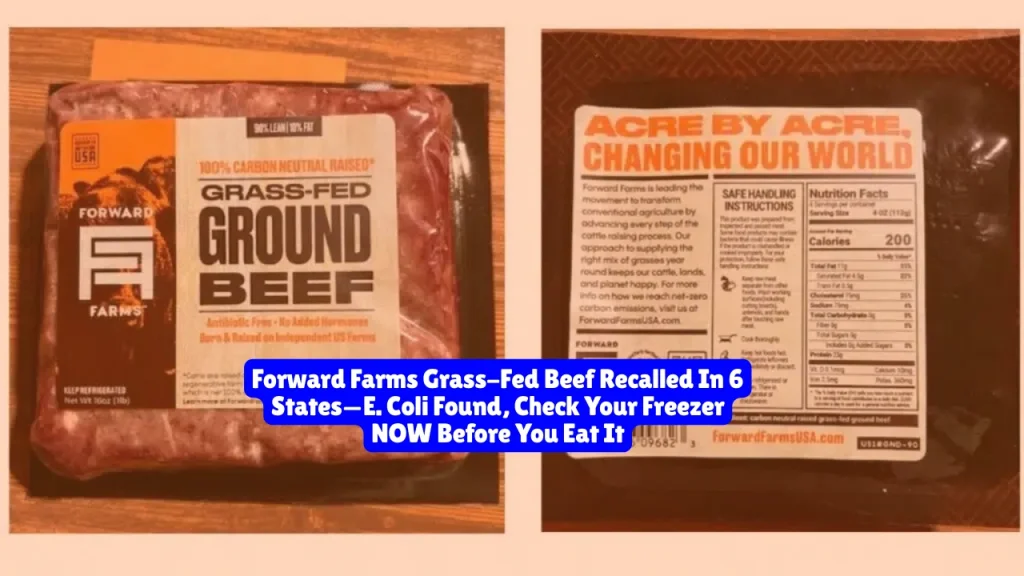
Mountain West Food Group recalled 2,855 pounds of Forward Farms grass-fed ground beef (16-oz vacuum-sealed packages with “USE OR FREEZE BY 01/13/26 EST 2083”) sold in California, Colorado, Idaho, Montana, Pennsylvania, and Washington due to E. coli O26 contamination. If you have this product, throw it away immediately or return it. Do not eat it—E. coli can cause severe illness requiring hospitalization, especially in young children and elderly adults.
Food recalls jumped 14% in 2025—and E. coli contamination remains one of the deadliest threats in America’s food supply. On December 27, 2025, the USDA announced that routine testing discovered E. coli O26 bacteria in Forward Farms beef produced just 11 days earlier. While no illnesses have been reported yet, this dangerous strain sends thousands to hospitals annually, with children under 5 facing the highest risk of life-threatening kidney failure.
What Products Are Recalled?
Product: Forward Farms Grass-Fed Ground Beef
Size: 16-ounce (1-lb.) vacuum-sealed packages
Date Code: “USE OR FREEZE BY 01/13/26 EST 2083” printed on packaging
Production Date: December 16, 2025
Establishment Number: “EST 2083” on the side of packaging
The beef was distributed to retailers in:
- California
- Colorado
- Idaho
- Montana
- Pennsylvania
- Washington
According to reports, affected products were shipped to retailers including Albertsons, Safeway, and Amazon, and could be available across the United States through these distribution channels.
Total recalled: 2,855 pounds
What Is E. Coli O26 and Why Is It Dangerous?
E. coli O26 is a Shiga toxin-producing strain of E. coli (STEC) that causes foodborne illness.
How you get infected: Eating undercooked contaminated beef or cross-contamination from raw meat to other foods, utensils, or surfaces.
Incubation period: Symptoms typically appear 2-8 days after exposure (average 3-4 days).
Common symptoms include:
- Severe stomach cramps
- Diarrhea (often bloody)
- Vomiting
- Low-grade fever (occasionally)
Most people recover within 5-7 days. But E. coli O26 can trigger a life-threatening complication called hemolytic uremic syndrome (HUS)—a form of kidney failure.
Who Is at Highest Risk?
While anyone can get E. coli infection, certain groups face increased risk of severe illness:
Children under 5 years old. Their immune systems are still developing, making them more vulnerable to HUS. Young children are at increased risk for infection and more likely to develop life-threatening hemolytic uremic syndrome.
Adults 65 and older. Age-related immune system decline increases infection severity.
Immunocompromised individuals. People with HIV, cancer, or taking immunosuppressive medications like chemotherapy or steroids face higher risk.
Pregnant women. While not at higher risk for E. coli, severe dehydration from diarrhea poses pregnancy complications.
Similar to recent product safety issues covered in our analysis of the Panera Charged Lemonade lawsuits, companies face increasing liability when contaminated or dangerous products reach consumers.
Related article: Rust-Oleum ‘2X Coverage’ Spray Paint Lawsuit, New $1B Claims Filed After Company Paid Only $3-$6 Per Person in 2017 Settlement
Warning Signs of Hemolytic Uremic Syndrome (HUS)
HUS is a medical emergency. Seek immediate medical care if you or a family member develops these symptoms after E. coli exposure:
- Little or no urination
- Losing pink color in cheeks and inside lower eyelids (paleness)
- Unexplained bruising or tiny red spots on skin
- Blood in urine
- Extreme fatigue or irritability
- Decreased awareness or alertness
HUS can lead to kidney failure, permanent health problems, and even death. According to Johns Hopkins Medicine, 3-5% of people who develop HUS die from this complication.
What to Do If You Have the Recalled Beef
Step 1: Check Your Refrigerator and Freezer Immediately
Look for:
- 16-oz vacuum-sealed packages
- “Forward Farms Grass-Fed Ground Beef” label
- “USE OR FREEZE BY 01/13/26” date code
- “EST 2083” establishment number
Step 2: Do Not Eat, Cook, or Taste the Product
Cooking to proper temperature (160°F internal) kills E. coli, but cross-contamination during handling poses serious risk. Don’t risk it.
Step 3: Dispose Safely or Return for Refund
Option A: Throw it away
- Place beef in sealed plastic bag
- Put in garbage can with secure lid
- Wash hands thoroughly with soap and hot water
Option B: Return to store
- Bring the product back to where you purchased it
- Request full refund
- No receipt required for recalled items
Step 4: Clean Contaminated Surfaces
If recalled beef touched your refrigerator, counters, cutting boards, or utensils:
- Wash with hot soapy water
- Sanitize with bleach solution (1 tablespoon bleach per gallon of water)
- Let air dry
If You Ate the Recalled Beef: What to Watch For
Monitor for symptoms 2-8 days after consumption:
Day 1-2: Often no symptoms yet
Day 3-4: Stomach cramps begin, followed by diarrhea
Day 5-7: Diarrhea may become bloody; vomiting increases
Day 8+: Most recover, but watch for HUS warning signs
When to seek medical care:
- Diarrhea lasting more than 3 days
- High fever (over 102°F)
- Bloody diarrhea
- Severe dehydration (dizziness, dry mouth, dark urine, no urination)
- Signs of HUS (listed above)
Critical: Do NOT take anti-diarrheal medication like Imodium or Pepto-Bismol if you suspect E. coli. Using anti-diarrheal medication with STEC infection can increase the chance of hemolytic uremic syndrome.
Do NOT request antibiotics. Studies show antibiotics may increase HUS risk with STEC infections.
How to Report Illness
If you became ill after eating Forward Farms beef, report it to:
USDA FSIS Meat and Poultry Hotline
Phone: 1-888-MPHotline (1-888-674-6854)
Email: [email protected]
Hours: Monday-Friday, 10 a.m. to 6 p.m. ET
Your State Health Department
Find contact info: CDC State Health Departments
CDC Foodborne Illness Reporting
Visit: CDC Foodborne Illness Complaint System
Reporting helps health officials track outbreaks and prevent additional illnesses.
Legal Rights: Product Liability for Contaminated Food
If you or a family member suffered E. coli illness from recalled beef, you may have legal claims for:
Medical expenses: Hospital bills, emergency room visits, doctor appointments, medications, diagnostic tests
Lost wages: Time missed from work due to illness or caring for sick family member
Pain and suffering: Physical pain, emotional distress, permanent health complications
In severe cases involving HUS:
- Long-term kidney damage requiring ongoing treatment
- Permanent disability
- Wrongful death (if fatal)
Product liability law holds manufacturers, distributors, and retailers accountable when contaminated food causes illness. You don’t need to prove negligence—only that:
- The product was defective (contaminated with E. coli)
- You consumed the product
- The product caused your illness and damages
Similar to cases covered in our analysis of McDonald’s hot coffee liability, food contamination cases often result in substantial settlements when serious injuries occur.
Previous Beef E. Coli Outbreaks and Settlements
E. coli contamination in beef is not new—and companies have paid significantly when outbreaks cause illness:
2018 Cargill E. coli O26 Outbreak: Ground beef recall after 18 people in 4 states became ill. Six hospitalized, one person developed HUS, and one death in Florida. Cargill recalled ground beef produced June 21, 2018.
Jack in the Box 1993 Outbreak: The deadliest E. coli outbreak in US history killed 4 children and sickened 732 people. Jack in the Box paid over $50 million in settlements.
Topps Meat 2007 Recall: 21.7 million pounds recalled—second-largest beef recall in US history. Company went out of business after the outbreak.
These cases demonstrate the serious financial and health consequences of contaminated beef reaching consumers.
How Mountain West Food Group Recall Happened
The USDA’s Food Safety and Inspection Service (FSIS) discovered the E. coli contamination during routine testing of raw ground beef samples.
Timeline:
- December 16, 2025: Forward Farms beef produced
- December 2025: FSIS conducts routine sampling
- December 27, 2025: Test results confirm E. coli O26 presence; recall announced
This proactive testing likely prevented widespread illness. Without routine FSIS testing, contaminated beef could have reached thousands of consumers before illnesses triggered an investigation.
Preventing E. Coli From Ground Beef
While recalls address contaminated products already distributed, consumers can protect themselves:
Cook ground beef to 160°F internal temperature. Use a food thermometer—don’t guess by color.
Prevent cross-contamination:
- Use separate cutting boards for raw meat
- Wash hands after touching raw beef
- Never place cooked food on plates that held raw meat
Refrigerate properly: Keep beef at 40°F or below; freeze at 0°F or below.
Don’t eat rare or medium-rare ground beef. Unlike steaks, bacteria can be mixed throughout ground meat.
FAQs
Can I still eat Forward Farms beef with different date codes?
Only beef with “USE OR FREEZE BY 01/13/26 EST 2083” is recalled. Other dates are safe unless additional recalls are announced.
Will cooking kill E. coli?
Yes, cooking to 160°F kills E. coli. But cross-contamination during handling poses risk. With recalled products, dispose rather than cook.
How long does E. coli survive on surfaces?
E. coli can survive on kitchen surfaces for hours to days. Clean and sanitize all surfaces that contacted recalled beef.
Are other Forward Farms products recalled?
No. Only the 16-oz grass-fed ground beef with the specific date code is affected.
What if I already ate it and feel fine?
Continue monitoring for symptoms up to 8 days after consumption. Most people who get sick develop symptoms within 3-4 days.
Can I sue if I haven’t gotten sick yet?
Generally no. Product liability claims require actual damages (medical expenses, lost wages, pain and suffering). Fear of future illness typically isn’t compensable without physical manifestation.
The Bottom Line
If you have Forward Farms Grass-Fed Ground Beef with “USE OR FREEZE BY 01/13/26 EST 2083,” throw it away or return it immediately. Do not eat it.
E. coli O26 causes serious illness, especially in young children, elderly adults, and immunocompromised individuals. While no illnesses have been reported yet, the bacteria’s presence in tested samples confirms contamination risk.
Monitor yourself and family members for symptoms if you consumed this product. Seek medical care for severe diarrhea, bloody stools, or signs of dehydration or HUS.
If you became ill from recalled beef, document your medical treatment and consider consulting a product liability attorney about your legal rights to compensation.
For questions: Call USDA FSIS at 1-888-674-6854 or visit FSIS.usda.gov/recalls
Disclaimer: This article provides general information about the Mountain West Food Group recall and food safety. It does not constitute medical or legal advice. For health concerns, consult your doctor. For legal questions about product liability claims, consult an attorney.
About the Author

Sarah Klein, JD, is a licensed attorney and legal content strategist with over 12 years of experience across civil, criminal, family, and regulatory law. At All About Lawyer, she covers a wide range of legal topics — from high-profile lawsuits and courtroom stories to state traffic laws and everyday legal questions — all with a focus on accuracy, clarity, and public understanding.
Her writing blends real legal insight with plain-English explanations, helping readers stay informed and legally aware.
Read more about Sarah