
Jake Claver Lawsuit, XRP Influencer Caught Creating Fake Websites and Forging Documents And What the Crypto CEO Admitted to in Court Settlement
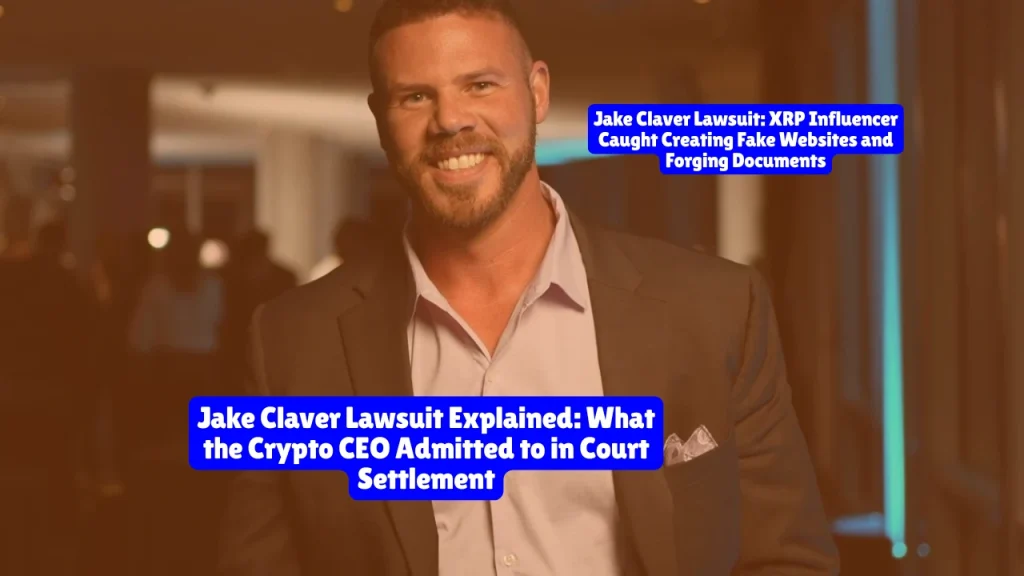
Crypto entrepreneur Jake Claver settled a federal trademark infringement lawsuit in February 2025 after admitting he created a fake website impersonating payment processor Verivend, fabricated wire transfer screenshots, and used forged materials to market his company Digital Ascension Group as a legitimate crypto operation. The case ended with a permanent injunction signed by Judge John L. Sinatra Jr., closing a legal chapter that raised questions about Claver’s business practices.
What Is the Jake Claver Lawsuit About?
Verivend Inc., a payment processing platform that helps businesses raise capital, filed the lawsuit on December 13, 2023, in the U.S. District Court for the Western District of New York.
The company accused Claver and his firm Digital Ascension Group LLC of trademark infringement under federal law—specifically 15 U.S.C. § 1114. But the allegations went far beyond simply using Verivend’s logo without permission.
According to court documents and stipulations, Claver orchestrated a scheme to mislead potential clients. He created a fake website designed to look like Verivend’s official site. He set up email addresses that appeared to come from Verivend. Then he used these fake materials to convince investors and business partners that his crypto ventures had processed significant transactions through Verivend’s legitimate platform.
The fabricated wire transfer screenshots were particularly damaging. These forged documents made it look like Digital Ascension had moved large sums through Verivend’s payment processing system, giving Claver’s operation an air of credibility it hadn’t earned.
The Specific Allegations Against Jake Claver
Court filings reveal three main components of Verivend’s case:
Fake Website Creation: Claver built a website that impersonated Verivend to deceive potential clients. The site was designed to look official, making visitors believe they were interacting with the legitimate payment processor.
Fabricated Wire Transfer Screenshots: Claver created fake screenshots showing wire transfers supposedly processed through Verivend. These forged documents falsely demonstrated that Digital Ascension was handling high-volume crypto transactions.
Marketing Fraud: Claver used these fake materials to market Digital Ascension Group as a legitimate, high-volume cryptocurrency firm. The forged Verivend connection gave his business an unearned reputation in the crypto industry.
The allegations painted a picture of deliberate deception designed to inflate Digital Ascension’s credibility and attract clients who believed they were working with a company connected to an established payment processor.
Who Is Jake Claver?
Jake Claver runs Digital Ascension Group, a Dallas-based family office he launched in 2022 with partner Max Avery. The company provides seed funding for early-stage ventures in fintech, direct-to-consumer brands, education, and gaming.
Claver also founded Digital Wealth Partners, which offers crypto custody and wealth management services. He’s become a prominent voice in the XRP community, having invested heavily in the cryptocurrency when it traded below thirty cents during a bear market.
His social media presence is substantial. On X (formerly Twitter), where he goes by the handle @beyond_broke, Claver has positioned himself as a crypto expert and made bold price predictions—including a controversial claim that XRP could hit $1,000 per token by the end of 2025.
That prediction drew criticism from other crypto analysts, including Levi Rietveld, who challenged Claver to a $1 million bet that XRP wouldn’t even reach $100 by year’s end. Claver declined the wager.
Related article: Kowalski Lawsuit, How Appeals Court Reversed $208M Netflix ‘Take Care of Maya’ Verdict
The Court Case Timeline
December 13, 2023: Verivend filed the lawsuit naming Claver and Digital Ascension Group as defendants
December 14, 2023: Verivend moved for expedited service and a temporary restraining order to immediately stop the alleged trademark infringement
December 18, 2023: The parties filed a stipulation for a preliminary injunction, suggesting Claver had agreed to some form of immediate relief
April 11, 2024: Claver and Digital Ascension Group filed their answer to the complaint
February 10, 2025: Judge John L. Sinatra Jr. signed a stipulated order for permanent injunction, resolving the case
The quick progression from preliminary injunction to permanent injunction within about 14 months suggests the parties worked toward settlement rather than fighting through discovery and trial.
What Claver Admitted
According to public statements and court records, Claver admitted fault in the matter.
Crypto analyst Levi Rietveld, who brought attention to the lawsuit in November 2025, noted that Claver had acknowledged his wrongdoing and settled the case outside of a full trial. The permanent injunction signed by the court in February 2025 effectively ended the litigation.
While the exact terms of the settlement aren’t fully public, the permanent injunction means Claver agreed to be bound by court-ordered restrictions going forward. Permanent injunctions typically prohibit the defendant from continuing the infringing activity and may include other conditions.
Claver has not publicly discussed the specifics of what he admitted or the terms of the settlement on his social media platforms, where he remains active discussing cryptocurrency and XRP price predictions.
What Is a Permanent Injunction?
The permanent injunction signed on February 10, 2025, is a court order that permanently prohibits Claver and Digital Ascension Group from engaging in the conduct that formed the basis of Verivend’s lawsuit.
Unlike a temporary restraining order or preliminary injunction (which last only until trial), a permanent injunction continues indefinitely. It’s enforceable as long as it remains in effect.
If Claver violates the terms of the permanent injunction, he could face contempt of court charges, which can result in fines or even jail time.
The stipulated nature of the injunction means both parties agreed to its terms rather than having the judge impose it after a trial. This typically happens when defendants want to avoid the risk and expense of litigation and plaintiffs want certainty that the infringing conduct will stop.
The Trademark Infringement Legal Basis
Verivend’s lawsuit was filed under 15 U.S.C. § 1114, the federal Lanham Act provision that prohibits trademark infringement.
To prove trademark infringement, Verivend had to show:
- It owns a valid trademark (the Verivend name and associated branding)
- Claver used that trademark (or something confusingly similar) in commerce
- The use was likely to cause confusion among consumers
The allegations that Claver created fake websites and email addresses using Verivend’s identity provided strong evidence of infringement. When someone creates materials designed to make people think they’re dealing with a legitimate company when they’re not, that’s textbook trademark infringement.
The fabricated wire transfer screenshots added another layer—they weren’t just using Verivend’s name, they were creating fake documentation that falsely showed a business relationship between Digital Ascension and Verivend.
Why This Matters for the Crypto Industry
The Jake Claver lawsuit highlights ongoing credibility issues in the cryptocurrency space.
Crypto remains a relatively new industry with fewer established guardrails than traditional finance. Bad actors can more easily fabricate credentials, inflate their track records, and mislead investors because the industry lacks the mature verification systems found in conventional financial services.
When someone like Claver—who has positioned himself as a thought leader in the XRP community—gets caught fabricating business relationships, it damages trust throughout the ecosystem.
Retail crypto investors often rely on influencers and self-proclaimed experts for guidance. If those figures are misrepresenting their credentials or creating fake documentation to appear more legitimate, investors can make decisions based on false information.
The case also shows why due diligence matters. Anyone considering working with a crypto firm should verify claims independently rather than taking marketing materials at face value.
The XRP Community Reaction
News of the Verivend lawsuit surfaced publicly in November 2025 when Levi Rietveld mentioned it while criticizing Claver’s XRP price predictions.
Rietveld argued that Claver’s legal history should concern people who trust him with investment advice or, potentially, their money through his wealth management services.
Some in the XRP community defended Claver, noting that he had settled the case and that civil litigation doesn’t necessarily indicate criminal wrongdoing. Others expressed concern that someone with a track record of fabricating business credentials was still actively promoting himself as a crypto expert.
Claver himself has not addressed the lawsuit details publicly on his social media platforms. He continues to post about XRP and cryptocurrency markets as if the Verivend matter never happened.
What Happened to Claver’s Bold XRP Prediction?
Claver’s claim that XRP could reach $1,000 by the end of 2025 became a flashpoint in the crypto community.
Levi Rietveld challenged him to put money behind the prediction, offering a $1 million bet that XRP wouldn’t even hit $100 by year’s end. Claver declined the wager.
As of early January 2026, XRP is trading around $2-3 per token—nowhere near Claver’s prediction.
The failed forecast, combined with the revelation of the Verivend lawsuit, damaged Claver’s credibility among skeptics in the crypto space. Supporters argue that price predictions are inherently speculative and that getting a forecast wrong doesn’t make someone a fraud.
Critics counter that making extreme predictions to build a following, then refusing to back those predictions with real money when challenged, suggests the forecasts are more about marketing than genuine analysis.
How the Case Compares to Other Crypto Legal Issues
The Claver lawsuit is relatively small compared to major crypto scandals like FTX’s collapse or the Terra-Luna crash.
Unlike Sam Bankman-Fried, who faces criminal fraud charges, Claver’s case was civil litigation over trademark infringement. No criminal charges have been filed against him related to the Verivend matter.
But the case fits a broader pattern of crypto firms and individuals inflating their credentials or misrepresenting their business relationships. The industry has seen numerous examples of:
- Fake partnerships announced to pump token prices
- Fabricated advisory board members
- Exaggerated transaction volumes
- Made-up institutional backing
Claver’s alleged conduct—creating fake websites and forged wire transfer screenshots—represents a more elaborate version of these credibility-inflation schemes.
What Should Investors Learn from This?
The Jake Claver lawsuit offers several lessons for anyone involved in cryptocurrency:
Verify Everything: Don’t take claims about business relationships or transaction volumes at face value. Check directly with the companies supposedly involved.
Question Bold Predictions: When crypto influencers make extreme price predictions, ask what analysis supports them and whether they’re willing to put real money behind their forecasts.
Research Legal Histories: Court records are public. Before trusting someone with investment advice or money, search PACER (Public Access to Court Electronic Records) to see if they’ve been sued.
Understand Settlement Doesn’t Mean Innocence: When someone settles a lawsuit, it doesn’t necessarily mean they’re guilty, but it also doesn’t mean they’re innocent. Evaluate the allegations and what was admitted.
Be Skeptical of Self-Proclaimed Experts: The crypto space is full of people who built their reputations on social media rather than through traditional credentials. That doesn’t automatically make them frauds, but it means you need to do extra due diligence.
Current Status and What’s Next
The permanent injunction signed on February 10, 2025, closed the Verivend v. Claver case.
As far as public records show, Claver faces no other pending litigation related to his crypto businesses. Digital Ascension Group and Digital Wealth Partners continue to operate.
Claver remains active on social media, posting about cryptocurrency markets and continuing to promote XRP as an investment. He has not publicly addressed the Verivend lawsuit or explained his side of what happened.
The case stands as a closed matter in federal court, but its implications for Claver’s reputation linger. Anyone considering working with Digital Ascension Group or Digital Wealth Partners now has access to public records showing he admitted to creating fake materials to inflate his business’s credibility.
Whether that history affects his ability to attract clients or maintain influence in the crypto community remains to be seen.
Frequently Asked Questions
Q: Was Jake Claver criminally charged?
A: No. The Verivend lawsuit was civil litigation, not a criminal case. Claver faces no criminal charges related to this matter.
Q: Did Jake Claver go to jail?
A: No. Civil lawsuits don’t result in jail time unless someone violates a court order. The case was resolved with a permanent injunction.
Q: What exactly did Jake Claver admit to?
A: According to court records and public statements, Claver admitted fault in creating fake materials that misrepresented his company’s relationship with Verivend. The specific admissions are detailed in court stipulations filed in the case.
Q: How much did Jake Claver have to pay Verivend?
A: The financial terms of the settlement have not been made public. Settlements often include confidentiality clauses that prevent parties from disclosing monetary amounts.
Q: Can Jake Claver still operate his crypto businesses?
A: Yes. The permanent injunction prohibits specific conduct related to misusing Verivend’s trademark, but it doesn’t prevent him from running Digital Ascension Group or Digital Wealth Partners.
Q: Is Digital Ascension Group legitimate?
A: The company is a registered business entity. The lawsuit alleged that Claver used fraudulent materials to market it, not that the company itself doesn’t exist or doesn’t engage in real business activities.
Q: Should I trust Jake Claver’s XRP price predictions?
A: That’s a personal decision. His $1,000 XRP prediction has proven wildly inaccurate so far, and he declined to bet money on even a $100 target. The Verivend lawsuit showed he previously fabricated credentials. Make your own informed decision about whose investment advice to follow.
Q: What is the case number if I want to look up the records?
A: Case No. 1:23-cv-01289, U.S. District Court for the Western District of New York. You can access court records through PACER at pacer.uscourts.gov (subscription required).
Q: Can Verivend sue Jake Claver again for the same conduct?
A: No. The permanent injunction and settlement resolve the claims in the lawsuit. If Claver violates the terms of the injunction, Verivend could seek contempt sanctions, but the original claims have been settled.
Q: How did this lawsuit become public knowledge?
A: Court filings are public records. Crypto analyst Levi Rietveld brought attention to the case in November 2025 when criticizing Claver’s XRP predictions and credibility.
The Bigger Picture: Trust in Crypto
The Jake Claver lawsuit is one data point in a larger story about credibility and trust in cryptocurrency.
The industry has struggled with bad actors since its inception. From outright Ponzi schemes to more subtle forms of misrepresentation, crypto’s relatively unregulated environment has made it easier for people to inflate their credentials and mislead investors.
Traditional finance has guardrails—licensing requirements, regulatory oversight, disclosure obligations—that don’t yet exist in many areas of crypto. That creates both opportunity and risk.
For legitimate entrepreneurs, it means they can move quickly and innovate without bureaucratic hurdles. For bad actors, it means they can operate longer before getting caught.
Claver’s case sits somewhere in the middle. He runs real businesses that provide actual services. But the allegations he settled suggest he was willing to fabricate credentials to attract clients.
Whether the crypto industry matures into something more trustworthy depends partly on whether participants demand accountability and whether regulators step in to establish clearer rules. Cases like Verivend v. Claver show why both internal ethics and external oversight matter.
This article provides information about the Jake Claver lawsuit based on public court records and news reports. The lawsuit was settled, and no court made findings of fact after a trial. For legal questions about your specific situation, consult with an attorney.
About the Author

Sarah Klein, JD, is a licensed attorney and legal content strategist with over 12 years of experience across civil, criminal, family, and regulatory law. At All About Lawyer, she covers a wide range of legal topics — from high-profile lawsuits and courtroom stories to state traffic laws and everyday legal questions — all with a focus on accuracy, clarity, and public understanding.
Her writing blends real legal insight with plain-English explanations, helping readers stay informed and legally aware.
Read more about Sarah