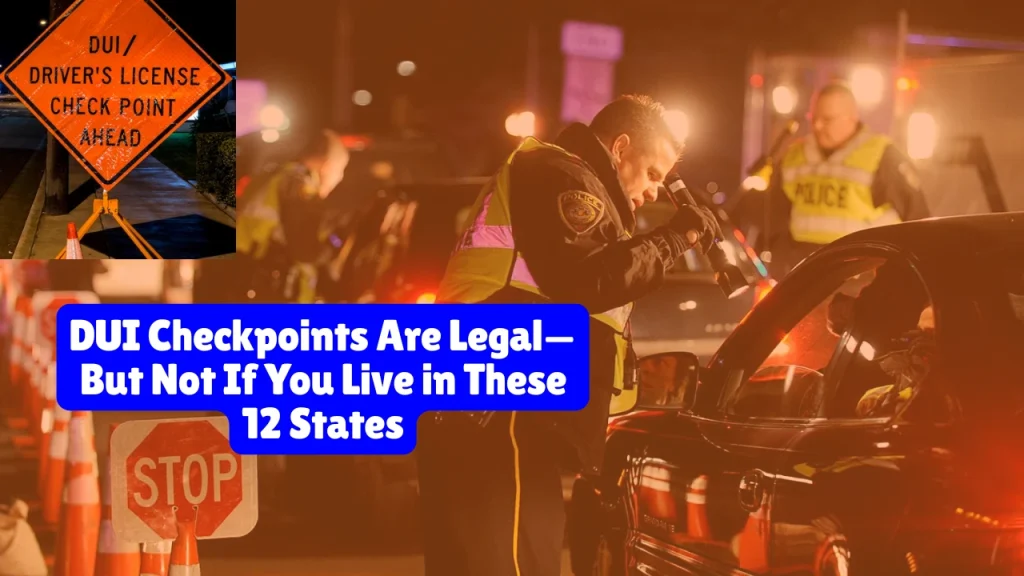
DUI Checkpoints Are Legal—But Not If You Live in These 12 States
DUI checkpoints are constitutional under the Fourth Amendment per the Supreme Court’s 1990 Michigan v. Sitz ruling. However, 12 states prohibit them: Texas, Michigan, Wisconsin, Rhode Island, Washington, Oregon, Idaho, Iowa, Minnesota, Montana, Wyoming, and Alaska. You must stop if you encounter a checkpoint, but you have rights.
The Supreme Court Ruling: Michigan v. Sitz (1990)
The U.S. Supreme Court ruled 6-3 that DUI checkpoints don’t violate the Fourth Amendment’s protection against unreasonable search and seizure.
Case Background: Michigan established a sobriety checkpoint pilot program in 1986. During one operation, 126 vehicles passed through, average delay was 25 seconds, and two drivers were arrested for DUI.
Licensed Michigan drivers sued the day before the checkpoint, claiming it violated their Fourth Amendment rights.
What the Court Decided: Chief Justice William Rehnquist applied a three-prong balancing test weighing:
- Gravity of public concern: State’s interest in preventing drunk driving
- Effectiveness of the checkpoint: Whether it actually reduces drunk driving
- Severity of intrusion: How much it interferes with individual liberty
The Court Found:
- States have a legitimate, substantial interest in preventing drunk driving
- Brief 25-second stops are minimal intrusions
- Neutral selection criteria (every vehicle stopped) prevents arbitrary enforcement
- Detection rate of 1.6% compared favorably to immigration checkpoints upheld in earlier cases
The Dissent: Justices Brennan and Marshall argued checkpoints constitute “suspicionless investigatory seizures” violating the Fourth Amendment because officers lack individualized suspicion before stopping drivers.
The Fourth Amendment Standard
Fourth Amendment Text: “The right of the people to be secure in their persons, houses, papers, and effects, against unreasonable searches and seizures, shall not be violated…”
What Constitutes a “Seizure”: Stopping your vehicle at a checkpoint is a seizure under the Fourth Amendment.
The Key Question: Is the seizure “reasonable”?
Supreme Court’s Answer: DUI checkpoints are reasonable when they meet specific requirements balancing public safety against individual liberty.
Related article: DUI Checkpoints Are Illegal in Texas—Here’s What Police Do Instead
What Makes a DUI Checkpoint Legal
For checkpoints to pass constitutional muster, law enforcement must follow strict guidelines:
Supervisory Approval: Checkpoints must be authorized and planned by supervising officers, not individual patrol officers deciding randomly.
Neutral Selection Criteria: Officers must use objective formulas like:
- Stop every vehicle
- Stop every third vehicle
- Stop every tenth vehicle
Officers cannot pick vehicles based on driver appearance, vehicle type, or subjective judgment.
Advance Public Notice: Departments must announce checkpoints ahead of time through:
- News media
- Social media
- Department websites
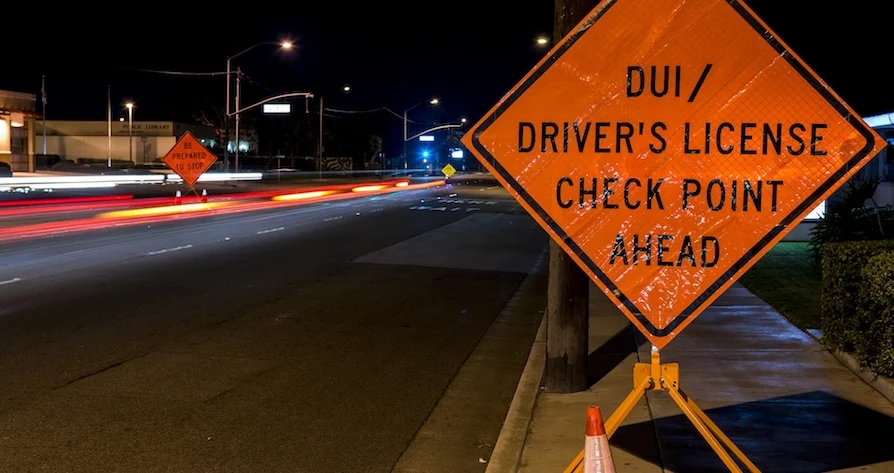
- Roadside signage approaching the checkpoint
Specific location typically isn’t disclosed, but advance notice of checkpoint operations is required.
Visible, Safe Location:
- Well-lit areas
- Clear signage
- Uniformed officers
- Marked police vehicles
- Traffic cones and warning lights
Minimal Intrusion: Stops must be brief—typically 1-3 minutes maximum unless officers develop reasonable suspicion of impairment.
Limited Scope: Primary purpose must be DUI enforcement, not general crime control. The Supreme Court ruled in City of Indianapolis v. Edmond (2000) that checkpoints for general “fishing expeditions” are unconstitutional.
12 States Where DUI Checkpoints Are Prohibited
Despite federal constitutional approval, these states ban checkpoints through state constitutions or statutes:
1. Texas Texas courts interpret the Fourth Amendment more strictly than the U.S. Supreme Court. State law considers checkpoints unreasonable seizures without probable cause. Article 1, Section 9 of the Texas Constitution prohibits them.
2. Michigan Ironically, the state where Sitz originated now prohibits checkpoints. After the U.S. Supreme Court ruling, Michigan’s Supreme Court held that checkpoints violate the state constitution’s protection against warrantless, suspicionless seizures.
3. Wisconsin State statute requires legislative authorization for checkpoints, which hasn’t been granted.
4. Rhode Island Similar to Wisconsin—requires statutory authority that doesn’t exist.
5. Washington State constitution interpreted to prohibit checkpoints without specific legislative authorization.
6. Oregon Same as Washington—prohibited without legislative approval.
7. Idaho State courts deemed checkpoints unconstitutional under Idaho’s constitution.
8. Iowa State constitutional protections interpreted to ban checkpoints.
9. Minnesota Courts ruled checkpoints violate Minnesota’s constitutional protections.
10. Montana State constitution provides broader protections than federal Fourth Amendment.
11. Wyoming State statute prohibits sobriety checkpoints.
12. Alaska Courts interpreted Alaska’s constitution to ban checkpoints.
Note: Some sources list Missouri as prohibiting checkpoints, but this varies by jurisdiction and recent rulings. Check local law.
38 States + DC Where Checkpoints Are Legal
If you don’t live in one of the 12 states above, DUI checkpoints are permitted in your state.
States with Special Requirements:
New Hampshire, South Carolina, Utah: Checkpoints require advance judicial approval before operation.
California: Strict advance notice requirements and supervisory oversight mandated by state law.
Your Rights at a DUI Checkpoint
What You MUST Provide:
- Driver’s license
- Vehicle registration
- Proof of insurance
Refusing these documents can result in arrest for failure to comply with lawful orders.
What You CAN Refuse:
Questions About Drinking: You have the right to remain silent under the Fifth Amendment. You’re not required to answer:
- “Have you been drinking?”
- “Where are you coming from?”
- “Where are you going?”
Polite response: “I’m exercising my right to remain silent. Am I free to go?”
Field Sobriety Tests: You can refuse roadside sobriety tests (walk-and-turn, one-leg stand, horizontal gaze nystagmus). These are voluntary.
Consequences of Refusal:
- Officer may develop reasonable suspicion based on other factors (odor, slurred speech, bloodshot eyes)
- May lead to arrest if officer has probable cause
- May result in longer detention
Preliminary Breathalyzer (PBT) at Checkpoint: In most states, you can refuse the portable breathalyzer at the checkpoint. This is different from post-arrest chemical testing.
Vehicle Search: Officers need your consent, probable cause, or a warrant to search your vehicle. You can refuse consent.
If officer says, “Do you mind if I search your vehicle?” you can respond: “I do not consent to searches.”
What Officers Can Legally Observe
Visual Observations:
- Bloodshot, watery eyes
- Flushed face
- Odor of alcohol
- Open containers
- Drug paraphernalia in plain view
Speech Patterns:
- Slurred speech
- Confused responses
- Inability to follow simple instructions
Motor Skills:
- Fumbling with license/registration
- Difficulty maintaining balance
- Unsteady movements
These observations can establish reasonable suspicion for further investigation.
Reasonable Suspicion vs. Probable Cause
Reasonable Suspicion: Specific, articulable facts suggesting criminal activity. Required to detain you beyond the initial brief stop.
Example: Odor of alcohol + slurred speech + fumbling with license = reasonable suspicion to conduct field sobriety tests.
Probable Cause: Higher standard. Facts and circumstances would lead a reasonable person to believe you committed a crime. Required for arrest.
Example: Failed field sobriety tests + strong alcohol odor + admission of drinking + erratic driving before checkpoint = probable cause for DUI arrest.
Can You Turn Around Before a Checkpoint?
Short Answer: Yes, if you do it legally.
Legal Considerations:
Lawful Turn: If you see a checkpoint ahead and legally turn around (using a driveway, side street, or U-turn where permitted), that alone doesn’t give officers reasonable suspicion to stop you.
Traffic Violations: If you commit a traffic violation while turning around (illegal U-turn, failure to signal, speeding), officers can stop you for that violation.
Evasive Behavior: If your turn appears evasive (sudden, erratic, unsafe), officers may develop reasonable suspicion to investigate.
What Happens If Stopped After Turning Around: Officer must articulate specific reasons for the stop beyond merely avoiding the checkpoint. Courts have generally held that avoiding a checkpoint alone isn’t reasonable suspicion.
What Happens If You Refuse to Stop
Consequences:
- Fleeing or eluding police is a serious criminal offense
- Officers will pursue
- Additional charges beyond DUI
- Potential felony charges
- Increased bail
- Mandatory jail time
- License suspension/revocation
Never flee a checkpoint. If you believe the checkpoint is illegal, comply and challenge it later in court.
Implied Consent Laws
Most states have “implied consent” laws: by driving on public roads, you’ve implicitly consented to chemical testing if arrested for DUI.
At the Checkpoint (Pre-Arrest): You can typically refuse preliminary breath tests without serious consequences.
After Arrest: Refusing chemical testing (blood, breath, or urine) triggers automatic penalties:
- Immediate license suspension (6-12 months typically)
- Enhanced penalties if convicted
- Refusal can be used against you in court
- Some states allow forced blood draws with a warrant
Key Distinction: Checkpoint breath test (pre-arrest) ≠ Post-arrest chemical test
Know your state’s specific implied consent law.
Illegal or Unconstitutional Checkpoints
Red Flags of Illegal Checkpoints:
No Advance Notice: Checkpoint wasn’t publicized ahead of time.
Random Selection: Officers picking vehicles arbitrarily rather than using neutral criteria.
No Supervisory Approval: Individual officers set up checkpoint without authorization.
Excessive Duration: Stops lasting 5-10+ minutes without reasonable suspicion.
Improper Location: Dangerous area, poor visibility, inadequate warning signs.
Primary Purpose Is General Crime Control: Checkpoint aimed at catching general criminals rather than DUI enforcement.
Lack of Proper Signage: No warning signs, unmarked vehicles, officers not in uniform.
What to Do If Your Rights Are Violated
During the Stop:
- Remain calm and polite
- State clearly: “I do not consent to this stop/search”
- Ask: “Am I being detained, or am I free to go?”
- Don’t argue, resist, or become combative
- Document everything you can remember
After the Stop:
- Write down everything immediately: time, location, officers’ names/badge numbers, what was said, what happened
- Take photos of the checkpoint location
- Gather witness contact information
- Get dashcam or police body camera footage (request through public records)
Legal Remedies:
Motion to Suppress: Your attorney can file a motion to suppress evidence obtained from an illegal stop. If granted, DUI charges may be dismissed.
Civil Rights Lawsuit: Under 42 U.S.C. § 1983, you can sue for constitutional violations.
Administrative Complaint: File complaints with:
- Police department’s internal affairs
- State attorney general
- ACLU
Consult a DUI Attorney: If arrested at a checkpoint, immediately contact a DUI defense attorney who can evaluate whether the checkpoint was legal and your rights were protected.
Recent Legal Developments (2026)
Technology Integration: More departments using passive alcohol sensors that detect alcohol vapor in vehicles without requiring drivers to blow into a device.
Constitutional Challenges: Civil liberties groups continue challenging checkpoint programs, particularly regarding:
- Data collection and retention
- Use of automated license plate readers at checkpoints
- Expansion beyond DUI enforcement
State-Specific Updates:
As of January 2026, no additional states have banned checkpoints, and no states that previously prohibited them have reversed course.
Federal Funding: National Highway Traffic Safety Administration (NHTSA) continues providing grants to states conducting checkpoint programs, incentivizing increased operations.
Real-World Example: Challenging an Illegal Checkpoint
California Case (2024): A driver challenged his DUI arrest after officers at a checkpoint stopped him based on the officer’s “hunch” rather than the department’s stated neutral selection criteria (every vehicle).
Outcome: Court suppressed evidence and dismissed charges, finding the stop violated the driver’s Fourth Amendment rights because officers deviated from the approved checkpoint plan.
Lesson: Even in states where checkpoints are legal, they must strictly follow constitutional requirements. Deviations can invalidate arrests.
Expert Legal Analysis
Constitutional Law Perspective:
Professor David Gray, University of Maryland: “The Supreme Court’s checkpoint jurisprudence creates a narrow exception to traditional Fourth Amendment requirements. The key is minimizing discretion and intrusion while maximizing public safety benefits.”
Criminal Defense Perspective:
Defense attorneys emphasize that many checkpoint arrests are vulnerable to challenge because:
- Departments fail to follow their own protocols
- Officers exceed the scope of brief investigatory stops
- Selection criteria aren’t truly neutral in practice
What Law Enforcement Says
National Highway Traffic Safety Administration (NHTSA):
Checkpoints are effective deterrents when:
- Highly visible
- Well-publicized
- Conducted frequently
- Combined with saturation patrols
Effectiveness Data: NHTSA reports checkpoints result in:
- 9% reduction in alcohol-related crashes in areas with regular checkpoints
- 20% reduction when combined with media campaigns
- Detection rate of 1-3% (1-3 DUI arrests per 100 vehicles stopped)
Practical Guidance for Drivers
If You Encounter a Checkpoint:
1. Stay Calm Don’t panic or make sudden movements.
2. Comply with Lawful Orders Stop when directed. Provide license, registration, insurance.
3. Be Polite Hostility escalates situations. Remain courteous.
4. Know What to Refuse You don’t have to answer questions, perform field sobriety tests, or submit to preliminary breath tests (in most states).
5. Don’t Incriminate Yourself Avoid statements like “I only had two beers.” Anything you say can be used against you.
6. Request an Attorney If arrested, immediately invoke your right to counsel.
7. Document Everything Mental notes of time, location, officers, what occurred.
Frequently Asked Questions
Are DUI checkpoints legal in my state?
Check the list of 12 states where they’re prohibited. If your state isn’t listed, checkpoints are legal when properly conducted.
Can I refuse to roll down my window at a checkpoint?
No. Refusing to roll down your window can be considered obstruction. Officers need to communicate with you to verify you’re not impaired.
What if I’m a passenger in a vehicle stopped at a checkpoint?
Passengers have the same rights as drivers regarding questions and searches. You don’t have to show ID unless you’re suspected of a crime.
Can officers search my vehicle at a checkpoint?
Not without your consent, probable cause, or a warrant. Refusing consent is your right.
What if I have a medical condition that affects field sobriety tests?
Inform officers of medical conditions. You can still refuse tests and request chemical testing instead.
Do I have to take a breath test at the checkpoint?
Preliminary breath tests at checkpoints are voluntary in most states (pre-arrest). Post-arrest chemical testing is typically mandatory under implied consent laws.
Can I record the checkpoint stop on my phone?
Yes. You have a First Amendment right to record police in public. Keep your phone visible, don’t interfere with the stop.
What if the checkpoint is in a state where they’re illegal?
Any arrest or evidence from an illegal checkpoint can be challenged and likely suppressed. Contact a DUI attorney immediately.
How long can officers detain me at a checkpoint?
Brief stops (1-3 minutes) are typical. Longer detention requires reasonable suspicion of impairment or other criminal activity.
What if I’m not drunk but arrested anyway?
Request chemical testing (blood or breath) to prove sobriety. You may be arrested based on officer observations, but testing can exonerate you.
Can checkpoints operate 24/7?
Legally yes, but most operate during high-risk times (nights, weekends, holidays) when drunk driving is more common.
What if I have prescription medication that might cause impairment?
Prescription drugs can still result in DUI if they impair driving. Inform officers and request blood testing to determine exact levels.
Key Takeaways
- DUI checkpoints are constitutional under federal law per Michigan v. Sitz (1990)
- 12 states prohibit checkpoints through state law or constitution
- 38 states + DC allow checkpoints when properly conducted
- You must stop and provide license, registration, insurance
- You can refuse to answer questions, perform field sobriety tests, and preliminary breath tests (pre-arrest)
- Turning around before a checkpoint is legal if done lawfully without traffic violations
- Implied consent laws apply post-arrest, not at checkpoints
- Checkpoints must follow strict guidelines: advance notice, neutral selection, minimal intrusion, supervisory approval
- Illegal checkpoints can be challenged through motions to suppress evidence
- Consult a DUI attorney if arrested at a checkpoint to evaluate whether your rights were violated
Bottom Line
DUI checkpoints walk a constitutional tightrope between public safety and individual liberty. The Supreme Court approved them under narrow circumstances, but states retain the power to provide greater protections.
If you live in one of the 12 states prohibiting checkpoints, you’ll never encounter one legally. In the other 38 states, know your rights: you must stop and provide identification, but you don’t have to incriminate yourself.
The best defense against DUI checkpoints remains simple: don’t drink and drive.
About the Author

Sarah Klein, JD, is a former criminal defense attorney with hands-on experience in cases involving DUIs, petty theft, assault, and false accusations. Through All About Lawyer, she now helps readers understand their legal rights, the criminal justice process, and how to protect themselves when facing charges.
Read more about Sarah