
Michael Jordan NASCAR Settlement Amount, Michael Jordan Just Beat NASCAR—Here’s What the Settlement Means
Michael Jordan’s 23XI Racing and Front Row Motorsports settled their antitrust lawsuit against NASCAR on December 11, 2025. NASCAR agreed to make team charters permanent for all 36 teams—exactly what Jordan wanted. Financial terms weren’t disclosed, but an economist testified NASCAR owed the teams $364.7 million in damages. Both teams got their six charters back for 2026.
The Day MJ Stood Up to NASCAR
December 11, 2025. A federal courthouse in Charlotte, North Carolina.
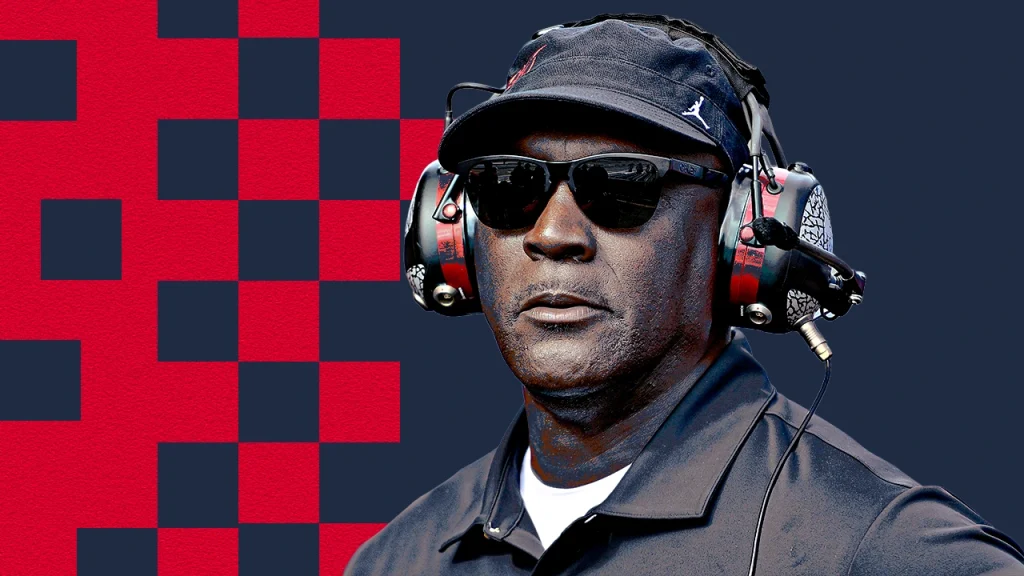
Michael Jordan and NASCAR chairman Jim France walked out together, standing side-by-side like old friends on the courthouse steps.
Just minutes earlier, they’d been on opposite sides of a brutal legal fight that lasted over a year. Now they were smiling, surrounded by lawyers, celebrating a settlement that changed NASCAR forever.
Jordan had just done what other team owners were too scared to do—he challenged the France family, NASCAR’s founding family, and won.
What This Whole Fight Was About
Here’s the simple version: NASCAR has something called “charters.” Think of them like franchises in the NFL or NBA.
If you have a charter, your team gets:
- A guaranteed spot in every Cup Series race
- A share of the revenue (about $12-13 million per car annually)
- More stability to attract sponsors and investors
Sounds great, right? Except there was a catch.
NASCAR could take those charters away. They weren’t permanent. They expired when NASCAR’s media deals expired, forcing teams to renegotiate every few years with zero leverage.
Team owners hated this. They couldn’t build long-term value. They couldn’t sell their teams for what they were really worth. They felt trapped.
Related article: Patriots Star Stefon Diggs Hit With Felony Charges Accused of ‘Slapping And Choking Out his Female Chef’ His Lawyers Are Already Working on a Settlement
The “Take It or Leave It” Moment
September 2024. NASCAR dropped a 112-page charter agreement on team owners’ desks.
“Sign this by the end of the day,” NASCAR basically said. “This is our final offer. Take it or leave it.”
Thirteen of the fifteen teams signed. They felt they had no choice.
Two teams refused: Michael Jordan’s 23XI Racing and Front Row Motorsports.
Both teams said a loss in the case would have put them out of business.
Jordan wasn’t backing down. He’d invested millions into his team. He’d even paid $28 million for a third charter from the now-defunct Stewart-Haas Racing, hoping to expand.
But he wasn’t willing to accept what he saw as an unfair deal.
Why Jordan Wasn’t Afraid
Most team owners were terrified to challenge NASCAR. Some had been in the sport for decades and watched the France family run things their way.
But Jordan? He was different.
“I wasn’t afraid,” he told the jury during the trial. “I felt I could challenge NASCAR as a whole.”
Jordan said they didn’t sign the charter agreement because he didn’t feel it was economically viable, the release clause not to sue NASCAR and the ultimatum that was given in September 2024 to sign the deal.
Jordan had Denny Hamlin—a three-time Daytona 500 winner and current Cup Series driver—as his co-owner. Together with Curtis Polk, Jordan’s longtime business manager, they felt they had the power to fight.
So they sued NASCAR for antitrust violations. Front Row Motorsports joined them.
Racing Without Charters (And Risking Everything)
Because they didn’t sign the agreement, Jordan and Front Row lost their charters for the 2025 season.
They raced as “open” teams—meaning no guaranteed spots, less money, and way more uncertainty.
It was a massive gamble. If they lost the lawsuit, both teams would’ve shut down.
But Jordan believed it was worth the risk. Not just for himself, but for every team in NASCAR.
The Trial That Changed Everything
The trial started December 1, 2025. It was supposed to last weeks.
Eight days in, NASCAR knew they were losing.
The testimony wasn’t going well for them. An economist told the jury NASCAR owed 23XI and Front Row $364.7 million in damages. Worse, NASCAR shorted 36 chartered teams $1.06 billion from 2021-24.
Team owners like Richard Childress gave emotional testimony about how unfair the system was. Letters from Hall of Fame owners Joe Gibbs, Rick Hendrick, Jack Roush, and Roger Penske were shown to the jury—all of them begging the France family to make charters permanent.
Even NASCAR President Steve O’Donnell was caught calling legendary owner Richard Childress a “stupid redneck” in internal communications.
By the time NASCAR started presenting its defense, they seemed more focused on reducing potential damages than proving they’d done nothing wrong.
The Settlement Nobody Expected
December 11, 2025—the ninth day of the trial.
Judge Kenneth Bell called an hour-long sidebar. Nobody knew what was happening.
Then Jeffrey Kessler, the teams’ attorney, emerged and said two words: “We’re ready.”
They’d reached a settlement.
The deal gave the teams everything they wanted:
- Permanent “evergreen” charters for all 36 Cup Series teams
- 23XI and Front Row got their six charters back for 2026
- A new revenue-sharing model (specific terms weren’t disclosed)
- The ability for teams to finally build long-term equity
Financial details were kept confidential, but remember—an economist had testified NASCAR owed over $300 million in damages.
What Jordan Said Outside the Courthouse
“Like two competitors, obviously we tried to get as much done in each other’s favor,” Jordan said, towering over France, 81.
Jordan didn’t gloat. He didn’t spike the football.
Instead, he talked about growing the sport together.
“I grew up watching [Jim’s] father build this sport,” Jordan said. “I didn’t want to have to tear it down. I don’t think he wanted it to be tore down.”
He acknowledged it took 16 months of fighting to get there, but said it was worth it.
Denny Hamlin was more blunt: “Everything within the settlement is going to grow the sport. It’s going to be better for everyone. There’s no doubt about it.”
What This Means for NASCAR Teams
This is huge. Let me break it down:
Before the settlement:
- Teams had no long-term security
- Charters could be taken away when media deals expired
- Team owners couldn’t build real equity
- NASCAR had all the power in negotiations
After the settlement:
- Charters are now permanent (with some conditions)
- Teams can finally build long-term value
- Owners can sell their teams for what they’re actually worth
- Teams have a stronger voice in NASCAR’s future decisions
Think about it this way: Would you invest millions in a business where someone could yank your license away every few years? Of course not.
Now NASCAR teams finally have the stability other professional sports franchises have had for decades.
Who Really Won Here?
Jordan won. No question about it.
He got permanent charters—the main goal of the lawsuit. He got his team’s charters back. And he forced NASCAR to change a system that had frustrated owners for years.
But NASCAR also won in a way. They avoided potentially hundreds of millions in damages if the jury had ruled against them. They stopped embarrassing internal documents from coming out during more weeks of testimony. And they can now move forward without a bitter lawsuit hanging over them.
The real winners? All 36 charter teams. They now have the long-term stability they’ve been begging for.
What Happens Now?
NASCAR is issuing amended charter agreements to all teams with the new “evergreen” terms.
23XI Racing and Front Row Motorsports will officially get their charters back for the 2026 season.
The revenue-sharing model is being updated, though the exact details haven’t been made public yet.
And NASCAR can finally move on from one of the most bruising legal fights in its history.
Is There a Settlement Payout?
This settlement is different—it’s not about individual fans getting money. It’s about NASCAR teams getting fair treatment.
The financial terms of the settlement are confidential. We don’t know if NASCAR paid damages to 23XI and Front Row or what the exact payout was.
What we do know:
- An economist testified NASCAR owed the two teams $364.7 million in damages
- NASCAR also allegedly shorted all 36 charter teams over $1 billion from 2021-2024
- The settlement terms were kept private
There’s no claims process for fans or consumers. This was a business dispute between race teams and NASCAR about how the sport operates, not a consumer class action.
If you’re a NASCAR fan, the settlement means you’ll continue seeing great racing with more stable teams that can invest in the future.
The Bigger Picture
This lawsuit was never just about money. It was about power.
For decades, the France family ran NASCAR as a private family business. Team owners had to accept whatever terms they were given.
Michael Jordan—one of the greatest competitors in sports history—wasn’t okay with that.
He took on NASCAR, risked his entire team, sat through days of trial testimony, and forced the France family to negotiate as equals.
In doing so, he didn’t just help his own team. He helped every team in NASCAR.
As Judge Kenneth Bell said in court: “I believe this is great for NASCAR. Great for the future of NASCAR. Great for the entity of NASCAR. Great for the teams and ultimately great for the fans.”
Jordan proved that even in NASCAR’s world, sometimes you have to challenge the old way of doing things to move forward.
And once again, MJ came out on top.
Want to Follow This Story?
The case was filed as 23XI Racing LLC et al. v. NASCAR et al., Case No. 1:24-cv-00870 in the U.S. District Court for the Western District of North Carolina.
For more information on sports law and antitrust cases, check our related articles on AllAboutLawyer.com.
About the Author

Sarah Klein, JD, is a licensed attorney and legal content strategist with over 12 years of experience across civil, criminal, family, and regulatory law. At All About Lawyer, she covers a wide range of legal topics — from high-profile lawsuits and courtroom stories to state traffic laws and everyday legal questions — all with a focus on accuracy, clarity, and public understanding.
Her writing blends real legal insight with plain-English explanations, helping readers stay informed and legally aware.
Read more about Sarah