
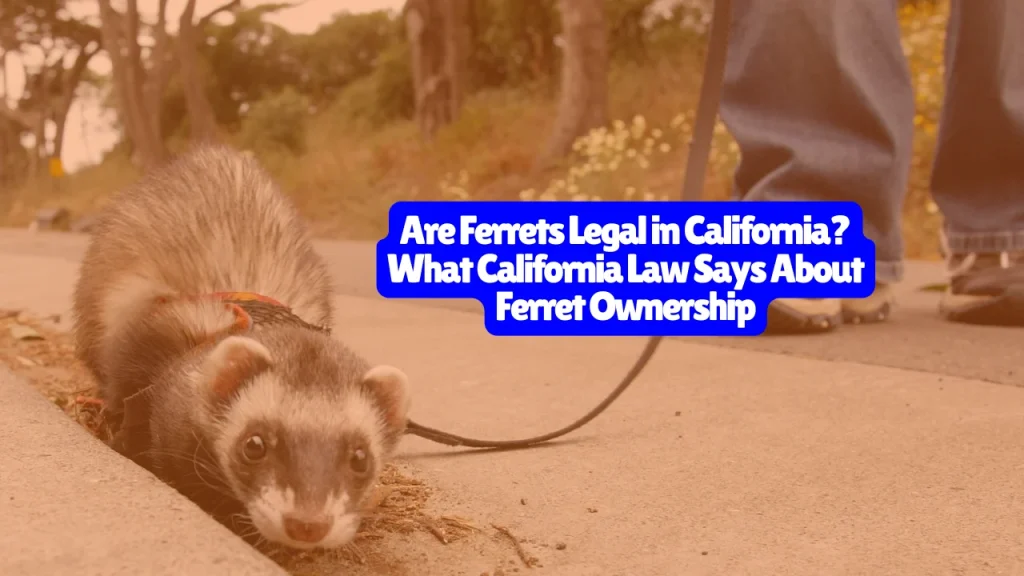
Are Ferrets Legal in California? What California Law Says About Ferret Ownership
Ferrets are illegal to own in California. California Fish and Game Code Section 2118 explicitly bans ferret possession without a permit, and the California Department of Fish and Wildlife does not issue permits for pet ownership. Violators face fines up to $1,000, criminal charges, and immediate animal confiscation.
What California Law Says About Ferret Ownership
California Fish and Game Code Section 2118 makes it unlawful to import, transport, or possess ferrets without a permit from the California Department of Fish and Wildlife.
The law treats ferrets as restricted species due to concerns about:
- Potential establishment of feral populations
- Threats to native wildlife and birds
- Agricultural damage risks
- Public safety concerns
The California Department of Fish and Wildlife maintains strict enforcement of this ban and has not issued permits for personal pet ownership since the regulation took effect.
Why Are Ferrets Banned in California?
California’s ferret ban stems from ecological and agricultural concerns dating back decades.
Wildlife Protection Concerns
State officials worry that escaped or released ferrets could establish breeding populations in California’s climate. Ferrets are skilled predators that could threaten ground-nesting birds, small mammals, and endangered species like the California least tern.
Agricultural Industry Interests
California’s powerful agricultural lobby has historically opposed ferret legalization. Concerns include potential damage to chicken farms, vineyards, and other agricultural operations if feral ferret colonies develop.
Comparison to Wild Mustelids
California already faces challenges with feral populations of similar species. The state’s experience with invasive species influences its cautious approach to ferrets, despite their domestic breeding history spanning centuries.
Are There Any Exceptions or Permits for Ferret Ownership in California?
California law technically allows permits under Fish and Game Code Section 2118, but the California Department of Fish and Wildlife does not grant them for pet ownership.
Permits are only issued to:
- Licensed research facilities conducting scientific studies
- Zoos and educational institutions with proper credentials
- Wildlife rehabilitation centers for temporary care of sick or injured ferrets before relocation
Regular California residents cannot obtain permits for pet ferrets under any circumstances. The application process exists only for institutional purposes.
Some Californians mistakenly believe obtaining a special license or demonstrating responsible ownership qualifies them for exceptions. This is incorrect—no pathway exists for legal personal ferret ownership in California.
Related article: Is Dumpster Diving Legal in California? What California Law Says About Salvaging Discarded Items
Penalties for Owning a Ferret Illegally in California
California enforces its ferret ban with significant consequences.
Criminal Penalties Include:
- Misdemeanor charges for possession
- Fines up to $1,000 per ferret
- Additional fines for breeding or selling ferrets
- Potential jail time for repeat offenses or commercial breeding operations
Administrative Actions:
- Immediate animal confiscation
- Owners must pay costs for ferret care and relocation to legal states
- Prohibited from obtaining future exotic animal permits
- Potential additional charges if ferrets caused property damage or wildlife harm
Real Enforcement Cases:
In 2023, San Diego County animal control seized 12 ferrets from a breeding operation. The owner faced $8,000 in fines plus criminal charges. The ferrets were relocated to a Nevada rescue organization at the owner’s expense.
A Los Angeles resident posting ferret videos on social media in 2024 received an anonymous tip complaint. Animal control confiscated two ferrets, issued a $1,500 fine, and the owner faced misdemeanor charges.
These cases show that enforcement happens through neighbor complaints, veterinary reports, and social media monitoring.
How California Enforces the Ferret Ban
California Department of Fish and Wildlife officers and local animal control agencies share enforcement responsibilities.
Enforcement typically occurs when:
- Neighbors report suspected ferret ownership
- Veterinarians report treating ferrets (they’re legally required to report illegal exotic pets)
- Social media posts reveal California residents with ferrets
- Border inspections catch people bringing ferrets into California
- Routine inspections of pet stores or breeding facilities uncover illegal animals
The Investigation Process:
Animal control or fish and wildlife officers investigate reports. If they confirm illegal ferret possession, they issue citations and confiscate the animals immediately.
Owners cannot reclaim confiscated ferrets. The animals are typically transferred to rescue organizations in states where ferrets are legal, like Nevada or Oregon.
Officers may pursue criminal charges depending on circumstances. Large-scale breeding operations or repeat offenders face more serious consequences than first-time pet owners.
Legislative Efforts to Legalize Ferrets in California
Multiple attempts to overturn California’s ferret ban have failed over the past three decades.
Notable Legislative Attempts:
1994: Assembly Bill 363 sought to legalize ferrets but died in committee after agricultural interests opposed it.
1996: Another legalization bill failed following California Department of Fish and Wildlife testimony about ecological risks.
2004: Assembly Bill 2141 proposed creating a ferret ownership licensing system. The bill passed the Assembly but failed in the Senate after intense lobbying from agricultural groups and wildlife advocates.
2015: A petition gathered over 30,000 signatures urging the legislature to reconsider the ban. No resulting legislation emerged.
2025 Status:
No active legislation currently proposes legalizing ferrets in California. Advocacy groups continue pushing for change, but political will remains limited.
What Ferret Advocacy Groups Say
Organizations like Californians for Ferret Legalization argue the ban is outdated.
Their Arguments Include:
- Ferrets have been domesticated for over 2,000 years and cannot survive in the wild
- Millions of ferrets live as pets in 48 other US states without establishing feral populations
- Modern spaying/neutering practices eliminate reproduction concerns
- The ban forces responsible pet owners to either surrender beloved pets or break the law
The American Ferret Association has lobbied California legislators for decades, emphasizing ferrets’ safety record in other states.
What California Wildlife Officials Say
The California Department of Fish and Wildlife maintains its opposition to legalization.
Their Position:
Even domesticated ferrets retain predatory instincts. California’s mild climate could support feral populations if escaped ferrets breed. The state cannot risk introducing another invasive species given existing challenges with feral cats, wild pigs, and other non-native animals.
Agricultural interests align with wildlife officials. The California Farm Bureau Federation consistently opposes ferret legalization bills, citing potential agricultural impacts.
Comparing California’s Ferret Ban to Other States
Only two US jurisdictions completely ban ferret ownership: California and Hawaii.
Hawaii’s Ban:
Hawaii prohibits ferrets for similar reasons—island ecosystem protection and agricultural concerns. Hawaii’s isolation makes it even more vulnerable to invasive species establishment.
New York City Ban:
New York City (not the entire state) banned ferrets until 2015, when the city council lifted the restriction after determining ferrets posed minimal public health risks.
Other States:
The remaining 48 states allow ferret ownership, though some require rabies vaccinations or breeder licenses. No other mainland state maintains California’s strict prohibition.
This makes California an outlier nationally. Ferret advocates point to this as evidence the ban is unnecessarily restrictive.
Other Exotic Pets Banned in California
California maintains one of the nation’s most restrictive exotic pet laws.
Other banned animals include:
- Hedgehogs
- Gerbils
- Quaker parakeets (monk parakeets)
- Most reptiles over eight feet long
- Sloths
- Monkeys (with limited exceptions)
- Large carnivores (lions, tigers, bears)
California’s approach reflects a precautionary principle—ban first, permit only with compelling justification. This contrasts with states that allow exotic pets unless specific problems arise.
What California Residents Actually Do
Despite the ban, some California residents illegally own ferrets.
Underground Ownership:
Estimates suggest thousands of ferrets live in California illegally. Owners obtain them through:
- Friends or family in neighboring states
- Underground breeders operating covertly
- Online sales and private transactions
- Bringing them when moving from legal states
Risks of Illegal Ownership:
Beyond legal penalties, illegal ferret owners face practical challenges:
- Cannot take ferrets to California veterinarians without risking reports
- Must hide ownership from neighbors and landlords
- Cannot travel with ferrets or board them legally
- Risk losing pets during any law enforcement encounter
Some California ferret owners drive to Nevada or Arizona veterinarians for care, adding significant expense and logistical challenges.
Legal Alternatives for California Ferret Enthusiasts
People who want ferrets have limited options.
Move to a Different State:
This is the only way to legally own a ferret while living in your home. Nevada, Oregon, and Arizona border California and all allow ferret ownership.
Volunteer at Facilities with Ferrets:
Some California zoos and educational institutions keep ferrets legally. Volunteering provides interaction opportunities without ownership.
Foster Ferrets Temporarily:
Licensed rescue organizations occasionally need temporary California-based foster homes for ferrets in transit to permanent homes in legal states. This requires special permits and coordination with wildlife authorities.
Advocacy Work:
Join organizations pushing for legalization. While success seems unlikely short-term, sustained advocacy could eventually change California law.
Could California’s Ferret Ban Change?
Political realities suggest the ban will remain for the foreseeable future.
Obstacles to Legalization:
California’s agricultural lobby wields significant influence in Sacramento. Without their support, ferret legalization bills struggle to advance.
Environmental groups generally oppose introducing new species, even domesticated ones. Their concerns about California’s biodiversity carry political weight.
The California Department of Fish and Wildlife has institutional opposition to the change. Overcoming agency resistance requires strong legislative leadership.
Possible Pathways Forward:
A pilot program allowing ferret ownership in specific counties could test concerns. If no feral populations establish after several years, statewide legalization might gain traction.
Improved data from other states demonstrating ferrets pose minimal risks could shift political calculations.
Economic arguments about pet industry revenue and tourism might appeal to legislators focused on California’s budget challenges.
However, none of these approaches have generated serious legislative momentum as of 2025.
Practical Advice for California Residents
If you’re considering ferret ownership in California, understand the risks.
Don’t Break the Law:
Illegal ferret ownership exposes you to criminal charges, fines, and losing your pet. The emotional and financial costs outweigh any benefits.
Research Before Moving:
If you own ferrets legally in another state and plan to move to California, arrange for rehoming before relocating. Bringing ferrets to California violates state law.
Consider Legal Alternatives:
Many legal pets offer similar companionship. Rats, guinea pigs, and rabbits are legal in California and share some traits with ferrets.
Support Legislative Change:
Contact your California state legislators expressing support for ferret legalization. Political pressure from constituents can influence future bills.
Stay Informed:
Monitor California legislature websites for proposed bills affecting exotic pet ownership. Early advocacy during the bill drafting process is most effective.
FAQ About Ferret Legality in California
Are ferrets illegal in all of California?
Yes. The ban applies statewide to all California counties and cities. No California jurisdiction allows private ferret ownership.
Can I get a permit to own a ferret in California?
No. The California Department of Fish and Wildlife does not issue permits for personal pet ownership. Permits exist only for research facilities, zoos, and educational institutions.
What happens if I bring my ferret when visiting California?
Bringing a ferret into California, even temporarily, violates state law. You risk confiscation, fines, and criminal charges. Leave your ferret in a legal state or don’t travel to California with them.
Can California veterinarians treat ferrets?
Veterinarians are legally required to report exotic animals that are illegal to own. Most California vets refuse to treat ferrets to avoid liability. Some may report owners to authorities.
Why doesn’t California’s ferret ban violate property rights?
States have broad authority to regulate animal ownership under their police powers. Courts have consistently upheld exotic pet bans as legitimate exercises of state authority to protect public health, safety, and welfare.
Has anyone successfully challenged California’s ferret ban in court?
No successful legal challenges have occurred. Courts defer to state wildlife agencies’ expertise on ecological risks. Without evidence of arbitrary or discriminatory enforcement, bans typically survive constitutional challenges.
Are there more California residents with illegal ferrets or legal compliance?
Precise numbers are unknown. Advocacy groups estimate thousands of illegal ferret owners exist in California, but this represents a tiny fraction of the state’s population. Most California residents comply with the ban.
What should I do if I find a ferret in California?
Contact local animal control or the California Department of Fish and Wildlife. Do not attempt to keep or rehome the ferret yourself, as this violates state law.
Do police actively search for illegal ferret owners?
No. Enforcement is complaint-driven. Police don’t conduct proactive searches for ferrets, but they will investigate reports and seize illegal animals when discovered.
Could California legalize ferrets in the next few years?
Unlikely. No active legislation proposes legalization as of 2025, and political obstacles remain significant. Advocacy continues, but near-term change seems improbable.
Understanding California’s Broader Exotic Pet Regulatory Approach
California’s ferret ban reflects the state’s general philosophy toward exotic pet ownership.
The state takes a precautionary approach—restricting animals unless proven safe rather than allowing them unless problems arise. This contrasts with more permissive states.
California’s ecological diversity and agricultural importance drive conservative wildlife policies. The state faces constant challenges from invasive species. Officials prefer avoiding new risks rather than responding after problems develop.
This regulatory framework frustrates exotic pet enthusiasts but aligns with California’s broader environmental protection priorities. Whether this approach serves the public interest remains politically contested.
Final Considerations for Prospective Ferret Owners
California’s ferret ban creates a clear choice—comply with the law or risk serious consequences.
The legal landscape shows no signs of changing soon. Political, agricultural, and environmental interests align against legalization.
For California residents passionate about ferrets, moving to neighboring states offers the only realistic path to legal ownership.
Those considering illegal ownership should carefully weigh risks. Criminal charges, fines, and losing beloved pets create significant hardship.
Ultimately, California’s ferret ban demonstrates how state wildlife policies can diverge sharply from national norms. Understanding these legal realities helps prospective pet owners make informed decisions about whether ferret ownership is possible within their circumstances.
About the Author

Sarah Klein, JD, is a licensed attorney and legal content strategist with over 12 years of experience across civil, criminal, family, and regulatory law. At All About Lawyer, she covers a wide range of legal topics — from high-profile lawsuits and courtroom stories to state traffic laws and everyday legal questions — all with a focus on accuracy, clarity, and public understanding.
Her writing blends real legal insight with plain-English explanations, helping readers stay informed and legally aware.
Read more about Sarah