
Los Angeles Jury Orders Johnson & Johnson to Pay $40 Million Over Talc Cancer Claims
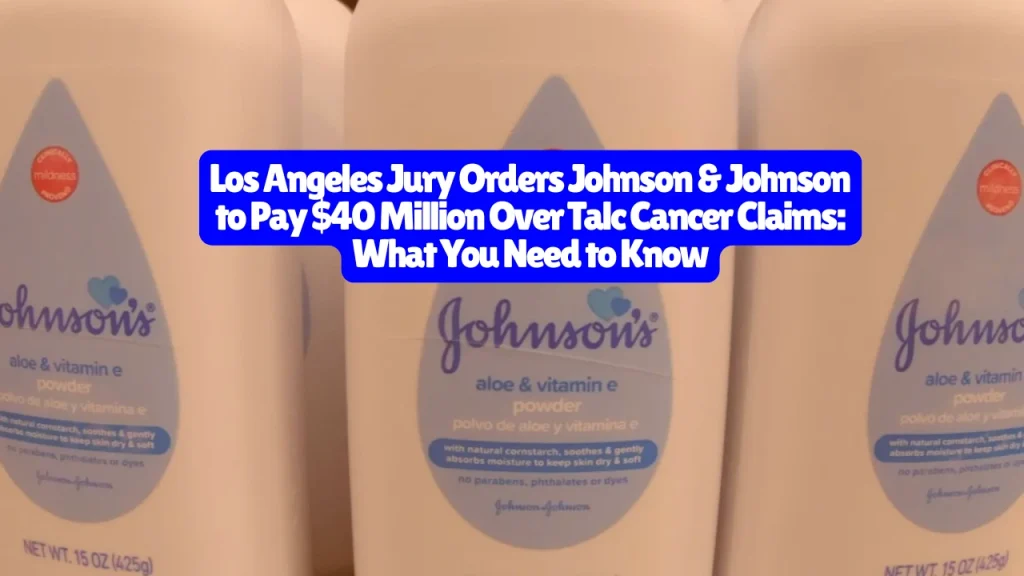
A Los Angeles Superior Court jury ordered Johnson & Johnson to pay $40 million to two California women who developed ovarian cancer after decades of using the company’s talc-based baby powder products. The jury found the company liable for negligence, failure to warn, and fraudulent misrepresentation in a verdict delivered December 12, 2025.
What Did the Los Angeles Jury Rule?
The jury awarded $18 million to Monica Kent and $22 million to Deborah Schultz and her husband after finding that Johnson & Johnson knew for years its talc-based products were dangerous but failed to warn consumers. The verdict was entirely compensatory damages with no punitive damages awarded.
The cases—Monica Kent v. Johnson & Johnson et al., Case No. 17CV318672, and Deborah Schultz et al. v. Johnson & Johnson et al., Case No. 20CV0476—were consolidated under California State Court Coordinated Proceeding JCCP No. 4872, Johnson & Johnson Talcum Powder Cases.
Who Are the Plaintiffs?
Monica Kent was diagnosed with ovarian cancer in 2014. She is a California resident who used Johnson & Johnson’s baby powder after bathing for approximately 40 years.
Deborah Schultz was diagnosed with ovarian cancer in 2018. She and her husband, Dr. Albert Schultz, are California residents. Like Kent, Schultz used the talc-based products for about 40 years.
Both women developed cancer after long-term genital use of Johnson’s Baby Powder and Shower to Shower products.
What Products Are Involved?
The lawsuit centered on two specific talc-based products:
- Johnson’s Baby Powder (talc-based formula)
- Shower to Shower body powder
Johnson & Johnson stopped selling talc-based baby powder in the United States and Canada in 2020, switching to cornstarch-based alternatives. The company globally discontinued all talc products in 2023.
The company claims the decision was commercial, not safety-related, but plaintiffs argue the timing proves safety concerns drove the change.
Related article: 80 Roblox Child Sex Abuse Lawsuits Just Got Consolidated—What Parents Need to Know Before Their Kids Log On Tonight
What Evidence Did the Jury Consider?
The six-week trial featured powerful testimony and internal company documents.
Expert Testimony
Former U.S. Food and Drug Administration Commissioner Dr. David Kessler testified that Johnson & Johnson’s concealment of asbestos evidence spanned more than five decades. Referring to internal documents dating back to the 1970s, Dr. Kessler testified that Johnson & Johnson knew its Baby Powder contained asbestos and intentionally put public health at risk.
Dr. Kessler led the FDA from 1990 to 1997 under two presidential administrations, giving his testimony significant weight.
Medical Expert Testimony
Jurors heard from leading medical experts, including a gynecologic oncologist, epidemiologist, and pathologist, about scientific evidence supporting talc use as a key causation factor for the plaintiffs’ ovarian cancer. Testimony included peer-reviewed studies demonstrating that frequent genital use of talc increases the risk of ovarian cancer by at least 50%, with consistent long-term use potentially doubling that risk.
Medical experts also testified about finding talc and asbestos in the plaintiffs’ reproductive tracts.
Internal Company Documents
The trial featured internal Johnson & Johnson documents from the 1960s and 1970s showing the company knew talc products could be contaminated with asbestos fibers but failed to warn consumers or notify regulators.
How Talc May Cause Ovarian Cancer
Research suggests microscopic talc particles applied to the genital area may migrate through the vagina, uterus, and fallopian tubes to the ovaries. This migration could trigger chronic inflammation, a proposed mechanism for cancer development.
In nature, talc and asbestos can form close together geologically, making contamination a recurring issue in talc mining and processing.
Legal Basis for the Claims
The jury found Johnson & Johnson liable on three distinct legal grounds:
Negligence
The company failed to exercise reasonable care in manufacturing, testing, and distributing talc products despite knowing potential dangers.
Failure to Warn
Johnson & Johnson did not adequately warn consumers about potential cancer risks associated with long-term genital talc use.
Fraudulent Misrepresentation
The company allegedly misrepresented the safety of its products through marketing that assured consumers the products were safe for daily personal use.
Johnson & Johnson’s Defense
Allison Brown, an attorney for Johnson & Johnson, told the jury that the only people to tell Kent and Schultz that their cancers were caused by talc were their lawyers, as the alleged connection isn’t backed by any major U.S. health authority and there is no study showing talc can migrate from the outside of the body to reproductive organs.
The company maintains its products are safe, do not contain asbestos, and do not cause cancer, citing decades of independent scientific studies.
Erik Haas, Johnson & Johnson’s worldwide vice president of litigation, said the company plans to “immediately appeal this verdict and expect to prevail as we typically do with aberrant adverse verdicts”.
How Is the $40 Million Divided?
The jury awarded only compensatory damages:
- $18 million to Monica Kent
- $22 million to Deborah Schultz and her husband, Dr. Albert Schultz
No punitive damages were awarded in this case, unlike some other recent talc verdicts that included substantial punitive awards designed to punish corporate misconduct.
What Happened During the Trial?
The trial lasted six weeks and was the first of three scheduled in Los Angeles Superior Court in the second half of 2025. It represented the first talc-related ovarian cancer trial since 2021 because cases had been delayed by Johnson & Johnson’s repeated bankruptcy filings.
The consolidated trial allowed both women’s cases to be heard together, presenting overlapping evidence about Johnson & Johnson’s knowledge and conduct regarding talc safety.
What Does This Verdict Mean for Pending Talc Cases?
The bellwether trial results, along with those from other test trials, may help guide future settlement values and negotiations. Bellwether trials test legal theories and gauge how juries respond to evidence, providing insights for both plaintiffs and defendants.
The Broader Litigation Landscape
Johnson & Johnson faces more than 67,000 talc-related lawsuits in the United States, spanning ovarian cancer and mesothelioma claims. The majority involve ovarian cancer claims, while cases alleging talc caused mesothelioma make up a smaller portion.
The verdict represents a major victory for plaintiffs in California’s coordinated talc proceedings in the first talc-related ovarian cancer trial since the company’s bankruptcy filings were rejected by federal courts last year.
Recent Developments in Talc Litigation 2025
Bankruptcy Attempts Rejected
Johnson & Johnson attempted three times to resolve talc claims through bankruptcy, each time failing:
- First Attempt (2021): Federal court rejected initial bankruptcy filing
- Second Attempt (2022-2023): Courts again dismissed the strategy
- Third Attempt (April 2025): A federal judge rejected Johnson & Johnson’s $8.9 billion bankruptcy plan, citing insufficient support from claimants and criticizing the plan for extending legal protections to non-bankrupt entities like retailers and Johnson & Johnson’s spinoff, Kenvue
The company confirmed it will not appeal and will defend claims in regular court proceedings.
Wave of Recent Verdicts
The Los Angeles verdict is part of an escalating series of substantial jury awards:
October 2025: A California jury awarded $966 million in a mesothelioma case linked to talc exposure, one of the largest verdicts to date in this litigation
December 2025: A Baltimore jury awarded $1.56 billion to a single plaintiff in a mesothelioma case, the largest individual award in talc litigation history
Minnesota 2025: A jury awarded more than $65 million in another mesothelioma case
These verdicts demonstrate juries’ willingness to hold Johnson & Johnson accountable despite the company’s defenses.
Settlement Mediation Underway
Following the bankruptcy rejection, U.S. District Judge Michael Shipp appointed veteran mediator Fouad Kurdi to oversee settlement negotiations. Both sides must participate with representatives who have full settlement authority.
The first federal MDL bellwether trial has been scheduled, with plaintiff Carter Judkins alleging long-term Baby Powder use caused her ovarian cancer.
What Court Cases Have Ruled on Similar Product Liability Claims?
Mixed Verdict History
Johnson & Johnson claims it has won 16 of 17 ovarian cancer talc cases tried in the last 11 years. However, recent verdicts show a shift:
- Multiple billion-dollar verdicts awarded in 2025
- Juries increasingly accepting scientific evidence linking talc to cancer
- Courts rejecting company’s bankruptcy shield attempts
Legal Precedents in Product Liability
California and other jurisdictions have established that manufacturers must:
- Provide adequate warnings about known dangers
- Not conceal material safety information
- Face liability when internal documents show knowledge of risks
The failure-to-warn standard requires companies to disclose risks they know about or should know about through reasonable investigation.
What Do Legal Experts Say?
“This verdict sends an unmistakable message that no amount of legal maneuvering or corporate intimidation will prevent juries from holding J&J accountable,” said Leigh O’Dell, Co-Lead of the MDL Plaintiffs’ Steering Committee. “The scientific evidence accumulated over the years is powerful.”
“This verdict reflects what the evidence made clear,” said Dan Robinson, trial counsel for plaintiffs. “For decades, Johnson & Johnson knew about serious safety concerns tied to its talc products and failed to warn women who trusted those products for daily personal use”.
How to File a Talc Cancer Claim
If you used Johnson & Johnson talc products and developed ovarian cancer or mesothelioma:
Determine Eligibility
You may qualify if you:
- Used talc-based baby powder or body powder regularly
- Applied products in the genital area
- Were diagnosed with ovarian cancer or mesothelioma
- Used products for an extended period (typically years or decades)
Gather Documentation
Collect evidence including:
- Medical records showing cancer diagnosis
- Treatment records and pathology reports
- Purchase receipts or product photos if available
- Timeline of product use (approximate dates and frequency)
Contact an Attorney
Talc litigation is complex. Experienced product liability attorneys can:
- Evaluate your case for free
- Handle all legal procedures
- Work on contingency (no upfront costs)
- Connect you with the MDL or state court proceedings
Act Promptly
Statutes of limitations vary by state, typically ranging from 1-6 years from diagnosis or discovery of harm. Don’t delay in exploring your legal options.
What You Need to Know About Talc Products
Check Your Home
Examine personal care products for:
- Talc or talcum powder listed in ingredients
- Products manufactured before 2020 (when J&J stopped U.S. talc sales)
- Body powders, baby powders, or feminine hygiene powders
Safer Alternatives
Consider switching to:
- Cornstarch-based powders
- Talc-free body powders
- Alternative moisture-absorbing products
Major retailers now stock predominantly talc-free options following consumer demand shifts.
Understand the Risks
While major regulatory bodies like the FDA have not classified cosmetic talc as a proven carcinogen, accumulating evidence suggests:
- Long-term genital talc use may increase ovarian cancer risk
- Talc contamination with asbestos remains a concern
- Individual juries are finding companies liable for failing to warn about these risks
Are There Regulatory Changes Coming?
The FDA has increased scrutiny of talc in cosmetics but has not banned the ingredient. The agency conducts periodic testing for asbestos contamination.
Some advocacy groups push for stricter regulations requiring:
- Mandatory testing of all talc for asbestos
- Clear warning labels on talc-containing products
- Enhanced oversight of mining and processing
What About International Claims?
Approximately 3,000 claimants are pursuing legal action in the United Kingdom. Johnson & Johnson faces growing international pressure as scientific evidence reaches global audiences.
Can Johnson & Johnson Afford These Verdicts?
Despite recent losses, Johnson & Johnson remains financially strong. The company posted $15 billion in pharmaceutical revenue in a single quarter of 2025.
However, with more than 67,000 pending U.S. lawsuits and thousands more internationally, the cumulative liability could reach tens of billions of dollars if the company doesn’t secure favorable rulings or negotiate a global settlement.
What Happens Next?
Immediate Next Steps
- Appeal: Johnson & Johnson will appeal the $40 million verdict
- Additional Trials: More bellwether trials are scheduled through 2026
- Settlement Talks: Mediation continues despite company’s litigation stance
- MDL Proceedings: Federal multidistrict litigation advances with critical expert witness rulings pending
Long-Term Outlook
The failure of Johnson & Johnson’s bankruptcy strategy combined with recent substantial verdicts suggests:
- More cases will proceed to trial
- Pressure for meaningful settlement will increase
- Individual plaintiffs may see quicker resolution than during bankruptcy delays
- Compensation amounts may be influenced by recent high-value verdicts
Frequently Asked Questions
Q: Does this verdict mean talc definitely causes cancer?
The jury found Johnson & Johnson liable for failing to warn about risks, but the scientific debate continues. Regulatory agencies have not classified cosmetic talc as a definitive carcinogen, yet multiple juries have found sufficient evidence of risk to hold the company accountable.
Q: Can I still file a lawsuit if I used talc years ago?
Possibly. Statutes of limitations vary by state and typically begin when you discover the harm (cancer diagnosis) rather than when you used the product. Consult an attorney to evaluate your specific situation.
Q: Will Johnson & Johnson have to pay the full $40 million?
The company plans to appeal, which could reduce the award or overturn it. However, if the verdict withstands appeal, Johnson & Johnson must pay the full amount plus interest.
Q: Are all talc products dangerous?
Not all talc products carry the same risks. Cosmetic talc used for personal care near mucous membranes (genital use) presents different risks than industrial talc. Contamination with asbestos is the primary concern, and cornstarch-based alternatives avoid this issue entirely.
Q: What if I can’t prove exactly which brand I used?
This can complicate your case but doesn’t necessarily bar recovery. Attorneys experienced in talc litigation understand how to establish product use through circumstantial evidence, household purchasing patterns, and market availability during relevant time periods.
Q: How long will my case take?
Individual cases vary, but talc litigation typically takes 1-3 years from filing to resolution. Bellwether trials and settlement negotiations may accelerate timelines for cases filed in the MDL.
Q: What compensation can I receive?
Compensation may include:
- Medical expenses (past and future)
- Lost wages and earning capacity
- Pain and suffering
- Loss of consortium (for spouses)
- Punitive damages (in some cases)
Amounts vary based on cancer stage, prognosis, treatment costs, and other factors.
Q: Did Johnson & Johnson admit its products cause cancer?
No. The company maintains its products are safe and contests every verdict. However, juries have repeatedly found the company failed to adequately warn about risks it knew or should have known about.
Q: Should I stop using talc immediately?
If you currently use talc-based products, especially in the genital area, consider switching to talc-free alternatives. Discuss any concerns with your doctor.
Conclusion
The Los Angeles jury’s $40 million verdict against Johnson & Johnson marks a significant moment in ongoing talc litigation. Two California women who trusted the company’s products for decades won compensation after developing ovarian cancer.
With more than 67,000 cases pending and Johnson & Johnson’s bankruptcy strategy rejected, the litigation enters a critical phase. More trials are scheduled, settlement negotiations continue, and juries consistently hear evidence about internal documents showing the company knew about safety concerns but failed to warn consumers.
Whether through individual trials or eventual global settlement, tens of thousands of plaintiffs continue seeking justice for cancers they allege resulted from decades of talc use. The December 2025 verdict demonstrates that juries are willing to hold one of America’s most recognized brands accountable when evidence shows failure to protect consumer safety.
If you or a loved one used talc-based products and developed ovarian cancer or mesothelioma, understanding your legal rights is essential. The window for filing claims remains open, but statutes of limitations require timely action.
This article provides general information about the Los Angeles jury verdict and ongoing talc litigation. It should not be construed as legal or medical advice. Consult a qualified attorney for advice about your specific situation and a healthcare provider for medical guidance.
About the Author

Sarah Klein, JD, is a licensed attorney and legal content strategist with over 12 years of experience across civil, criminal, family, and regulatory law. At All About Lawyer, she covers a wide range of legal topics — from high-profile lawsuits and courtroom stories to state traffic laws and everyday legal questions — all with a focus on accuracy, clarity, and public understanding.
Her writing blends real legal insight with plain-English explanations, helping readers stay informed and legally aware.
Read more about Sarah