
California DMV CDL Cancellation Lawsuit, 20,000 Truck Drivers Face Job Loss Over DMV’s Own Errors—What You Need to Know Before January 5
Gurpreet Singh woke up to a letter in November that would shatter his life. The 2024 Driver of the Year award recipient who had just purchased his first California home learned his commercial driver’s license would be canceled in 60 days. The reason? A date mismatch on his CDL—a mistake the California DMV itself had made when issuing his license years earlier. Now, despite having done nothing wrong, he faced losing everything.
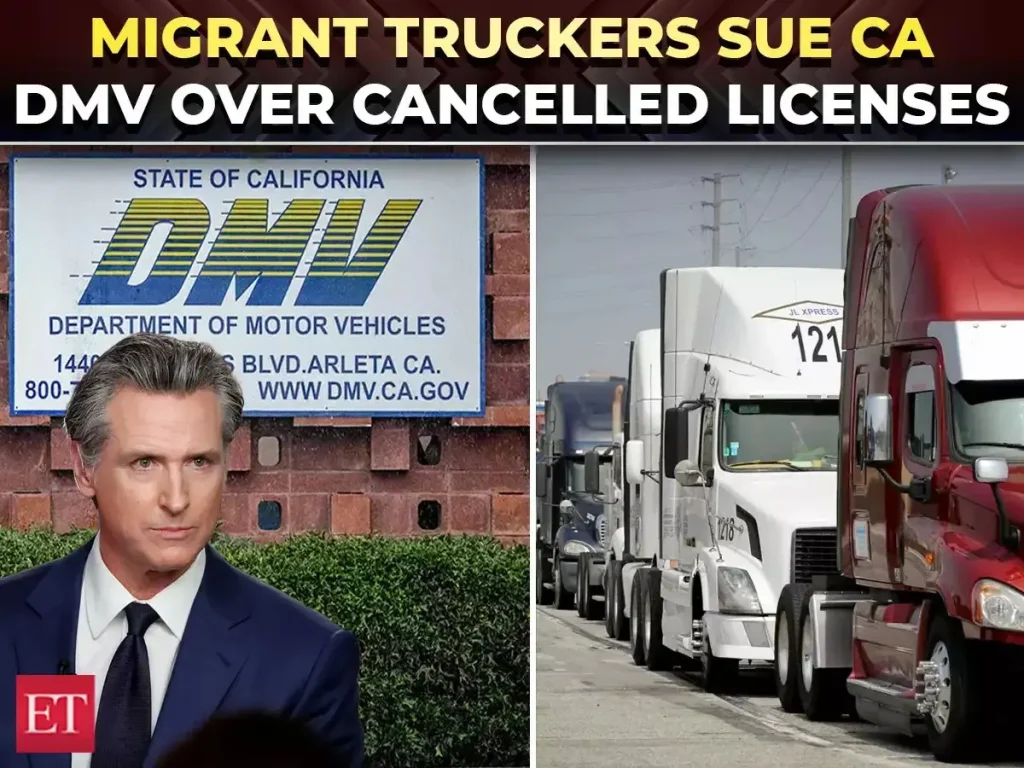
A class-action lawsuit filed December 23, 2025, in Alameda County Superior Court challenges the California DMV’s planned cancellation of approximately 20,000 commercial driver’s licenses issued to immigrant drivers, alleging these cancellations stem from the DMV’s own administrative errors and violate California Vehicle Code Section 13100, which requires canceled licenses be terminated “without prejudice” and allow drivers to immediately reapply. The lawsuit, brought by the Asian Law Caucus, Sikh Coalition, and Weil, Gotshal & Manges LLP, seeks to halt cancellations set to begin January 5, 2026, that would cause mass unemployment and supply chain disruption.
What Are California DMV CDL Cancellation Lawsuits About?
The lawsuit targets a crisis manufactured by bureaucratic errors. Beginning November 6, 2025, the California DMV sent cancellation notices to 17,299 immigrant drivers stating their non-domiciled commercial driver’s licenses would be canceled on January 5, 2026, due to mismatched expiration dates between their CDLs and work authorization documents—dates the DMV itself set incorrectly.
An additional 2,700 drivers received similar letters in December, with their licenses set for cancellation in mid-February 2026.
The core legal question is straightforward: Can the California DMV cancel licenses due to its own mistakes while blocking drivers from fixing the errors or even challenging the cancellations?
The lawsuit says no—and California law agrees.
The Reality Behind California DMV CDL Cancellation Allegations
For years, the California DMV issued non-domiciled CDLs to immigrant drivers legally authorized to work in the United States. But the agency made a critical error: it set CDL expiration dates that extended beyond drivers’ work authorization periods.
The DMV acknowledged in correspondence with federal regulators that “shortcomings of its technical systems and processes” led to the mismatched dates.
Under California regulation 13 CCR §26.02, CDL expiration dates must match or precede work authorization expiration dates. When a federal audit discovered that approximately 25% of California’s non-domiciled CDLs had been improperly issued with incorrect dates, federal authorities threatened action.
The Federal Motor Carrier Safety Administration found California had violated existing federal regulations and threatened to withhold over $150 million in highway funding and potentially decertify California’s entire CDL program.
Instead of fixing the date errors and reissuing corrected licenses, the California DMV opted for mass cancellations—and refused to let affected drivers reapply or correct the mistakes.
Ramandeep Kaur, a school bus driver on parental leave with her newborn, described the nightmare in the lawsuit: “I received this letter while on maternity leave. I’ve driven safely for years, passed all my tests, and now I’m being told I can’t work because of a date the DMV put on my license. When I went to fix it, they said they couldn’t help me.”
Related Article: Amazon Prime Lawsuit Settlement, $2.5 Billion Refund—Check If You’re Owed Up to $51 Before December 24
Which Parties Are Affected by These Lawsuits?
Plaintiffs:
The lawsuit names five individual plaintiffs and the Jakara Movement, a Fresno-based grassroots organization serving the Punjabi Sikh community:
- Plaintiff 1: Tech company bus driver caring for a severely disabled child
- Plaintiff 2: Tow truck company owner whose wife is expecting their third child in February 2026
- Plaintiff 3: 2024 Driver of the Year award recipient who recently purchased his first home
- Plaintiff 4: School bus driver on parental leave
- Plaintiff 5: Central Valley school bus driver facing a 50% pay cut if forced into an alternative position
The Broader Class:
Approximately 20,000 immigrant commercial drivers across California who received cancellation notices, including:
- Freight truck drivers
- School bus operators
- Municipal waste truck drivers
- Agricultural transport drivers
- Private bus drivers
Many of the affected drivers are Sikhs, and according to the North American Punjabi Trucking Association, about a quarter of Sikhs living in the United States work in the trucking industry.
Defendant:
California Department of Motor Vehicles and DMV Director Steven Gordon (sued in his official capacity)
Legal Representation:
For Plaintiffs:
- Asian Law Caucus (Katherine Zhao, Senior Staff Attorney; David Singh, Attorney)
- Sikh Coalition (Munmeeth Kaur, Legal Director)
- Weil, Gotshal & Manges LLP (major international law firm providing pro bono representation)
What Do the California DMV CDL Cancellation Lawsuits Allege?
The lawsuit advances three distinct legal theories challenging the DMV’s actions:
1. Violation of California Vehicle Code Section 13100
California Vehicle Code Section 13100 requires licenses canceled due to error to be terminated “without prejudice,” allowing drivers to “immediately apply for a license”.
The statute is clear: “When used in reference to a driver’s license, ‘cancellation’ means that a driver’s license certificate is terminated without prejudice and must be surrendered. Any person whose license has been canceled may immediately apply for a license.”
The lawsuit alleges the DMV is violating this mandatory requirement by:
- Refusing to accept applications for corrected CDLs
- Providing no timeline for when drivers can reapply
- Informing applicants the agency is “not processing—issuing, renewing, or amending—any nonresident CDL”
- Telling drivers at field offices that staff have “no guidance” and cannot assist them
By blocking reapplications, the DMV effectively cancels licenses “with prejudice”—something California law does not authorize.
2. Due Process Violations Under the California Constitution
The lawsuit alleges the cancellations violate due process under the California Constitution by stripping property and liberty interests without meaningful notice, opportunity to be heard or avenue for relief.
Commercial drivers’ licenses represent both:
- Property interests: The right to work in a licensed profession
- Liberty interests: The freedom to pursue one’s livelihood
The lawsuit argues drivers are being deprived of these fundamental rights without:
- Adequate notice of the basis for cancellation
- Opportunity to contest the DMV’s determinations
- Any hearing or administrative process to challenge the decision
- Meaningful avenue for relief or correction
3. Ultra Vires Actions (Acting Beyond Statutory Authority)
The plaintiffs argue the DMV is acting beyond its statutory authority by effectively canceling licenses “with prejudice” when the law only authorizes cancellation “without prejudice”.
California Vehicle Code Section 13100 grants the DMV specific, limited authority to cancel licenses. By refusing to allow immediate reapplication as the statute mandates, the DMV exceeds its lawful powers.
Under California administrative law, when a government agency acts beyond its statutory authority, such actions are void and have no legal effect.
Defendants’ Response to California DMV CDL Cancellation Lawsuits
The California DMV has defended its actions while acknowledging the administrative failures that created the crisis.
Official DMV Statement:
“Given we are in compliance with federal regulations and state law, this delay by the federal government not only hurts our trucking industry, but it also leaves eligible drivers in the cold without any resolution during this holiday season,” said Eva Spiegel, deputy director of the Office of Public Affairs at the California DMV.
DMV’s Position:
The DMV argues:
- It is acting under federal pressure to comply with federal regulations
- The license cancellations are necessary to avoid losing federal highway funding
- The date mismatches violate DMV regulations requiring CDL expiration dates to match work authorization periods
- The agency is waiting for federal guidance before processing new applications
The Broken Promise:
According to reports from the San Francisco Chronicle and KQED, California state officials communicated they would begin reissuing licenses on December 17, 2025. Despite these public assurances, the state has neither reissued any of the contested licenses nor created a process to remedy the date issue with no indication that it plans to do so.
California announced December 17 it would begin reissuing licenses but reversed course December 19 under federal pressure.
Current DMV Website Status:
The California DMV website currently states: “Until further notice, the California DMV cannot issue, reissue, or renew limited-term legal presence (non-domiciled) commercial driver’s licenses.”
Field offices have been instructing affected drivers that they have no guidance and cannot assist them with obtaining corrected licenses.
Which Courts Are Handling These Lawsuits?
Primary Case:
Court: Superior Court of California, County of Alameda
Case Type: Verified Class Petition for Writ of Mandate and Complaint for Declaratory and Injunctive Relief
Filing Date: December 23, 2025
Case Caption: Jakara Movement, et al. v. California Department of Motor Vehicles, et al.
Related Federal Proceedings:
The Federal Motor Carrier Safety Administration issued an interim final rule September 29, 2025, restricting non-domiciled CDL eligibility to H-2A, H-2B and E-2 visa holders, excluding asylum seekers, refugees and DACA recipients. The D.C. Circuit Court stayed that rule November 13, finding petitioners were “likely to succeed” on claims that FMCSA violated federal law.
The federal litigation created additional confusion because the DMV’s November cancellation letters cited “new federal guidelines issued on September 26, 2025”, a reference to the interim final rule that was stayed seven days after the letters were sent. The agency has not revised or withdrawn the letters.
Current Status of California DMV CDL Cancellation Cases
Timeline of Critical Events:
September 29, 2025: Federal Motor Carrier Safety Administration issues interim final rule restricting non-domiciled CDL eligibility
November 6, 2025: California DMV sends cancellation notices to 17,299 immigrant drivers, stating licenses will be canceled January 5, 2026
November 13, 2025: D.C. Circuit Court stays the federal interim final rule
December 2025: DMV sends additional cancellation notices to 2,700 drivers for mid-February 2026 cancellations
December 17, 2025: California announces plans to begin reissuing licenses
December 19, 2025: California reverses course under federal pressure, halting all license reissuances
December 23, 2025: Class-action lawsuit filed in Alameda County Superior Court
December 27, 2025 (Current Status):
- Lawsuit in early stages; no court rulings yet issued
- No preliminary injunction hearing scheduled as of this date
- January 5, 2026 cancellation deadline fast approaching
- DMV continues refusing to process new or corrected CDL applications
- Federal and state governments remain in standoff over licensing authority
What Happens Next:
January 5, 2026: If no court intervention, 17,299 CDL cancellations take effect
Mid-February 2026: Additional 2,700 CDL cancellations scheduled
The lawsuit seeks emergency relief before the January 5 deadline, though no hearing date has been publicly announced yet.
Evidence Supporting the California DMV CDL Cancellation Allegations
Documentary Evidence:
DMV Cancellation Letters:
The lawsuit includes copies of the November 6, 2025 cancellation letters sent to drivers. These letters:
- Cite “new federal guidelines issued on September 26, 2025”
- Give drivers 60 days notice of cancellation
- State that CDL cancellation will also result in cancellation of regular driver’s licenses
- Provide no process for contesting the cancellation
- Offer no opportunity to correct the date errors
DMV Admissions:
The DMV acknowledged in correspondence with federal regulators that “shortcomings of its technical systems and processes” led to the mismatched dates.
This admission is critical—it proves the DMV, not the drivers, created the date mismatches.
Federal Audit Findings:
FMCSA’s 2025 Annual Program Review found approximately 25% of California’s non-domiciled CDLs improperly issued with incorrect expiration dates.
Testimony and Declarations:
The lawsuit includes declarations from five individual drivers detailing:
- How they legally obtained their CDLs through proper testing and procedures
- The financial hardships cancellation will cause their families
- Their attempts to correct the errors and DMV’s refusal to help
- One driver’s experience being “pressured into surrendering his CDL, out of fear that his non-commercial driver’s license would already be cancelled”
Expert Analysis:
“What they’re trying to do is penalize these 20,000 drivers who committed no wrongdoing,” said attorney Hardeep Soni. “After giving them (California DMV) multiple opportunities to correct this, we’ve been left with no option but to file the lawsuit because of the imminency of the Jan. 5 termination date”.
Statistical Evidence:
California has more than 700,000 CDL holders and is home to the nation’s largest trucking workforce, with more than 138,000 truck drivers. Affected drivers transport freight, drive school buses, operate municipal waste trucks and deliver produce from the Central Valley.
What Laws Apply to California DMV CDL Cancellation Cases?
Primary California Statutes
California Vehicle Code Section 13100:
The statute’s full text:
“When used in reference to a driver’s license, ‘cancellation’ means that a driver’s license certificate is terminated without prejudice and must be surrendered. Any person whose license has been canceled may immediately apply for a license. Cancellation of license may be made only when specifically authorized in this code, when application is made for a license to operate vehicles of a higher class, or when a license has been issued through error or voluntarily surrendered to the department.”
This is the lawsuit’s cornerstone legal provision.
California Vehicle Code Section 15250:
Governs commercial driver’s license issuance and requirements, including provisions for non-domiciled CDL applicants.
California Code of Regulations, Title 13, Section 26.02:
State regulation requiring CDL expiration dates to match work authorization or legal presence document expiration dates—the regulation the DMV violated through its own errors.
California Constitutional Provisions
California Constitution, Article I:
Due process protections prohibiting the state from depriving persons of property or liberty without due process of law.
Federal Laws and Regulations
Commercial Motor Vehicle Safety Act of 1986:
Federal law establishing CDL requirements and standards.
49 C.F.R. Part 383:
Federal Motor Carrier Safety Administration regulations governing commercial driver’s license standards.
Federal Motor Carrier Safety Administration Interim Final Rule (September 29, 2025):
The now-stayed federal rule that attempted to restrict non-domiciled CDL eligibility—though this rule was stayed by the D.C. Circuit before most cancellation letters were sent.
Administrative Law Principles
Ultra Vires Doctrine:
Government agencies can only exercise powers expressly granted by statute. Actions beyond statutory authority are void.
Mandate and Prohibition:
California law allows courts to compel government agencies to perform ministerial duties they’re legally required to perform.
Similar Cases: How They Compare
While this specific CDL cancellation crisis is unprecedented in scale, several legal principles from similar cases apply:
Driver’s License Due Process Cases:
California courts have consistently held that driver’s licenses represent significant property interests protected by due process. Courts have struck down DMV actions that deprive licensees of licenses without adequate notice and opportunity to be heard.
Administrative Error Cases:
Courts routinely hold that government agencies cannot punish individuals for the agency’s own mistakes. When licenses or permits are issued in error due to government mistakes, agencies must provide correction processes, not simply revoke the licenses.
Ultra Vires Actions:
California case law, including Rich Vision Centers, Inc. v. Board of Medical Examiners (1983), establishes that when administrative agencies act beyond their statutory authority, such actions are void from the beginning.
Immigration-Related Licensing:
This case joins a growing body of litigation challenging state actions that impact immigrant workers’ ability to maintain licenses and employment authorization, particularly when those actions are taken under federal pressure.
Federal-State Conflicts:
The case involves tensions between federal immigration enforcement and state licensing authority—an area of ongoing litigation across multiple states and contexts.
What Legal Experts Say About California DMV CDL Cancellation Lawsuits
Supporting the Drivers’ Position:
“The state of California must help these 20,000 drivers because, at the end of the day, the clerical errors threatening their livelihoods are of the CA-DMV’s own making. If the court does not issue a stay, we will see a devastating wave of unemployment that harms individual families, as well as the destabilization of supply chains on which we all rely,” said Munmeeth Kaur, legal director of the Sikh Coalition.
“Our state has a clear moral obligation and legal duty to protect workers who have done everything right,” said Katherine Zhao, senior staff attorney at Asian Law Caucus. “Without an immediate court-ordered stay, many drivers will lose their jobs through no fault of their own”.
Legal Analysis:
The statutory language of California Vehicle Code Section 13100 is unambiguous. When read plainly, it requires that:
- Cancellations be “without prejudice”
- Canceled license holders “may immediately apply for a license”
The DMV’s refusal to accept applications directly contradicts the statute’s clear mandate.
Administrative Law Perspective:
Legal experts note that California administrative law is strict about agencies exceeding their statutory authority. When an agency acts ultra vires (beyond its powers), courts typically void those actions entirely.
Due Process Analysis:
Constitutional law experts point out that CDLs represent both property interests (the right to pursue a livelihood) and liberty interests (freedom to work). Depriving individuals of these interests without notice, hearing, or opportunity to contest the deprivation raises serious due process concerns.
Practical Legal Assessment:
Several legal observers note the DMV is in a legally untenable position:
- It admits the date errors are its own fault
- State law requires it to allow immediate reapplication
- It’s refusing to follow its own statute
- It’s blaming federal pressure for actions that violate state law
This combination suggests plaintiffs have strong legal grounds, though emergency timing before January 5 creates practical challenges.
Timeline of California DMV CDL Cancellation Lawsuit Developments
Historical Context:
2019-2024:
California DMV issues thousands of non-domiciled CDLs to immigrant drivers with work authorization, but incorrectly sets expiration dates beyond work authorization periods due to “shortcomings of its technical systems and processes.”
2025 Events:
September 26, 2025:
Federal Motor Carrier Safety Administration publicly announces interim final rule restricting non-domiciled CDL eligibility.
September 29, 2025:
FMCSA interim final rule becomes effective upon publication in Federal Register.
October 2025:
FMCSA 2025 Annual Program Review identifies that approximately 25% of California’s non-domiciled CDLs were improperly issued. Federal government threatens to withhold over $150 million in highway funding.
November 6, 2025:
California DMV sends cancellation notices to 17,299 immigrant drivers, setting January 5, 2026 cancellation date.
November 13, 2025:
D.C. Circuit Court stays the federal interim final rule, finding petitioners were “likely to succeed” on their legal challenges.
December 2025:
DMV sends additional cancellation notices to 2,700 drivers for mid-February 2026 cancellations.
December 17, 2025:
California announces it will begin reissuing licenses.
December 19, 2025:
California reverses course under federal pressure, halting all license reissuances. DMV website updated to state agency “cannot issue, reissue, or renew limited-term legal presence (non-domiciled) commercial driver’s licenses.”
December 23, 2025:
Asian Law Caucus, Sikh Coalition, and Weil, Gotshal & Manges LLP file class-action lawsuit in Alameda County Superior Court.
December 26-27, 2025:
Media coverage and legal analysis intensifies as January 5 deadline approaches.
Upcoming Critical Dates:
January 5, 2026:
17,299 CDL cancellations scheduled to take effect unless court issues injunction.
Mid-February 2026:
Additional 2,700 CDL cancellations scheduled.
Future Proceedings:
Court must rule on emergency injunction request before January 5. Class certification hearing and trial on the merits will follow if case proceeds.
What Should Affected Parties Know?
For CDL Holders Who Received Cancellation Notices
IMMEDIATE ACTION REQUIRED:
If you received a cancellation notice from the California DMV dated November 6, 2025, or later, you need to know:
✅ You are potentially part of the class action – You do NOT need to take separate action to join the lawsuit if you received a cancellation notice
✅ The January 5, 2026 deadline is approaching – Time is critical
✅ You have legal rights – California law requires the DMV to let you reapply immediately
✅ The errors were not your fault – The DMV admits its own technical systems caused the date mismatches
What You Can Do Right Now:
1. Document Everything:
- Keep your cancellation letter and all DMV correspondence
- Document any attempts you’ve made to contact the DMV or fix the error
- Keep records of your work history, income, and family responsibilities
- Save copies of your current CDL and work authorization documents
2. Contact Legal Resources:
Sikh Coalition Punjabi Language Hotline:
Phone: 212-287-9169
Website: www.sikhcoalition.org
Asian Law Caucus:
Website: www.asianlawcaucus.org
Email for CDL case inquiries: Contact through their website
3. Preserve Your Income Documentation:
- Recent pay stubs
- Tax returns showing CDL-related income
- Employer letters confirming your employment and CDL requirements
- Evidence of financial obligations (mortgage, family support, etc.)
4. DO NOT Surrender Your CDL: One plaintiff in the lawsuit was “pressured into surrendering his CDL” at a DMV office. You are NOT required to surrender your license until the cancellation date arrives, and even then, the lawsuit may prevent cancellations.
5. Keep Working (For Now): Your CDL remains valid until the cancellation date specified in your letter (January 5 or mid-February). Continue working normally while the legal case proceeds.
6. Stay Informed:
- Monitor updates from the Sikh Coalition and Asian Law Caucus websites
- Watch for news about court proceedings
- Check if the DMV posts any updates (unlikely but possible)
For Employers of Affected CDL Holders
What This Means for Your Business:
If you employ drivers who received cancellation notices, you face potential workforce disruptions starting January 5, 2026.
Immediate Steps:
✅ Identify affected employees – Ask drivers if they received DMV cancellation notices
✅ Document their qualifications – Maintain records showing they passed all required tests and have clean driving records
✅ Prepare contingency plans – Though undesirable, consider how you’ll handle potential driver shortages
✅ Support your workers – Connect them with legal resources and allow flexibility for legal proceedings
✅ Consider public advocacy – Business groups may want to file amicus briefs supporting the drivers
Your Business Interests:
Employers have standing to voice concerns about supply chain disruptions and workforce impacts. Consider contacting:
- California Trucking Association
- Industry trade groups
- State legislators
- Governor’s office
For California Trucking Industry
Potential Impact:
The lawsuit states the cancellations would “result in mass work stoppages” starting January 5, 2026.
With 20,000 drivers facing cancellation out of California’s 138,000-driver commercial trucking workforce, this represents approximately 14.5% of the state’s commercial drivers.
Supply Chain Implications:
Affected drivers:
- Transport freight statewide and nationally
- Drive school buses serving California communities
- Operate municipal waste trucks
- Deliver agricultural produce from the Central Valley
- Provide essential transportation services
Industry Response:
Consider unified advocacy for:
- DMV compliance with California Vehicle Code Section 13100
- Swift license reissuance process
- Protection of qualified, tested drivers who committed no wrongdoing
For Immigration Advocacy Organizations
Broader Implications:
This case represents a critical test of whether state agencies can punish immigrant workers for administrative errors under federal pressure, even when doing so violates state law.
Key Issues:
- Due process rights for non-citizen workers
- State authority versus federal immigration enforcement
- Protection of legally authorized workers from discriminatory actions
- Precedent for other state licensing contexts
For Legal Practitioners
Practice Areas Implicated:
- Administrative law (ultra vires actions, mandamus relief)
- Constitutional law (due process, property/liberty interests)
- Immigration law (work authorization, non-domiciled status)
- Labor and employment law (wrongful deprivation of livelihood)
- Class action procedure
Potential Expansion:
Similar issues may affect:
- Other professional licenses held by immigrants
- Other states with non-domiciled CDL programs
- Federal-state conflicts in other licensing contexts
Broader Implications: What This Means for California
For State Governance:
This lawsuit raises fundamental questions about state agency accountability:
Can state agencies violate state law because of federal pressure?
The DMV argues federal threats justify refusing to follow California Vehicle Code Section 13100. Courts will decide whether federal pressure excuses state law violations.
What recourse do individuals have when government makes mistakes?
If the DMV can cancel licenses due to its own errors without letting people fix the problems, what protections do Californians have against administrative mistakes?
Who bears the cost of inter-governmental disputes?
Should 20,000 workers and their families pay the price for federal-state disagreements over immigration and licensing policy?
For Worker Protections:
The case tests whether California will protect legally authorized workers or sacrifice them to federal immigration pressure.
California has historically positioned itself as protective of immigrant workers. This case forces the state to choose between:
- Following its own laws and protecting workers who did nothing wrong
- Capitulating to federal pressure at workers’ expense
For Supply Chain and Economy:
Mass cancellation of 20,000 CDLs would cause:
- Immediate workforce shortages in critical transportation sectors
- Supply chain disruptions affecting freight, agriculture, and essential services
- School bus driver shortages impacting California students
- Municipal service disruptions (waste management, public transit)
- Economic harm to affected businesses and industries
For Sikh Community:
According to the North American Punjabi Trucking Association, about a quarter of Sikhs living in the United States work in the trucking industry.
The disproportionate impact on Sikh drivers raises concerns about:
- Economic devastation in Sikh communities across California
- Potential disparate impact discrimination
- Community targeting through ostensibly neutral licensing actions
Bay Area cities with sizable Sikh populations—including Fremont, Livermore, Hayward, Union City, and El Sobrante—would be severely impacted.
For Federal-State Relations:
The case highlights ongoing tensions between:
- Federal immigration enforcement priorities
- State authority over professional licensing
- Competing visions of immigrant worker rights and protections
For Administrative Justice:
At its core, this case asks a simple fairness question: Should people lose their livelihoods because a government agency made mistakes?
California law says no—when licenses are canceled due to error, people must be allowed to immediately reapply. The DMV is refusing to follow that law.
The outcome will determine whether administrative convenience and federal pressure can override statutory protections for individuals harmed by government errors.
What to Expect Next
Immediate Term (December 2025 – January 2026):
Emergency Court Proceedings:
Plaintiffs will seek emergency preliminary injunction to halt January 5, 2026 cancellations. Court must rule quickly given imminent deadline.
Possible Outcomes:
Scenario 1: Court Grants Injunction
- January 5 cancellations blocked pending trial
- Drivers keep their CDLs temporarily
- DMV ordered to accept applications for corrected licenses
- Case proceeds to class certification and trial on merits
Scenario 2: Court Denies Injunction
- 17,299 cancellations take effect January 5
- Mass unemployment and supply chain disruptions begin
- Plaintiffs appeal and continue litigation
- Pressure intensifies on California legislature to intervene
Scenario 3: DMV Settles or Changes Policy
- DMV agrees to follow California Vehicle Code Section 13100
- Process created for correcting licenses and allowing reapplication
- Cancellations withdrawn or made without prejudice as law requires
- Drivers able to obtain corrected licenses quickly
Short Term (January – March 2026):
If Case Proceeds:
- Class certification briefing and hearing
- Discovery into DMV’s decision-making and technical failures
- Potential depositions of DMV officials
- Additional court proceedings on preliminary relief
- Mid-February cancellation deadline for additional 2,700 drivers
Legislative Response:
California Legislature could intervene by:
- Passing emergency legislation clarifying DMV’s duties
- Appropriating funds to upgrade DMV technical systems
- Holding oversight hearings on the DMV’s actions
- Directing the DMV to comply with state law
Federal Developments:
- Resolution of the D.C. Circuit case challenging the federal interim final rule
- Potential new federal guidance to states
- Possible changes in federal enforcement priorities
- DOT funding threat resolution
Medium Term (Spring – Fall 2026):
Trial Proceedings:
If not resolved earlier:
- Full trial on the merits of plaintiffs’ claims
- Expert testimony on DMV systems and administrative law
- Final judgment on whether DMV violated California law
- Potential appeals to California Court of Appeal
Industry Adaptation:
- Trucking companies adjusting to workforce changes
- Potential new business models or recruitment strategies
- Industry advocacy for licensing reform
Policy Reforms:
- Potential DMV technical system upgrades
- New procedures for handling licensing errors
- Improved coordination between state and federal authorities
- Enhanced protections for workers affected by administrative mistakes
Long Term (2027 and Beyond):
Legal Precedent:
The case will establish important precedents regarding:
- State agencies’ obligations when correcting their own errors
- Due process protections for professional license holders
- Limits on agencies acting ultra vires (beyond statutory authority)
- Federal-state conflicts in licensing contexts
System Reforms:
Likely reforms include:
- DMV technical system improvements to prevent future date mismatches
- Enhanced oversight of non-domiciled CDL issuance
- Better coordination with federal regulators
- Stronger worker protections against administrative errors
Immigration Policy Impacts:
The case may influence:
- How other states handle non-domiciled professional licenses
- Federal-state cooperation on immigrant worker licensing
- Protections for legally authorized workers
- Standards for state compliance with federal immigration enforcement
Your Next Steps: What Affected Drivers Should Do Now
If you’re one of the 20,000 drivers facing cancellation, time is critical. Here’s your action plan:
Step 1: Verify Your Status (5 minutes)
- Check if you received a cancellation letter dated November 6, 2025, or later
- Note the cancellation date stated in your letter (January 5 or mid-February)
- Confirm your CDL is a “non-domiciled” or “limited-term legal presence” CDL
Step 2: Gather Critical Documents (30 minutes)
- Your current CDL
- Your work authorization documents (Employment Authorization Document, visa, etc.)
- The DMV cancellation letter you received
- Recent pay stubs showing CDL-related income
- Employment verification letter from your employer
- Proof of your clean driving record
- Any correspondence with the DMV about this issue
Step 3: Contact Legal Resources Immediately (15 minutes)
Sikh Coalition Punjabi Language Hotline:
📞 Phone: 212-287-9169
🌐 Website: www.sikhcoalition.org
📧 Email: Available through their website contact form
Asian Law Caucus:
🌐 Website: www.asianlawcaucus.org
📧 Contact: Use their online contact form for CDL case inquiries
📍 Location: San Francisco Bay Area
Step 4: Protect Your Rights (10 minutes)
- ✅ DO NOT surrender your CDL before the cancellation date
- ✅ DO NOT sign anything at DMV offices without legal advice
- ✅ DO continue working until the cancellation date (your license is still valid)
- ✅ DO document everything – keep all letters, emails, and notes from DMV contacts
- ✅ DO tell your employer about the situation so they can plan accordingly
Step 5: Stay Informed
- Check the Sikh Coalition website daily for updates
- Monitor Asian Law Caucus announcements
- Watch California news outlets for court proceedings
- Join community meetings about the lawsuit
- Connect with other affected drivers for support
⚠️ CRITICAL DEADLINE WARNING:
January 5, 2026 is just days away. If the court doesn’t issue an injunction, 17,299 licenses will be canceled. Every day counts.
Don’t wait. Don’t assume someone else will handle it. Take action today.
FAQ: California DMV CDL Cancellation Lawsuit
Q: I received a cancellation letter. Am I automatically part of the lawsuit?
A: Yes, if you received a cancellation notice dated November 6, 2025 or later, you are potentially part of the class action. You do NOT need to take separate action to join the lawsuit. However, you should still contact the legal organizations (Sikh Coalition or Asian Law Caucus) to ensure they have your information and can update you on case developments.
Q: Will the lawsuit stop my January 5, 2026 cancellation?
A: That depends on whether the court grants an emergency preliminary injunction. The plaintiffs are seeking emergency relief to halt all cancellations while the case proceeds. The court must rule before January 5 for the injunction to be effective. This is why time is so critical.
Q: What if the court doesn’t stop the cancellations in time?
A: If cancellations proceed on January 5, the lawsuit will continue fighting to:
- Reverse the cancellations retroactively
- Force the DMV to allow you to reapply immediately as California law requires
- Potentially recover damages for lost wages and harm caused by the illegal cancellations
However, this would mean weeks or months without your CDL and income, which is why preventing the cancellations is the priority.
Q: I already went to the DMV and tried to fix this. They said they can’t help me. What do I do?
A: This is exactly the problem the lawsuit addresses. The DMV is violating California Vehicle Code Section 13100 by refusing to let you reapply. Document your attempts to fix the issue (dates you went to DMV, names of employees you spoke with, what they told you) and provide this information to the legal team. This evidence strengthens the case.
Q: Is this only affecting Sikh drivers?
A: No. While many affected drivers are Sikhs (about a quarter of Sikhs in the U.S. work in trucking), the cancellations affect all immigrant drivers with non-domiciled CDLs, regardless of ethnicity, religion, or national origin. The 20,000 affected drivers include people from diverse backgrounds who are legally authorized to work in the United States.
Q: I have a clean driving record and passed all my tests. Why is this happening to me?
A: You did nothing wrong. The DMV admits this is due to “shortcomings of its technical systems and processes.” The date mismatch on your CDL was the DMV’s error when they issued your license. You should not be punished for the agency’s mistakes, which is precisely what the lawsuit argues.
Q: Will my regular driver’s license also be canceled?
A: The cancellation letters state that canceling your CDL will also result in cancellation of your regular driver’s license. This is another major concern raised in the lawsuit, as it would leave you unable to drive at all, not just commercially.
Q: Can I just reapply for my CDL after January 5?
A: Under California law, yes—you should be able to “immediately apply for a license” after cancellation. But the DMV is currently refusing to accept any applications for non-domiciled CDLs. Their website states: “Until further notice, the California DMV cannot issue, reissue, or renew limited-term legal presence (non-domiciled) commercial driver’s licenses.” This refusal to accept applications is the core violation alleged in the lawsuit.
Q: How long will this lawsuit take?
A: The emergency injunction request should be decided within days or weeks given the January 5 deadline. However, the full case (class certification, trial on the merits, potential appeals) could take months or even years. The immediate goal is stopping the January 5 cancellations while the legal issues are properly resolved.
Q: What is the DMV’s explanation for refusing to let us reapply?
A: The DMV claims it’s acting under federal pressure and waiting for federal guidance. However, California law (Vehicle Code Section 13100) requires the DMV to allow immediate reapplication after cancellation. The lawsuit argues federal pressure doesn’t excuse violating state law.
Q: I heard California was going to start reissuing licenses on December 17. What happened?
A: California announced December 17 it would begin reissuing licenses but reversed course on December 19 under federal pressure. The state has not reissued any licenses or created any process to fix the date errors, despite earlier promises to do so.
Q: Will I lose money if I can’t work? Can I get compensation?
A: If your license is canceled, you will likely lose income during the period you cannot work. The lawsuit may eventually seek damages for lost wages and other harm caused by the illegal cancellations, though that would come later in the litigation. The immediate priority is preventing the cancellations from happening at all.
Q: I’m a school bus driver. How does this affect students and schools?
A: Many affected drivers operate school buses. If cancellations proceed, California schools will face driver shortages, potentially affecting student transportation. Schools and parent groups may want to advocate to state officials about the crisis this creates for students and families.
Q: Can my employer fire me if my CDL is canceled?
A: If your job requires a valid CDL and your license is canceled through no fault of your own, employment law issues may arise. Consult an employment attorney about your specific situation. The lawsuit argues you shouldn’t lose your CDL in the first place because the DMV is violating state law.
Q: What about the federal rule that was stayed by the D.C. Circuit?
A: The Federal Motor Carrier Safety Administration’s interim final rule (September 29, 2025) attempted to restrict non-domiciled CDL eligibility. The D.C. Circuit stayed that rule on November 13, 2025, finding challenges to it were “likely to succeed.” Ironically, the DMV’s cancellation letters cite “new federal guidelines issued on September 26, 2025″—meaning they relied on a rule that was stayed just days after the letters went out.
Q: I’m not a truck driver—I drive a school bus / tow truck / waste management truck. Does this apply to me?
A: Yes! The cancellations affect ALL commercial driver’s license holders with non-domiciled CDLs, regardless of what type of commercial vehicle you drive. School bus drivers, tow truck operators, waste management drivers, agricultural transport drivers, and others are all included.
Q: What if I just got my CDL recently?
A: If you received your CDL in recent years and have a non-domiciled / limited-term legal presence CDL with a date mismatch, you’re likely affected. The DMV issued these licenses with incorrect dates due to technical system problems over several years.
Q: Can I switch to a regular (domiciled) CDL instead?
A: To obtain a regular (domiciled) California CDL, you must be a California resident and provide proof of legal presence in the United States. Non-domiciled CDLs exist specifically for individuals who are legally present and authorized to work but may not meet residency requirements for a domiciled license. If you qualify for a domiciled CDL, that could be an alternative path, but many affected drivers may not meet those requirements.
Q: I’m an employer. Can I help my drivers with this?
A: Yes! Employers can:
- Connect drivers with legal resources
- Provide employment verification letters
- Allow time off for legal proceedings
- Document drivers’ qualifications and work history
- Consider filing amicus briefs supporting the lawsuit
- Contact industry associations and state officials
- Prepare contingency workforce plans
- Publicly advocate for protecting qualified drivers
Q: Will this affect people in other states?
A: Currently, this lawsuit addresses California’s DMV actions. However, other states also issue non-domiciled CDLs, and similar issues could arise elsewhere. The case may set precedents relevant to other states’ licensing practices.
Q: The DMV says this is about federal compliance. Isn’t that a good reason?
A: The lawsuit argues that federal pressure doesn’t authorize the DMV to violate California state law. California Vehicle Code Section 13100 is clear: cancellations must be “without prejudice” and canceled license holders “may immediately apply for a license.” The DMV cannot simply ignore state law because of federal pressure. Moreover, the federal rule the DMV cited was stayed by the D.C. Circuit before most cancellation letters were even sent.
Q: What does “cancellation without prejudice” mean?
A: “Without prejudice” is a legal term meaning the cancellation doesn’t imply wrongdoing and doesn’t bar you from immediately reapplying. It’s different from a suspension or revocation (which do imply violations). California law specifically requires license cancellations be “without prejudice” precisely to protect people in situations like this where errors occurred.
Q: Should I hire a private lawyer?
A: You may want to consult a private attorney about your individual situation, but the class-action lawsuit is being handled by experienced attorneys at the Asian Law Caucus, Sikh Coalition, and Weil, Gotshal & Manges LLP on behalf of all affected drivers. You don’t need to hire your own lawyer to be part of the class action.
Q: What happens if I’m in the middle of a job when January 5 arrives?
A: If your license is canceled while you’re working, you would legally no longer be authorized to operate a commercial vehicle. This creates immediate safety, legal, and employment issues. This is why emergency court intervention before January 5 is so critical.
Q: How can I help if I’m not directly affected?
A: Community members, advocacy organizations, and concerned citizens can:
- Spread awareness about the lawsuit
- Contact state legislators and the Governor’s office
- Support affected drivers and their families
- Attend community meetings and rallies
- Share accurate information on social media
- Write letters to the editor of local newspapers
- Urge businesses to advocate for their workers
- Donate to organizations representing the drivers
Take Action Today
The January 5, 2026 deadline is approaching rapidly. Twenty thousand drivers and their families face devastating consequences through no fault of their own.
If you’re affected:
- Call the Sikh Coalition hotline NOW: 212-287-9169
- Visit www.sikhcoalition.org for updates
- Gather your documents today
- Tell other affected drivers about the lawsuit
- Stay strong—you’re not alone
If you’re an employer, community member, or concerned citizen:
- Contact your state legislators
- Call the Governor’s office: (916) 445-2841
- Support the legal organizations fighting this battle
- Share this information widely
The DMV made the mistakes. Drivers shouldn’t pay the price.
This article is based on the class-action lawsuit filed December 23, 2025 in Alameda County Superior Court, court documents, official DMV communications, legal expert analysis, and news reporting current as of December 27, 2025. Legal proceedings are ongoing. For official information and legal assistance, contact the Sikh Coalition (212-287-9169) or Asian Law Caucus (www.asianlawcaucus.org).
Last Updated: December 27, 2025
About the Author

Sarah Klein, JD, is a licensed attorney and legal content strategist with over 12 years of experience across civil, criminal, family, and regulatory law. At All About Lawyer, she covers a wide range of legal topics — from high-profile lawsuits and courtroom stories to state traffic laws and everyday legal questions — all with a focus on accuracy, clarity, and public understanding.
Her writing blends real legal insight with plain-English explanations, helping readers stay informed and legally aware.
Read more about Sarah