
Kennedy Center Lawsuit Update: Legal Challenge to Trump Name Addition
Rep. Joyce Beatty filed a lawsuit on December 22, 2025, challenging the Kennedy Center board’s decision to add President Donald Trump’s name to the performing arts center, arguing the board violated federal law because Congress designated the center’s name by statute in 1964. The lawsuit, filed in the U.S. District Court for the District of Columbia, seeks to restore the center’s original name and remove the newly installed signage bearing Trump’s name. The congresswoman argues the renaming violates the rule of law and constitutional order.
What Is the Kennedy Center Lawsuit About?
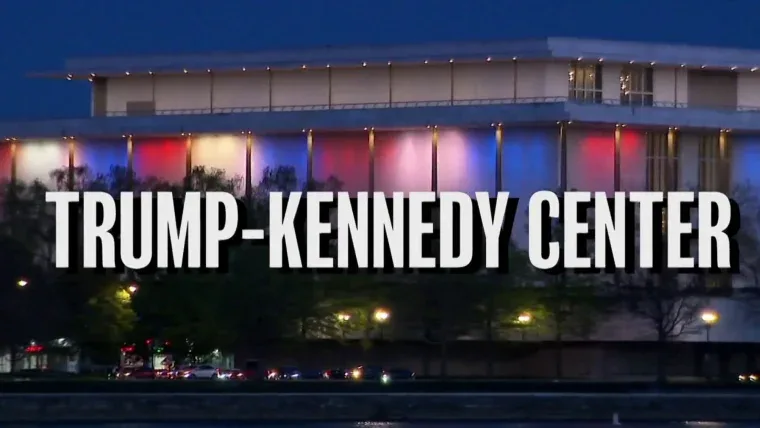
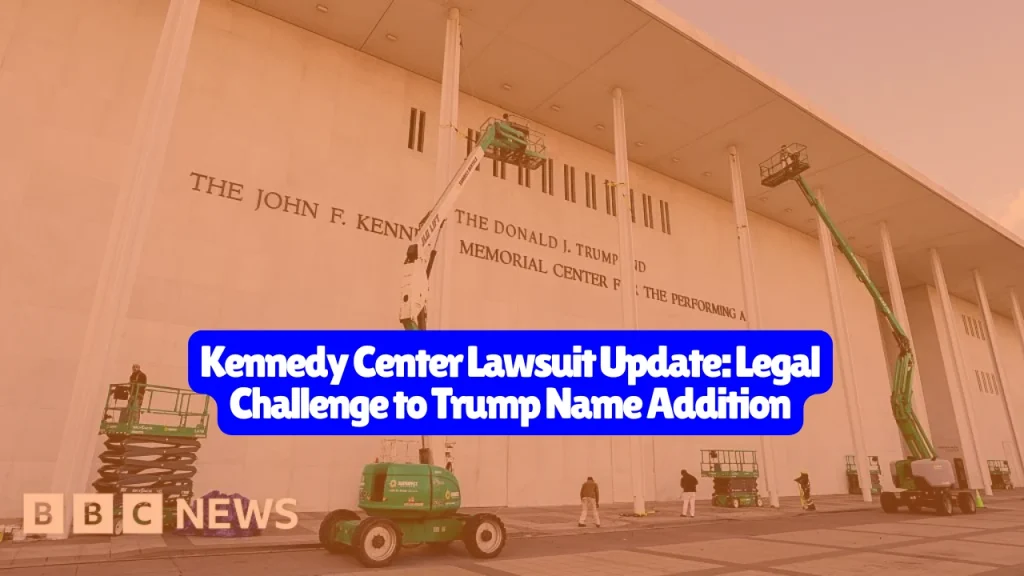
The lawsuit challenges the board’s December 18, 2025 vote to rename the center as “The Donald J. Trump and The John F. Kennedy Memorial Center for the Performing Arts”. Beatty participated in the board meeting and alleges she was prevented from speaking when she attempted to object to the renaming.
The case centers on whether the Kennedy Center’s board of trustees exceeded its statutory authority by changing a name that Congress established through federal legislation.
The Reality Behind the Legal Claims
Public Law 88-260, signed January 23, 1964, designated the center as “the John F. Kennedy Center for the Performing Arts” through an act of Congress. The lawsuit argues this congressional designation means only Congress—not the center’s board—has authority to change the name.
Legal experts consulted by media outlets have stated the board likely lacks legal authority for this action. Georgetown Law professor David Super, who specializes in legislation, stated there is “absolutely no way they can do this legally”, though he noted enforcement depends on whether challengers have legal standing.
The reality is that months after President Kennedy’s 1963 assassination, the center was made into a “living memorial” to the late president through an act of Congress signed into law by President Johnson in January 1964.
Which Parties Are Affected?
Plaintiff: Rep. Joyce Beatty (D-Ohio), serving as an ex officio trustee of the Kennedy Center by virtue of her position as a Member of the House of Representatives
Defendants: President Donald Trump and members of the Kennedy Center board of trustees who voted for the name change
Legal Representatives:
- For Beatty: Democracy Defenders Action and the Washington Litigation Group, with attorneys Norman Eisen and Nathaniel Zelinsky serving as lead counsel
- Norman Eisen previously served as White House ethics counsel in the Obama administration
Related Article: Chime Lawsuit 2025, Your Money Could Be Waiting—Here’s the Reality Behind the Allegations
What Does the Lawsuit Allege?
The lawsuit makes several specific allegations:
Statutory Violation: The complaint states the board’s renaming violates federal law because Congress named the center by statute, and only Congress can modify a statute by enacting new legislation
Procedural Irregularities: Beatty alleges she was muted when she attempted to speak in opposition during the board meeting and was unable to unmute herself despite repeated attempts, preventing her from casting her vote
False Representation: White House Press Secretary Karoline Leavitt claimed the board voted “unanimously” to rename the Kennedy Center, despite Beatty’s objection
Sham Proceedings: The complaint characterizes the board meeting as a “thinly-veiled sham” held at the home of one of the trustees
Kennedy Center’s Response to the Lawsuit
A Kennedy Center spokesperson stated that the entire board was invited to attend in person and the privilege of listening in was granted to all members, including ex officio member Joyce Beatty.
The center’s vice president of public relations, Roma Daravi, defended the renaming by pointing to millions of dollars Trump has raised to repair and refurbish the building. Both the Kennedy Center and the White House have stated the change does not impact the building’s status as a memorial to President Kennedy.
Daravi added that Trump raised over $131 million in private and corporate donations and had Congress provide $257 million for critical infrastructure needs.
What Court Is Handling the Kennedy Center Lawsuit?
The lawsuit was filed in the U.S. District Court for the District of Columbia on December 22, 2025.
Current Status of the Case
Timeline of Events:
- December 18, 2025: Kennedy Center board votes to add Trump’s name
- December 19, 2025: Workers install new signage reading “The Donald J. Trump and The John F. Kennedy Memorial Center for the Performing Arts” on the building’s exterior
- December 19, 2025: Kennedy Center website updated with new logo
- December 22, 2025: Rep. Beatty files lawsuit challenging the renaming
- December 23-24, 2025: Legal experts and media outlets analyze the lawsuit’s merits
As of December 27, 2025, the case is in its early stages. No emergency injunction has been filed according to court records as of the initial filing date. The court has not yet ruled on the merits or issued any preliminary orders.
Evidence Supporting the Allegations
Statutory Evidence:
The lawsuit relies heavily on federal statute:
- Public Law 88-260 (1964) established the center’s name through congressional action
- 20 U.S.C. § 76j(a)(3), titled “John F. Kennedy Center for the Performing Arts,” states that “no additional memorials or plaques in the nature of memorials shall be designated or installed in the public areas of the John F. Kennedy Center for the Performing Arts”
Historical Context:
Former House historian Ray Smock stated in an email that the Kennedy Center was named by law, and to change the name would require a revision of that 1964 law, noting the Kennedy Center board is not a lawmaking entity.
Physical Evidence:
Photographs and video documentation show the rapid installation of signage and website changes within 24 hours of the board vote.
What Laws Apply to This Case?
Primary Statutes:
Public Law 88-260 (January 23, 1964): This law renamed the National Cultural Center as the John F. Kennedy Center for the Performing Arts and designated it as a living memorial to President Kennedy.
20 U.S.C. Chapter 3, Subchapter V: The United States Code provisions governing the Kennedy Center, including restrictions on additional memorials.
Legal Theories:
Separation of Powers: The lawsuit argues only Congress can change a name established by congressional statute, and the board’s action violates the constitutional separation of powers
Ultra Vires Action: The claim that the board acted beyond its legal authority granted by Congress
Statutory Construction: Interpretation of whether “additional memorials” includes name changes
Legal Experts’ Views on the Claims
Legal experts have offered varied perspectives on the lawsuit’s merits:
Supporting Beatty’s Position:
Attorney Norm Eisen, representing Beatty, stated the case is “very clear-cut” because Congress designated the center’s name, and only Congress can change it.
Georgetown Law professor David Super affirmed there is “absolutely no way they can do this legally”.
Concerns About Standing:
Experts told CNN that while the board’s decision was likely unlawful, it’s unclear whether someone looking to challenge the move would have legal standing to pursue such a case.
Legal analysis raises questions about whether Kennedy family members are injured in a concrete way to satisfy standing requirements, noting that associational standing from historical preservation groups can be tricky.
Similar Cases and Legal Precedents
The Kennedy Center lawsuit presents a relatively unique legal question regarding the renaming of congressionally-designated memorials. However, several legal principles apply:
Congressional Designation Authority: Cases involving other national memorials and monuments have consistently held that Congress has plenary authority over federal property and memorials in the District of Columbia.
Board Authority Limitations: Corporate law and administrative law cases establish that boards of trustees can only exercise powers expressly granted by their governing statutes or implied as necessary to carry out those express powers.
Memorial Protection: Legal analysis suggests that under the board’s interpretation, any memorial established by Congress, from the Lincoln Memorial to presidential libraries, could be renamed or hyphenated, which would likely conflict with congressional intent.
Potential Outcomes
Possible Court Rulings:
For Plaintiff Beatty:
- Declaration that the renaming is unlawful and void
- Injunction ordering removal of Trump’s name from signage and website
- Restoration of the center’s statutory name
- Prevention of future renaming attempts without congressional authorization
For Defendants:
- Dismissal for lack of standing
- Ruling that the board’s action doesn’t constitute a prohibited “additional memorial”
- Finding that the statutory language is ambiguous or doesn’t prohibit name additions
Congressional Action:
Congress could resolve the dispute by either:
- Ratifying the board’s decision through new legislation
- Passing a resolution declaring the name change invalid and clarifying that statutory restrictions include name changes
- Taking no action, leaving the matter to the courts
What Should Affected Parties Know?
For Kennedy Center Stakeholders:
Artists and patrons should be aware that the center’s operations continue despite the legal dispute. However, attendance and ticket sales have reportedly been impacted, with some artists canceling performances in protest.
For Congress Members:
House Minority Leader Hakeem Jeffries stated the Kennedy Center board has no authority to rename the center absent legislative action. Congressional members may face pressure to take legislative action.
For Legal Observers:
The case may set important precedents regarding:
- The scope of board authority for federally-chartered institutions
- Requirements for standing to challenge governmental action affecting public memorials
- The breadth of congressional control over memorials it has designated
Broader Implications
Institutional Integrity:
The lawsuit argues the board’s action damages the institution’s public mission by turning a national memorial into a political vanity project.
Precedent Concerns:
If the renaming stands without congressional approval, it could establish precedent for executive-appointed boards to rename other congressionally-designated memorials and federal institutions.
Public Trust:
Internal Kennedy Center data reviewed by CNN showed approximately 10,000 seats sold for this year’s Nutcracker production across seven performances, compared with around 15,000 seats each in 2021-2024, with the center comping approximately five times more tickets than in past years.
Democratic Norms:
Democracy Forward’s president characterized the situation as part of an alarming trend of the president’s name appearing on federal buildings which ultimately belong to the people.
Timeline of Kennedy Center Lawsuit Developments
2025 Events:
February 2025: Trump administration reshuffles Kennedy Center board; Trump elected board chair
December 18, 2025: Kennedy Center board votes to rename the center
December 19, 2025: New signage installed; website updated with “Trump Kennedy Center” branding
December 22, 2025: Rep. Joyce Beatty files lawsuit in U.S. District Court for D.C.
December 23-26, 2025: Media coverage and legal analysis of the lawsuit intensifies; some artists cancel performances in protest
December 26, 2025: Kennedy Center President Richard Grenell sent a letter to jazz musician Chuck Redd criticizing his cancellation of an annual Christmas Eve concert and stating the center will seek $1 million in damages
The case remains in early litigation stages with no court rulings yet issued.
Related Legal Developments
Trump also affixed his name to the U.S. Institute of Peace (USIP) headquarters despite ongoing litigation between the administration and the institute after the Department of Government Efficiency effectively dismantled it.
The president has also announced a new “Trump class” of battleships, continuing a pattern of adding his name to federal institutions and military assets.
Practical Implications for Different Audiences
For Performing Arts Organizations:
The case highlights the importance of understanding the legal foundations of institutional governance and the limits of board authority, particularly for federally-chartered cultural institutions.
For Constitutional Scholars:
The lawsuit presents a significant test case for separation of powers principles and the extent to which executive-appointed boards can modify congressional designations.
For the General Public:
The outcome will determine whether the Kennedy Center retains its original name or becomes the first major congressional memorial to be renamed by board action rather than legislative amendment.
FAQ: Kennedy Center Lawsuit
Q: Can the Kennedy Center board legally rename the center without Congress?
A: Legal experts widely agree the answer is no. The center’s name was established through legislation in 1964, and legal counsel argues only Congress can modify a statute. However, the question of who has standing to challenge the action remains unresolved.
Q: What is Joyce Beatty’s role in this lawsuit?
A: Beatty is an ex officio member of the Kennedy Center board who serves by virtue of her position as a Member of the House of Representatives appointed by the Speaker. She has the same voting rights as presidentially-appointed trustees.
Q: Was the board vote really unanimous?
A: While White House Press Secretary Karoline Leavitt stated the vote was unanimous, Representative Joyce Beatty stated she was muted on the call and not allowed to speak or voice her opposition. House Minority Leader Hakeem Jeffries and Representative Rick Larsen indicated they were not present at the meeting.
Q: When will the court decide this case?
A: The lawsuit was just filed on December 22, 2025, and no timeline has been established for a ruling. Federal court cases can take months or years to resolve, though plaintiffs could seek expedited proceedings or preliminary injunctions.
Q: What does the 1964 law actually say about the Kennedy Center’s name?
A: Public Law 88-260 states that documents “of the United States shall be held to designate or refer to such Center as the John F. Kennedy Center for the Performing Arts”. Additionally, federal statute prohibits “additional memorials or plaques in the nature of memorials” in public areas of the Kennedy Center.
Q: Can Trump keep his name on the building during the lawsuit?
A: Yes, unless the court issues a preliminary injunction ordering removal of the signage. As of December 27, 2025, no such injunction has been requested or granted, and Trump’s name remains on the building and website.
Q: What are the chances Beatty wins this lawsuit?
A: While legal experts suggest the statutory argument is strong, success depends on whether Beatty has legal standing and how the court interprets the scope of the statutory restrictions. The case presents novel legal questions without direct precedent.
Q: Has Congress commented on the renaming?
A: House Minority Leader Hakeem Jeffries stated the Kennedy Center board has no authority to rename the center absent legislative action. However, Congress has not taken formal legislative action to either ratify or reject the name change.
Q: What happens if the lawsuit fails?
A: If Beatty’s lawsuit is dismissed or decided in favor of the defendants, the name “Trump Kennedy Center” would remain unless Congress passes legislation to change it back. The decision could also establish precedent allowing boards to rename other congressionally-designated memorials.
Q: Are Kennedy family members involved in the lawsuit?
A: Kennedy family members, including Kerry Kennedy and Joe Kennedy III, have publicly opposed the renaming and issued statements included in the lawsuit, but they are not plaintiffs in the case. Beatty is the sole plaintiff as an ex officio board member.
Q: What is the significance of the 1983 amendment mentioned in reports?
A: The statute was amended in 1983 to prohibit “additional memorials or plaques in the nature of memorials” in public areas of the Kennedy Center. The lawsuit may argue that adding Trump’s name constitutes such an additional memorial.
This article is based on court documents, official statements, legal expert analysis, and news reporting current as of December 27, 2025. Legal proceedings are ongoing and the situation continues to develop.
About the Author

Sarah Klein, JD, is a licensed attorney and legal content strategist with over 12 years of experience across civil, criminal, family, and regulatory law. At All About Lawyer, she covers a wide range of legal topics — from high-profile lawsuits and courtroom stories to state traffic laws and everyday legal questions — all with a focus on accuracy, clarity, and public understanding.
Her writing blends real legal insight with plain-English explanations, helping readers stay informed and legally aware.
Read more about Sarah