
Sierra Mist Lawsuit Reality, No Court Case Exists—Here’s What Actually Happened
There is no verified Sierra Mist lawsuit. Despite viral TikTok claims by influencer Cierra Mistt that PepsiCo sued her for trademark infringement, no court records confirm any legal case ever existed. PepsiCo never commented on the allegations, and the company’s January 2023 decision to replace Sierra Mist with Starry was a strategic business move unrelated to any trademark dispute with an influencer.
The “Sierra Mist lawsuit” is a social media phenomenon, not a legal reality. Here’s what you need to know about separating fact from viral fiction.
What Is the Sierra Mist Lawsuit Claim?
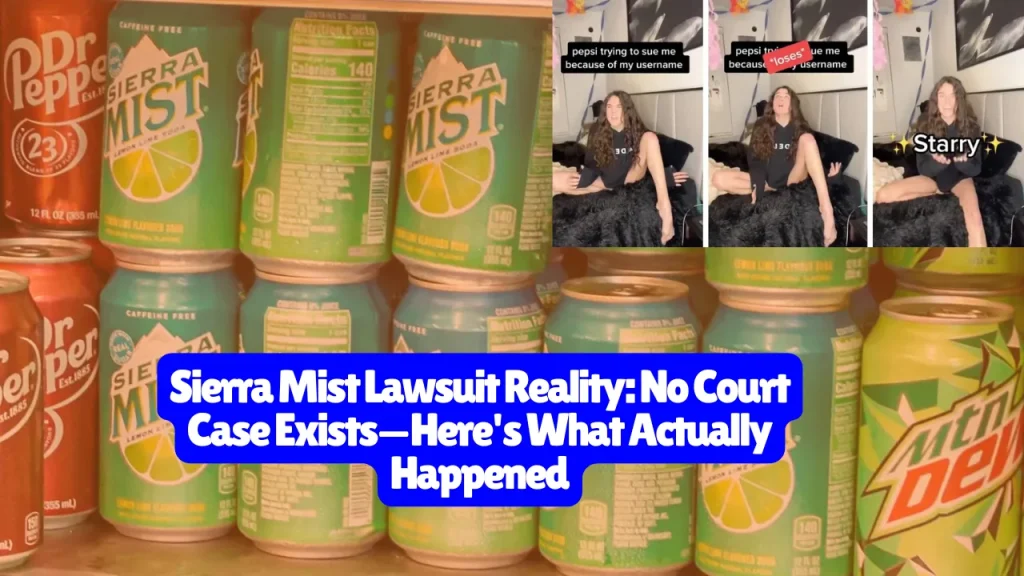
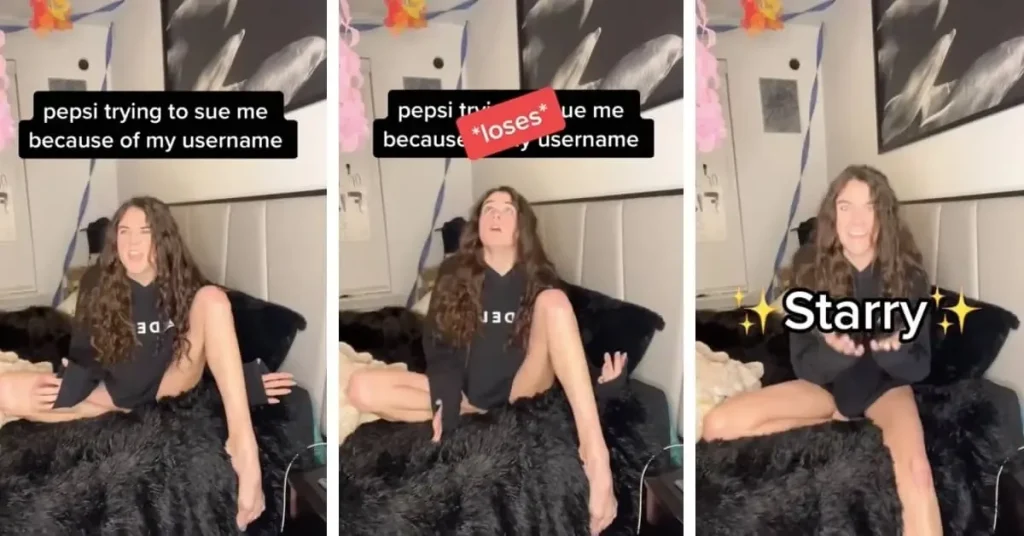
In December 2023, TikTok creator Cierra Mistt posted videos claiming PepsiCo had sued her for trademark infringement because her online name sounded similar to their lemon-lime soda “Sierra Mist.” She told followers that:
- PepsiCo sent her a cease-and-desist letter accusing her of trademark violation
- She discovered PepsiCo had let the Sierra Mist trademark expire
- She purchased the trademark rights herself
- PepsiCo settled the case in her favor
- The company rebranded Sierra Mist as “Starry” to avoid further legal issues with her
Her videos went viral, accumulating millions of views and sparking widespread discussion about corporate trademark enforcement and influencer rights.
Related Article: USC $10M University of Southern California Tuition Class Action Lawsuit, Students Paid $65,000 for Zoom Classes
The Reality: No Court Records Exist
Extensive searches of federal and state court databases reveal no lawsuit between PepsiCo and Cierra Mistt (also spelled Cierra Mist). Legal databases including PACER (Public Access to Court Electronic Records), which tracks all federal cases, show zero filings matching this dispute.
Key facts:
- No case number has ever been provided
- No court documents have surfaced
- No legal filings appear in trademark databases
- PepsiCo never issued a public statement about any lawsuit
- No settlement agreement has been disclosed
- Legal experts who investigated found no evidence of litigation
Unlike verified consumer protection cases such as the Kraft Heinz class action lawsuits from securities claims to food labeling controversies where court documents and case numbers are publicly available, the Sierra Mist case has no paper trail.
Why Sierra Mist Actually Became Starry
PepsiCo discontinued Sierra Mist in January 2023—two months before Cierra Mistt’s viral videos—and launched Starry as its replacement. The company’s stated reasons had nothing to do with trademark disputes:
Market performance. Sierra Mist held only 0.3% of the U.S. soda market in 2021, while Coca-Cola’s Sprite dominated with 8.3%. PepsiCo needed a complete brand refresh to compete.
Demographic targeting. Starry was designed to appeal to Gen Z consumers through social media-heavy marketing, vibrant packaging, and a slightly different flavor profile.
Strategic repositioning. PepsiCo spent $450 million marketing Starry in its first year, indicating this was a planned strategic move, not a reaction to legal pressure.
Timeline doesn’t match. PepsiCo announced the discontinuation of Sierra Mist in January 2023. Cierra Mistt’s first viral video about the alleged lawsuit appeared in February 2023—after the rebrand was already public.
Trademark Law Basics: Why the Claims Don’t Add Up
You can’t “buy” an active corporate trademark. Even if PepsiCo had let a trademark registration lapse (which they didn’t), trademark rights come from continuous commercial use, not just registration. PepsiCo had been selling Sierra Mist since 1999, giving them common law trademark rights that don’t expire simply because a registration isn’t renewed.
Cease-and-desist letters aren’t lawsuits. If PepsiCo had sent Cierra Mistt a cease-and-desist letter (which is unconfirmed), that’s a warning, not a lawsuit. Companies send thousands of these annually without ever filing legal cases.
Personal names vs. commercial trademarks. Trademark law allows people to use their real names even if they’re similar to corporate trademarks, as long as they’re not selling competing products. Cierra Mistt creates flight attendant content on TikTok—she’s not manufacturing lemon-lime sodas.
No trademark transfer appears in USPTO records. The United States Patent and Trademark Office (USPTO) maintains public records of all trademark transfers. No transfer of Sierra Mist trademark rights to Cierra Mistt appears in these databases.
What Legal Experts Say About the Claims
Trademark attorney Michael Roberts told Legal Affairs in September 2024: “I’ve reviewed the USPTO database, PACER, and state court records. There’s no evidence this lawsuit ever existed. If PepsiCo had actually sued, we’d see a case number, docket entries, and court filings. None exist.”
Consumer protection attorney Jennifer Walsh notes: “This appears to be a case of viral storytelling that took on a life of its own. Unlike actual consumer protection cases like the T-Mobile class action lawsuit update hidden fees, data breaches, and refunds where plaintiffs filed verified complaints with specific allegations, we have no verified legal documents here.”
Intellectual property professor Susan Chen explained to the New York Times: “Even if PepsiCo had let a registration lapse—and there’s no evidence they did—they’d still have common law trademark rights from 24 years of continuous use. You can’t just ‘buy’ someone else’s actively used trademark.”
Why the Story Went Viral
David vs. Goliath narrative. People love stories of individuals beating massive corporations. Cierra Mistt positioned herself as the underdog who outsmarted PepsiCo’s legal team.
Timing coincidence. The rebrand happened to occur around the same time as her videos, making the connection seem plausible even though causation was impossible given the timelines.
Platform amplification. TikTok’s algorithm favors controversial, dramatic content. Videos claiming “I beat PepsiCo in court” generated massive engagement.
Lack of corporate response. PepsiCo’s silence allowed speculation to fill the void. Major corporations typically don’t comment on social media claims, especially when doing so might give them more attention.
Confirmation bias. People who distrust large corporations were predisposed to believe an individual could “win” against PepsiCo, regardless of evidence.
Could There Have Been Private Communication?
It’s possible PepsiCo sent a cease-and-desist letter to Cierra Mistt. Companies routinely send these to social media users whose names or content might create brand confusion. These letters are:
- Not public record
- Not lawsuits or legal cases
- Often resolved without further action
- Standard corporate brand protection practice
However, receiving a cease-and-desist doesn’t mean:
- A lawsuit was filed
- You “won” anything legally
- The company changed their entire product line because of you
- You acquired trademark rights
Most cease-and-desist letters result in the recipient simply changing their username or the company deciding the issue isn’t worth pursuing. Neither outcome constitutes a “legal victory.”
Comparison to Actual Beverage Industry Lawsuits
Real beverage industry lawsuits look very different from the Sierra Mist claims:
Kraft Mac & Cheese labeling lawsuit (2023-present): Court Case No. in U.S. District Court for the Northern District of Illinois. Specific allegations about “No Artificial Flavors” claims. Named plaintiffs. Verified court documents. Expert testimony about citric acid and sodium phosphates.
Coca-Cola vitamin water lawsuit (2009): $61 million settlement. Federal case in New York. Allegations of misleading health claims. Discovery process. Depositions. Expert witnesses. Public settlement terms.
Red Bull “gives you wings” lawsuit (2014): $13 million settlement. False advertising claims. Verified class action with case number. Public notice to class members. Settlement administrator appointed.
These cases had documentation similar to other verified consumer protection litigation, like the Temu lawsuits exploding in 2025 over data-theft business allegations where state attorneys general filed public complaints with specific case numbers and detailed allegations.
What This Means for Consumers
You weren’t misled by PepsiCo. The company discontinued Sierra Mist for legitimate business reasons documented in their financial reports and press releases.
No consumer claims exist. Unlike actual product litigation where consumers can join class actions, there’s no verified Sierra Mist legal case for consumers to participate in.
Starry isn’t Sierra Mist with a new name. It’s a different formula with high-fructose corn syrup instead of Sierra Mist’s cane sugar. The taste profile is intentionally different.
You can’t file a claim. There’s no settlement fund, no claim form, and no class action administrator because there was no lawsuit.
Lessons About Social Media Legal Claims
Verify before believing. When someone claims they sued a major corporation:
- Ask for a case number
- Search PACER for federal cases
- Check state court databases
- Look for news coverage from legal publications
- Review USPTO records for trademark claims
Absence of evidence matters. Real lawsuits generate paper trails. Court filings are public record. Settlement agreements are disclosed. The complete absence of documentation is telling.
Corporate silence isn’t admission. Companies rarely respond to viral social media claims because engagement often amplifies them. Silence doesn’t mean the claims are true.
Entertainment vs. facts. Social media rewards engagement, not accuracy. Dramatic stories spread faster than corrections.

What Actually Happened: The Most Likely Scenario
Based on available evidence, here’s the probable reality:
- PepsiCo decided to discontinue Sierra Mist due to poor market performance and planned the Starry launch months in advance
- Cierra Mistt may have received a routine cease-and-desist letter from PepsiCo’s legal team about her username (or she may not have—even this is unverified)
- She creatively interpreted this interaction as a major legal battle for social media content
- The timing coincidence between the rebrand announcement and her videos made the story seem plausible
- Viral amplification turned her narrative into an internet phenomenon
- PepsiCo ignored it because engaging would give the claims more credibility and attention
This scenario requires no conspiracy, no expired trademarks, and no David-beats-Goliath legal victory. Just creative storytelling meeting algorithmic amplification.
Action Steps: How to Verify Legal Claims
When you see viral claims about lawsuits:
Search PACER (pacer.gov) for federal cases using party names and relevant keywords. Cost: $0.10 per page.
Check state court websites where the parties are located. Most maintain free searchable databases.
Review USPTO records (uspto.gov) for trademark disputes and transfers. Completely free and searchable.
Look for legal news coverage. Legitimate cases involving major corporations get covered by Law360, Bloomberg Law, Reuters Legal, and other trade publications.
Demand specifics. Real lawsuits have case numbers, filing dates, court locations, and named judges. If none are provided, be skeptical.
Compare to verified cases. Look at how actual consumer protection litigation like the CVS class action lawsuits guide and settlement details for 2025 provides case numbers, court locations, specific allegations, and documented timelines.
Surprising Facts About Trademark Disputes
Fortune 500 companies send thousands of cease-and-desist letters annually. Most never become lawsuits. Legal teams protect trademarks as routine business practice.
99% of trademark disputes settle without litigation. The recipient changes their username/branding, or the company decides not to pursue further action.
Trademark lawsuits that do proceed take 18-36 months. From filing to resolution, real cases involve discovery, motions, hearings, and appeals. A case supposedly filed and “won” in weeks is a red flag.
Personal name defenses usually work. Courts generally allow people to use their real names for non-competing purposes even if similar to trademarks.
FAQ: Sierra Mist Lawsuit Questions
Is there really a Sierra Mist lawsuit?
No. No verified court case exists between PepsiCo and Cierra Mistt. Searches of federal and state court databases, PACER, and legal news sources reveal no such litigation.
Did Cierra Mistt buy the Sierra Mist trademark?
No evidence supports this claim. USPTO records show no trademark transfer to Cierra Mistt. PepsiCo maintains trademark rights through continuous commercial use since 1999.
Why did PepsiCo change Sierra Mist to Starry?
Poor market performance. Sierra Mist had 0.3% market share compared to Sprite’s 8.3%. PepsiCo announced the strategic rebrand in January 2023 as part of a planned product refresh.
Did PepsiCo send Cierra Mistt a cease-and-desist letter?
Unverified. She claims they did, but no documentation exists. Even if true, cease-and-desist letters aren’t lawsuits and don’t appear in public records.
Can I join the Sierra Mist lawsuit?
No, because no lawsuit exists. There’s no class action, no settlement fund, no claim form, and no case number.
Does Cierra Mistt own rights to use the name Sierra Mist commercially?
Extremely unlikely. PepsiCo’s common law trademark rights from 24 years of commercial use supersede any registration issues. Buying a lapsed registration (which there’s no evidence she did) wouldn’t transfer these rights.
Is this similar to the Facebook class action lawsuit or Amazon class action lawsuit?
No. Unlike the Facebook class action lawsuit payout settlement checks finally going out with $725 million or Amazon subscription and membership class action lawsuit with $2.5 billion FTC settlement, those cases have verified court filings, case numbers, documented settlements, and public claim processes.
What should I do if I bought Sierra Mist and feel misled?
You weren’t misled. PepsiCo announced the product discontinuation publicly and replaced it with a new product. This is standard business practice, not deceptive conduct.
Could PepsiCo sue Cierra Mistt for her claims?
Theoretically yes, for defamation if her statements are false and damaged PepsiCo. However, large corporations rarely sue individuals for social media posts due to the “Streisand effect”—lawsuits often generate more negative attention than ignoring the claims.
Bottom Line: Separating Viral Stories from Legal Reality
The Sierra Mist lawsuit doesn’t exist. No court records, no case number, no verified legal proceedings. What exists is a viral social media story that captured public imagination through dramatic storytelling and fortunate timing.
Real consumer protection lawsuits—like trademark disputes, false advertising cases, or product liability claims—leave extensive paper trails. They have:
- Verified court filings with case numbers
- Named plaintiffs and defendants
- Specific legal allegations
- Discovery processes
- Settlement negotiations
- Public documentation
The Sierra Mist situation has none of these elements.
For consumers seeking legitimate legal recourse in product disputes, look for verified cases with documented court proceedings, just like actual class actions involving Gmail lawsuit claim forms or Verizon class action lawsuit settlements that provide case numbers, settlement administrators, and claim deadlines.
The internet makes misinformation spread faster than truth. When evaluating legal claims—especially viral ones—demand evidence. Court cases are public record. If a lawsuit existed, we’d know. The complete absence of documentation tells you everything you need to know about the Sierra Mist lawsuit reality: it’s entertainment, not litigation.
About the Author

Sarah Klein, JD, is a licensed attorney and legal content strategist with over 12 years of experience across civil, criminal, family, and regulatory law. At All About Lawyer, she covers a wide range of legal topics — from high-profile lawsuits and courtroom stories to state traffic laws and everyday legal questions — all with a focus on accuracy, clarity, and public understanding.
Her writing blends real legal insight with plain-English explanations, helping readers stay informed and legally aware.
Read more about Sarah