
Are Fireworks Legal In Washington DC? Almost Everything Banned—$2,000 Fines Enforced
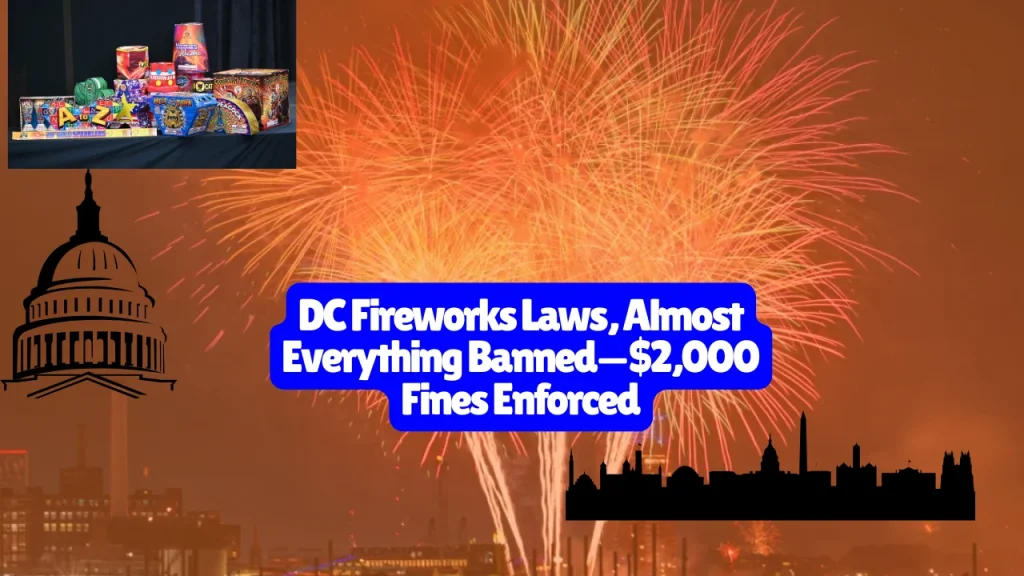
Most fireworks are illegal in Washington DC in 2025. Only sparklers under 20 inches, fountains, cones, torches, non-poisonous snakes, paper caps, and specific ground-based novelty items are legal. Firecrackers, Roman candles, bottle rockets, cherry bombs, and any fireworks that explode, spin, or move after ignition are prohibited. Possession of illegal fireworks carries minimum fines starting at $2,000 and potential arrest. Section 5609 of the DC Fire Code (2017) governs enforcement, requiring operational permits for any fireworks sales or storage.
DC’s restrictions are stricter than neighboring Maryland and Virginia.
What Types of Fireworks Are Legal in Washington DC?
DC Fire Code Section 5609 and Article 27 of the DC Municipal Regulations establish narrow categories of permissible fireworks.
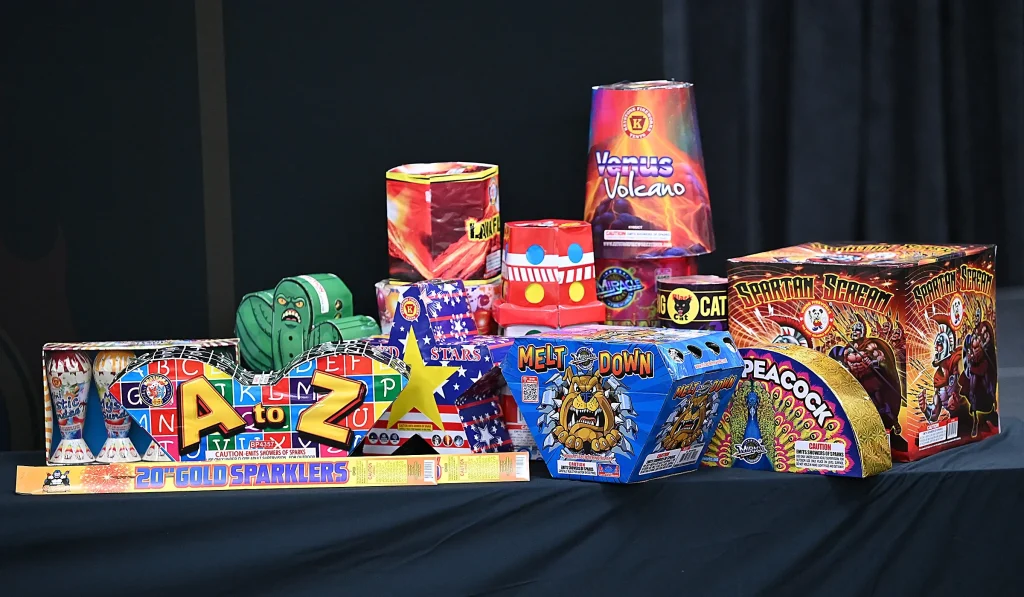
Legal Fireworks in DC:
- Sparklers not exceeding 20 inches in length
- Torches and box fires
- Fountains and cones
- Dip sticks
- Non-poisonous snakes
- Paper novelty items and colored lights
- Toy paper caps containing no more than 0.25 grains of explosive composition per cap
All legal fireworks must appear on the DC Fire Marshal’s approved products list, updated annually after May 25 each year. Only products from approved wholesale sellers that pass Office of the Fire Marshal testing can be legally sold in the District.
Illegal Fireworks in DC:
- Firecrackers of any kind or description
- Any fireworks that explode (cherry bombs, salutes, M-80s)
- Roman candles, floral shells, artillery shells
- Any fireworks intended to move after being placed and fired (bottle rockets, parachutes, buzzbombs, pinwheels, helicopters, jumping jacks)
- Fireworks that spin or rotate
- Fire balloons and sky rockets
- Fireworks containing mercury, arsenic, tetryl, phosphorous, sulphocyanide, magnesium, potassium picrate, gallic acid, chlorate of potash and sugar, or highly oxidizing agents
- Fireworks with side fuses or fuses inserted along the length
- Any fireworks deemed dangerous by the Fire Code Official
The prohibition extends beyond explosives—DC bans movement-based fireworks that neighboring jurisdictions may permit.
Related article: US Fireworks Laws Christmas 2025, Where They’re Legal State-by-State
DC Fire Code Section 5609: The Governing Regulation
Section 5609 (Consumer Fireworks) of the District of Columbia Fire Code (2017), an amended version of the International Fire Code of 2015, establishes comprehensive fireworks regulations.
Key Provisions:
- Section 5609.1.1.1: Manufacturing, possessing, storing, displaying, selling, setting off, or discharging prohibited fireworks is illegal
- Section 5604: Defines storage and handling requirements for permitted fireworks
- Section 5601.2: Requires operational permits for any manufacture, storage, handling, sale, or use of fireworks
- Article 27, F-2700.1.1 (DC Register): Lists prohibited fireworks
- Article 27, F-2700.1.2 (DC Register): Lists permitted fireworks
The Fire Code doesn’t simply restrict—it requires affirmative approval. Unlike states with presumptive legality for consumer fireworks, DC operates under a prohibited-unless-specifically-approved framework.
Penalties for Illegal Fireworks in Washington DC
DC imposes substantial penalties for fireworks violations under multiple enforcement mechanisms.
Criminal Penalties: Possession or use of illegal fireworks carries minimum fines starting at $2,000 and potential arrest for further prosecution. The Fire Code grants law enforcement authority to pursue criminal charges beyond civil infractions.
Civil Infractions: DC Municipal Regulations Section 16-3401(q) classifies violations of 12-H DCMR § 5609.1.1.1 (engaging in manufacturing, possession, storage, display, sale, setting off, or discharge of prohibited fireworks) as specific civil infractions with associated fine schedules.
Seizure and Destruction: The Office of the Fire Marshal seizes illegal fireworks discovered in the District. Retailers have 30 days to appeal seizures; after that, confiscated fireworks are destroyed. All unapproved fireworks are subject to immediate seizure.
Vendor Penalties: Retailers selling fireworks without both required permits face closure and product seizure. Businesses must maintain:
- Business license from Department of Consumer and Regulatory Affairs (DCRA)
- Fireworks permit from Office of the Fire Marshal ($50 fee, issued after site inspection)
Failure to produce both permits on request results in immediate closure and confiscation.
Enhanced Enforcement (July 4-6): During peak periods, DC operates dedicated fireworks enforcement through 311 with specialized call takers and MPD fireworks units in each district. This creates higher likelihood of citations and arrests.
Business Licensing and Operational Permits
Section 105.6.15 of the DC Fire Code requires operational permits for any fireworks-related business operations.
Permit Requirements for Sellers:
- Business license from DCRA (previously governed by DC Code § 47-2814, now repealed by DC Law 24-333)
- Fireworks permit from Fire Marshal’s Office following site inspection
- Corporate surety bond minimum $100,000 or public liability insurance for same amount
- Compliance with approved storage locations and methods
Wholesaler Approval: Retailers can only purchase from approved wholesale sellers whose products have been tested by the Office of the Fire Marshal. The approved list becomes available after May 25 annually.
Inspection Authority: The Fire Code Official can inspect all fireworks products and storage/sales locations to ensure compliance. Applicants must provide sufficient labor to unload and reload fireworks for inspection—inspectors don’t participate in handling.
Permit Revocation Grounds:
- Using permit for different location than issued
- Using permit for different activities than listed
- Violating permit conditions or limitations
- False statements in applications
- Different person using permit than named permittee
- Failure to comply with orders or notices
Reporting Illegal Fireworks
DC maintains year-round and seasonal reporting mechanisms for fireworks violations.
Year-Round Reporting:
- DC Fire Marshal’s Office: (202) 673-ARSON (2776)
- Visit fems.dc.gov and complete Fire Marshal Hotline Form
- Call 3-1-1 (DC’s non-emergency number)
July 4-6 Enhanced Reporting:
- DC311 App: Select “Illegal Fireworks Request”
- Call 311 and choose option #1 for fireworks
- Dedicated call takers route complaints to MPD fireworks units
Emergency Situations: Call 911 if fireworks cause property damage or injury. Follow call taker directions for immediate fire and police dispatch.
Anonymous reporting is accepted. Officials encourage reporting sales of illegal fireworks, not just use violations.
How DC Compares to Maryland and Virginia
DC maintains the most restrictive fireworks regulations in the region.
Maryland: State law permits gold-label sparklers, novelty items, and ground-based sparkler devices. Baltimore City, Montgomery County, and Prince George’s County ban all consumer fireworks including sparklers. Maryland violations carry fines up to $250 (state level) or $1,000 with six months jail (Montgomery County).
Virginia: State law restricts fireworks to non-aerial, non-explosive items. Possession of illegal fireworks is a Class 1 misdemeanor with maximum penalties of $2,500 fine and/or one year jail. Alexandria bans all consumer fireworks. Arlington prohibits any fireworks leaving the ground. Fairfax and Loudoun add restrictions against lateral movement. Prince William prohibits spinning fireworks.
Washington DC: Prohibits explosions, movement, and spinning. Bans more categories than either neighboring jurisdiction. Higher minimum fine ($2,000) than Maryland or Virginia state-level penalties. Narrowest list of approved products.
Comparative Legal Framework: DC’s approach reflects federal district priorities—density, national monuments, federal buildings, and diplomatic presence create heightened security and fire safety concerns. The District’s regulations aim to prevent both accidental fires and intentional disruptions of federal operations.
Professional Fireworks Displays in DC
Professional displays require extensive permitting and coordination with multiple agencies.
Federal Coordination: Displays near federal property, monuments, or waterways require coordination with:
- National Park Service (for National Mall events)
- U.S. Coast Guard (for waterway safety zones)
- U.S. Secret Service (for areas near White House, federal facilities)
- Metropolitan Police Department (for crowd control, security)
Coast Guard Safety Zones: The Coast Guard enforces safety zones for permitted displays. For example, The Wharf DC fireworks require safety zones in Washington Channel portions of Upper Potomac River. Vessels cannot enter safety zones during enforcement periods without Coast Guard authorization.
Permit Requirements:
- Operational permit from Office of the Fire Marshal
- Corporate surety bond minimum $100,000 or equivalent insurance
- Detailed display plans including safety protocols
- Site inspections and approvals
- Coordination with MPD, Fire and EMS
- Compliance with NFPA standards
Notable DC Displays: The annual National Mall Fourth of July celebration remains DC’s largest permitted display, featuring professional pyrotechnic operators under federal oversight.
Recent Fireworks-Related Incidents
DC enforcement reflects real public safety risks documented in recent incidents.
2024 Apartment Fire: A Roman candle—illegal in DC—caused a fire at a District apartment complex displacing more than 70 residents, according to Fire Marshal Ed Kauffman. The incident demonstrated how illegal fireworks create significant property damage and displacement risks in dense urban environments.
Arlington Business Fire (July 4, 2024): Illegal fireworks caused an estimated $250,000 in damage to an Arlington business on Independence Day 2024, illustrating cross-jurisdictional risks.
2025 Enforcement Trends: DC received 150 calls to 311 about illegal fireworks on July 4, 2024. Enhanced enforcement during July 4-6, 2025 included dedicated call takers and specialized MPD fireworks units in each district, demonstrating increased regulatory focus.
Safety Statistics and Injury Data
National and regional data justify DC’s restrictive approach.
National Statistics (2023): The U.S. Consumer Product Safety Commission reported 11 deaths and 14,700 injuries from fireworks misuse in 2023. Adults and young people ages 15-24 comprised the majority of injuries. Burns to fingers, hands, face, head, and ears were most common.
Injury Patterns: Between June 18-July 18, 2005, firecrackers, sparklers, and rockets accounted for most injuries seen in emergency departments. The U.S. National Fire Protection Association and CDC strongly recommend fireworks be used only by professionals.
DC-Specific Concerns:
- High population density increases injury risks
- Historic buildings and monuments increase fire hazards
- Diplomatic residences require enhanced security
- Federal facilities present terrorism concerns
- Narrow streets and limited firefighting access in older neighborhoods
Sparklers—legal in DC—burn at 1,200-1,800°F, hot enough to melt glass and ignite clothing. Even permitted items require strict adult supervision.
What You Need to Know for 2025
Key Takeaways:
- Almost all fireworks illegal in DC—only sparklers under 20 inches, fountains, cones, torches, and specific novelty items permitted
- Minimum $2,000 fines for possession of illegal fireworks plus potential arrest
- DC Fire Code Section 5609 governs all regulations
- Operational permits required for any sales or storage
- Only approved products from approved wholesalers can be sold
- Enhanced enforcement July 4-6 with dedicated 311 call takers
- Professional displays require extensive multi-agency coordination
- Stricter than Maryland or Virginia state laws
Before Using Fireworks in DC:
- Verify products appear on Fire Marshal’s approved list (available after May 25)
- Purchase only from licensed vendors with both DCRA license and Fire Marshal permit
- Keep sparklers away from children under close adult supervision
- Never use any fireworks that explode, move, or spin
- Have water or sand immediately available
- Report illegal fireworks through 311 or Fire Marshal hotline
- Never transport fireworks purchased in Maryland or Virginia into DC—many legal there are illegal in DC
For Visitors: DC’s fireworks restrictions apply to all persons within the District, including visitors. Products legal in your home state may be illegal in DC. Don’t bring fireworks from other jurisdictions.
Legal Expert Perspectives
DC’s fireworks framework reflects unique federal district considerations beyond typical municipal concerns.
As the nation’s capital, DC balances celebration traditions against security imperatives. The concentration of federal facilities, foreign embassies, monuments, and government operations creates heightened vulnerability to fire and security incidents.
Legal experts note DC’s prohibited-unless-approved framework contrasts sharply with most states’ permitted-unless-restricted models. This places burden on manufacturers and retailers to obtain affirmative approval rather than assuming legality.
The $2,000 minimum fine—higher than Maryland or Virginia state penalties—demonstrates DC’s enforcement priorities. Combined with seizure authority and arrest potential, penalties aim to deter violations rather than simply punish them after occurrence.
The annual approved products list requirement (available after May 25) creates administrative burdens but ensures Fire Marshal oversight of all available products. This prevents vendors from introducing new items without safety testing.
Professional fireworks displays’ multi-agency coordination requirements reflect DC’s complex jurisdictional landscape. National Park Service, Coast Guard, Secret Service, MPD, and Fire and EMS must all coordinate—a uniquely federal consideration absent in state contexts.
Frequently Asked Questions
Can I use sparklers from Amazon in DC?
Only if they appear on the DC Fire Marshal’s approved products list released after May 25 each year. Not all sparklers meeting DC’s size restrictions are approved—products must pass specific Fire Marshal testing.
Are fireworks from Maryland or Virginia legal to use in DC?
No. Many fireworks legal in neighboring jurisdictions are illegal in DC. Don’t transport fireworks from other states/jurisdictions into the District—they’re likely illegal regardless of where purchased.
What’s the penalty for personal use versus selling?
Both carry minimum $2,000 fines. Sellers face additional penalties including business closure, license revocation, product seizure, and bond forfeiture. Personal possession can result in arrest for further prosecution beyond fines.
Can I get a permit for a backyard fireworks show?
Unlikely for personal use. Operational permits are for businesses and professional displays. Private backyard shows using illegal fireworks aren’t eligible for permitting.
Why is DC stricter than Maryland and Virginia?
DC’s unique status as federal capital creates heightened security and fire safety concerns. Density, monuments, federal buildings, diplomatic facilities, and government operations all contribute to stricter regulations.
What if police don’t respond to my fireworks complaint?
During July 4-6, DC operates dedicated fireworks enforcement with specialized 311 call takers and MPD fireworks units. Year-round, complaints go to Fire Marshal’s office for investigation and follow-up.
Are “legal” fireworks really safe?
No fireworks are completely safe. Even permitted sparklers burn at 1,200-1,800°F and cause significant injuries. The NFPA and CDC recommend fireworks only be used by professionals.
Can I watch professional displays in DC?
Yes. The National Mall’s annual July 4 celebration features professional displays. Various locations including The Wharf host permitted professional shows throughout the year.
What happens to seized fireworks?
The Fire and EMS Department holds seized fireworks for 30 days to allow appeals. After 30 days, confiscated products are destroyed.
Do DC’s laws apply on federal property?
Federal property follows federal regulations, but DC laws generally apply in the District. National Park Service manages fireworks policies on Mall and federal parks, typically prohibiting all consumer fireworks.
Washington DC maintains strict fireworks regulations reflecting its unique status as the nation’s capital. Understanding prohibitions, penalties, and approved products ensures legal compliance while protecting public safety during celebrations. When in doubt, attend professional displays rather than risk substantial fines and criminal prosecution for illegal personal use.
About the Author

Sarah Klein, JD, is a licensed attorney and legal content strategist with over 12 years of experience across civil, criminal, family, and regulatory law. At All About Lawyer, she covers a wide range of legal topics — from high-profile lawsuits and courtroom stories to state traffic laws and everyday legal questions — all with a focus on accuracy, clarity, and public understanding.
Her writing blends real legal insight with plain-English explanations, helping readers stay informed and legally aware.
Read more about Sarah