
Kobe Bryant Sexual Assault Lawsuit Case, What Really Happened in Colorado 2003
In July 2003, NBA star Kobe Bryant was charged with felony sexual assault in Colorado after a 19-year-old hotel employee accused him of rape. The criminal case was dismissed in September 2004 when the accuser declined to testify, and a civil lawsuit was settled confidentially in March 2005. Bryant died in a helicopter crash in January 2020, but renewed interest in the case has prompted searches for accurate information about what transpired.
The Incident: June 30, 2003
On June 30, 2003, Bryant checked into the Lodge & Spa at Cordillera near Edwards, Colorado, the day before scheduled knee surgery at Steadman Hawkins Clinic in Vail.
What Happened That Night:
The 19-year-old employee gave Bryant a tour of the hotel. According to her account to investigators:
- Bryant invited her to his room after flirting during the tour
- The encounter began with consensual kissing
- She alleged it escalated to unwanted groping and sexual assault
- She told police Bryant blocked her exit when she tried to leave the room and used physical force to restrain her during nonconsensual sexual intercourse
Bryant’s version differed significantly. He initially told investigators he did not have sexual intercourse with his accuser, but later admitted to having an adulterous sexual encounter with her while insisting it was consensual.
The Legal Battle Begins
July 1, 2003: The employee reported the alleged assault to Eagle County Sheriff’s deputies
July 2, 2003: Both Bryant and the accuser underwent separate medical examinations at a hospital. Law enforcement collected evidence, and Bryant submitted to a rape test kit and voluntary polygraph test.
July 4, 2003: Sheriff Joe Hoy issued an arrest warrant for Bryant. Bryant flew from Los Angeles back to Eagle, Colorado, to surrender to police. He was immediately released on $25,000 bond.
July 18, 2003: District Attorney Mark Hurlbert filed a single count of felony sexual assault. If convicted, Bryant faced probation to life in prison.
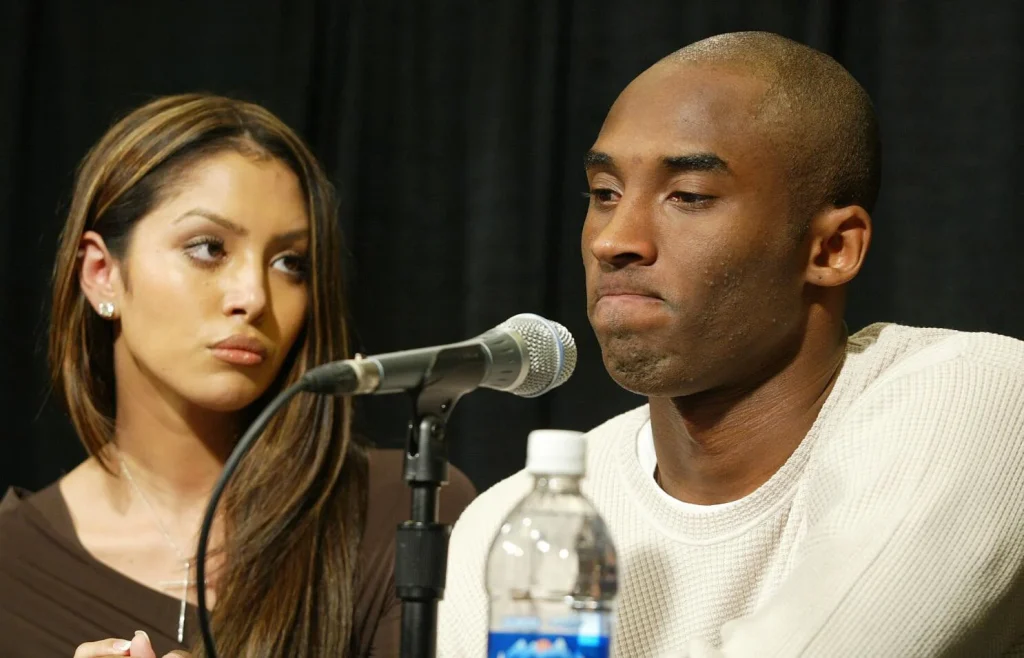
That same day, Bryant held a news conference adamantly denying rape but admitting to adultery. The press conference became one of the defining moments of the case.
Related article: Chipotle Lawsuit, Chipotle Just Won Big, Portion Size Fraud Lawsuit Tossed Out This Week
The Evidence and Pre-Trial Battles
The case involved extensive legal maneuvering over what evidence could be presented:
Physical Evidence:
- Rape kit examination results
- DNA samples taken from the alleged victim’s body and from the underwear she wore to the examination contained semen that did not match Bryant’s DNA profile
- Pubic hair obtained during the examination did not match that of the defendant
Witness Testimony: Bobby Pietrack, the accuser’s high school friend and a bellman at the resort, said she appeared to be very upset, was “very shaken” and crying, and “told me that Kobe Bryant had forced sex with her”
However, Trina McKay, the resort’s night auditor, said she saw the accuser as she was leaving to go home, and “she did not look or sound as if there had been any problem”
The Rape Shield Battle: The most contentious legal issue involved Colorado’s rape shield statute, which protects victims’ sexual histories from being publicly disclosed. Defense attorneys said the accuser had sex with someone else less than 15 hours after her alleged assault.
The Colorado Supreme Court had to intervene multiple times regarding what evidence about the accuser’s sexual conduct could be admitted at trial.
Media Circus and Privacy Violations
Leading up to trial, the woman’s identity was leaked and erroneously released multiple times. She faced intense public scrutiny and harassment.
The case generated unprecedented media coverage:
- Court transcripts were accidentally published with the accuser’s name
- Her sexual history became tabloid fodder
- Death threats forced her into hiding
- Her address and photos circulated online
The intense media attention and privacy violations took a severe toll on the accuser’s willingness to participate in the trial.
The Case Collapses
August 2004: The accuser filed a civil lawsuit against Bryant in federal court
September 1, 2004: The prosecution dropped the criminal case, saying the alleged accuser was “unable to go forward”
Shortly after jury selection had begun in September 2004, she told prosecutors she could not take part in trial, and they dropped the case and criminal charges were dismissed.
Bryant’s Apology Statement
On the day the criminal case was dismissed, Bryant issued a carefully worded statement that became crucial to understanding the case:
“First, I want to apologize directly to the young woman involved in this incident. I want to apologize to her for my behavior that night and for the consequences she has suffered in the past year. Although this year has been incredibly difficult for me personally, I can only imagine the pain she has had to endure. Although I truly believe this encounter between us was consensual, I recognize now that she did not and does not view this incident the same way I did.”
Bryant explicitly stated: “I also want to make it clear that I do not question the motives of this young woman.”
Importantly, Bryant noted: “No money has been paid to this woman” as part of the criminal case dismissal, though he added “She has agreed that this statement will not be used against me in the civil case.”
The Civil Settlement
March 2005: The civil lawsuit was settled out of court with confidential terms.
While the exact amount was never disclosed, experts estimated that a monetary component may have exceeded $2.5 million, which was the maximum a plaintiff could win in damages in Colorado at that time.
The settlement included no admission of guilt, and both parties agreed not to discuss the terms publicly.
Impact on Bryant’s Career and Reputation
Immediate Consequences:
- Lost major endorsement deals with McDonald’s and Nutella
- Nike temporarily suspended his shoe line before reinstating it
- Public image severely damaged
- Wife Vanessa stood by him but their marriage was strained
Long-Term Career: Despite the scandal, Bryant remained with the Lakers and continued his Hall of Fame career:
- Won two more NBA championships (2009, 2010)
- Named NBA Finals MVP in both years
- Rebuilt his public image through charitable work
- Retired in 2016 as one of basketball’s greatest players
The Legal Lessons
Rape Shield Laws: The case tested Colorado’s rape shield statute, which aims to protect sexual assault victims from having their sexual histories exploited in court. The statute “protects the privacy of a victim of sexual assault by ensuring that intimate details of his or her sexual history are not revealed in a public trial unless a court determines that this evidence is relevant to a material issue in the case.”
Celebrity Justice: The case highlighted how celebrity status affects the justice system:
- Intense media scrutiny on the accuser
- Defense resources far exceeding typical cases
- Public opinion heavily divided along fan loyalty lines
- Victim intimidation through public exposure
Consent and Miscommunication: Bryant’s apology statement revealed a critical issue: He truly believed the encounter was consensual, yet acknowledged she did not view it the same way. This gap in perception remains central to many sexual assault cases.
The Helicopter Crash: January 26, 2020
On January 26, 2020, a Sikorsky S-76B helicopter crashed into a hillside in the city of Calabasas, California, around 25 miles northwest of downtown Los Angeles. All nine people on board were killed: retired professional basketball player Kobe Bryant and his 13-year-old daughter Gianna; baseball coach John Altobelli, his wife Keri, and their 14-year-old daughter Alyssa; Sarah Chester and her 13-year-old daughter Payton; basketball coach Christina Mauser; and the pilot, Ara Zobayan.
What Happened: The helicopter departed from John Wayne Airport in Orange County at about 9:07 a.m. and was destined for Camarillo Airport, about 24 miles west of the accident site, where the group was heading to a youth basketball tournament at Bryant’s Mamba Sports Academy.
The pilot announced to air traffic control that he was initiating a climb to get the helicopter “above the cloud layers,” and the helicopter immediately began climbing. About 36 seconds later and while still climbing, the helicopter began to turn more tightly to the left. The helicopter reached an altitude of about 2,370 feet, then it began to descend rapidly in a left turn to the ground.
The Cause: The National Transportation Safety Board concluded that the probable cause of this accident was the pilot’s decision to continue flight under visual flight rules into instrument meteorological conditions, which resulted in the pilot’s spatial disorientation and loss of control.
The crash occurred in dense fog. Visibility was so low that the Los Angeles Police Department grounded its helicopters that morning because conditions “did not meet minimum standards for flying.”
The 2020 Reckoning: #MeToo and Bryant’s Legacy
Bryant’s death prompted an uncomfortable national conversation about how to reconcile his basketball greatness with the 2003 allegations.
Immediate Reactions:
- Most tributes focused solely on his athletic achievements
- Some journalists and activists mentioned the Colorado case
- Washington Post reporter Felicia Sonmez was suspended (then reinstated) for tweeting about the case
- Debates erupted about “separating art from artist”
The Divided Response: Supporters argued:
- Criminal charges were dropped
- He apologized and settled the civil case
- He spent 17 years rehabilitating his image
- His daughter’s death made criticism insensitive
Critics maintained:
- The apology acknowledged her perspective that it wasn’t consensual
- The case was dropped due to victim intimidation, not innocence
- Powerful men often escape accountability
- Hagiography erases his accuser’s experience
Comedian Ari Shaffir’s Controversial Response: Comedian Ari Shaffir caused outrage with his video response on Twitter to Bryant’s death, celebrating it and claiming that Bryant was a rapist. Shaffir faced intense backlash, death threats, and lost professional opportunities.
Why People Are Searching Again
Several factors drive continued interest in the Bryant case:
1. #MeToo Movement: The cultural shift toward believing accusers has prompted re-examination of past cases where powerful men faced allegations.
2. Celebrity Accountability: Renewed focus on how fame and wealth shield perpetrators from consequences.
3. Legal Education: Law students and professionals study the case for its rape shield statute implications and celebrity justice dynamics.
4. Bryant’s Enduring Legacy: New generations discovering Bryant’s career inevitably encounter the Colorado case.
5. Unsettled Questions: The case was never fully adjudicated, leaving many questions permanently unanswered.
What We’ll Never Know
Because the criminal case was dismissed before trial and the civil case settled confidentially, key questions remain unresolved:
- What exactly happened in that hotel room?
- Would a jury have convicted Bryant?
- How much was the civil settlement?
- What testimony would witnesses have provided?
- How would physical evidence have been interpreted?
Bryant maintained his innocence on the rape charge while acknowledging the encounter happened and apologizing for his behavior. The accuser maintained her account that she was assaulted. Both perspectives exist in the historical record.
Legal Precedents Set
Despite not going to trial, the case influenced sexual assault law:
Colorado Rape Shield Law: The Colorado Supreme Court’s rulings on in camera proceedings and victim privacy protections strengthened rape shield protections while balancing defendants’ rights to present relevant evidence.
Media Coverage of Sex Crimes: The case highlighted the dangers of revealing victim identities and prompted discussion about responsible reporting on sexual assault allegations.
Celebrity Prosecutions: District Attorney Mark Hurlbert’s willingness to prosecute a global superstar demonstrated that fame doesn’t guarantee immunity, even if the case ultimately didn’t reach verdict.
Frequently Asked Questions
Q: Was Kobe Bryant convicted of sexual assault?
A: No. The criminal charges were dismissed in September 2004 when the accuser told prosecutors she could not take part in the trial. He was never convicted because the case never went to trial.
Q: Did Kobe Bryant admit to rape?
A: No, but his apology was nuanced. He stated “Although I truly believe this encounter between us was consensual, I recognize now that she did not and does not view this incident the same way I did.” He acknowledged her perspective differed from his.
Q: Why did the accuser drop the criminal case?
A: She didn’t technically “drop” it—prosecutors dismissed charges after she said she couldn’t continue. Leading up to trial, the woman’s identity was leaked and erroneously released multiple times, subjecting her to intense harassment and making continued participation untenable.
Q: How much was the settlement?
A: The exact amount was never disclosed. Experts estimated it may have exceeded $2.5 million, which was the maximum a plaintiff could win in damages in Colorado at that time.
Q: Did Kobe Bryant’s wife divorce him?
A: No. Vanessa Bryant stood by Kobe throughout the case and remained married to him until his death in 2020, though the scandal severely strained their marriage.
Q: What evidence existed in the case?
A: DNA samples contained semen that did not match Bryant’s DNA profile, and pubic hair obtained during the examination did not match the defendant. There was also conflicting witness testimony about the accuser’s demeanor after the alleged assault.
Q: Can the case be reopened?
A: No. Bryant’s death in 2020 makes any criminal prosecution impossible. The civil case was settled and closed in 2005.
Q: Who was the accuser?
A: Her identity was widely leaked during the case but repeating it here would perpetuate the privacy violations she endured. She has never publicly discussed the case since the settlement.
Q: How did the case affect Bryant’s career?
A: He lost major endorsement deals initially but eventually rebuilt his image. He remained with the Lakers, won two more championships, and retired as one of basketball’s greatest players. However, the case permanently affected how some viewed his legacy.
Q: What happened to the prosecutor?
A: Mark Hurlbert was 34 and just six months into his job as DA when he prosecuted the case. He later left prosecution and rarely discussed the case publicly until after Bryant’s death.
The Bottom Line
The Kobe Bryant sexual assault case remains one of the most controversial celebrity legal battles in modern history. Criminal charges filed in July 2003 were dismissed in September 2004 when the accuser declined to testify, and a civil lawsuit was settled out of court in March 2005.
Key facts:
- Bryant admitted the sexual encounter occurred but maintained it was consensual
- The accuser maintained she was assaulted and did not consent
- Bryant apologized for his behavior and acknowledged she viewed the incident differently than he did
- The case never went to trial, so no jury verdict exists
- The civil settlement was confidential
Bryant died in a helicopter crash on January 26, 2020, along with his 13-year-old daughter Gianna and seven others. His death prompted renewed debate about how to evaluate his legacy given both his extraordinary basketball achievements and the serious allegations from 2003.
The case serves as a reminder that sexual assault allegations are complex, that legal outcomes don’t always provide moral clarity, and that the #MeToo era has fundamentally changed how society evaluates past cases involving powerful men.
For those seeking to understand the case, the documented facts exist in court records, Bryant’s public apology, and extensive news coverage. What happened in that Colorado hotel room on June 30, 2003, remains known only to the two people who were there.
Last Updated: December 24, 2025
This article is for informational purposes only and is based on publicly available court documents, news reports, and official statements. It does not constitute legal advice or judgment on the ultimate truth of what occurred.
About the Author

Sarah Klein, JD, is a licensed attorney and legal content strategist with over 12 years of experience across civil, criminal, family, and regulatory law. At All About Lawyer, she covers a wide range of legal topics — from high-profile lawsuits and courtroom stories to state traffic laws and everyday legal questions — all with a focus on accuracy, clarity, and public understanding.
Her writing blends real legal insight with plain-English explanations, helping readers stay informed and legally aware.
Read more about Sarah