
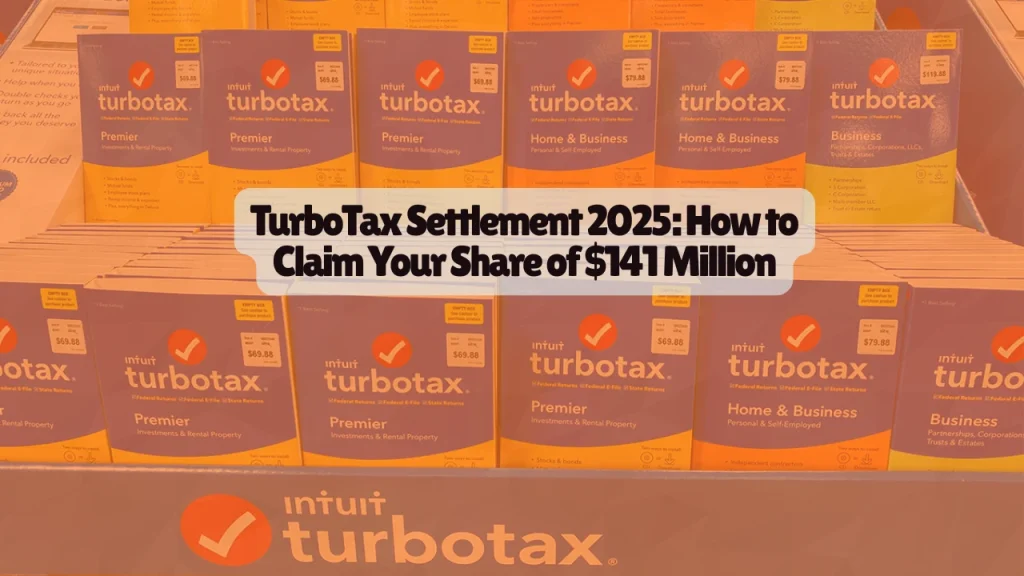
TurboTax Settlement 2025: How to Claim Your Share of $141 Million
The $141 million TurboTax settlement compensates 4.4 million consumers who paid for tax prep services that should have been free. If you used TurboTax for tax years 2016-2018 and were eligible for IRS Free File, you qualify for automatic payment—no claim form required.
What the TurboTax Settlement Involves
Intuit agreed to pay $141 million after states alleged the company deceived low-income taxpayers into paying for TurboTax when they qualified for free filing through the IRS Free File Program.
The multistate settlement resolved allegations that Intuit:
- Used misleading “free” advertising that most taxpayers couldn’t use
- Steered eligible consumers away from IRS Free File to paid products
- Failed to clearly disclose free-file limitations
- Employed aggressive marketing tactics that confused consumers
The Federal Trade Commission found approximately two-thirds of tax filers couldn’t use TurboTax’s free product in 2020, yet Intuit’s advertisements consisted almost entirely of the word “free” spoken repeatedly.
Legal Claims That Led to Settlement
Deceptive Marketing: State attorneys general alleged Intuit violated consumer protection laws by advertising “free” tax filing when most consumers didn’t qualify for the free version.
Unfair Business Practices: The complaint alleged Intuit employed deceptive user flows that pushed consumers from free-eligible products into paid TurboTax versions.
Bait-and-Switch Tactics: Investigators found Intuit would start consumers with “free” software, then tell them they didn’t qualify and had to upgrade to paid versions costing hundreds of dollars.
The settlement stemmed from investigations by all 50 states and Washington, D.C. California, New York, Los Angeles, and Santa Clara County played lead roles in the litigation filed in 2019.
Related article: Menards Rebate Deception Settlement: $4.25M Paid After 10 States Sue Over Misleading Ads Refund Eligibility & Details
How Much Compensation You’ll Receive
Payment amounts depend on how many eligible years you used TurboTax:
- Most consumers: $29-$30 per eligible year
- Maximum payment: Up to $85 if you qualified for all three years (2016, 2017, 2018)
The $141 million fund is distributed among approximately 4.4 million consumers nationwide.
Who Qualifies for TurboTax Settlement Payments
You qualify if you meet ALL these criteria:
Year Requirement: Used TurboTax for federal returns in tax years 2016, 2017, or 2018
Income Threshold: Were eligible for IRS Free File (adjusted gross income below $64,000 for 2016; thresholds varied by year)
Payment History: Started your return with Intuit’s free software but were told you didn’t qualify and paid to complete your return
Previous Use: Did NOT use Intuit’s Free File product in previous years
Eligible consumers received automatic notification from the settlement administrator, Rust Consulting.
How to Claim Your TurboTax Settlement—Automatic Payment
No claim form is required. Payments are automatic for eligible consumers.
Step 1: Check your email for notification from Rust Consulting, the settlement administrator. The email confirms eligibility and provides your claimant ID.
Step 2: Verify your mailing address is current. If you’ve moved, contact the settlement administrator immediately to update your address.
Step 3: Watch for your check in the mail. Payments began in May 2023 and continued through 2024.
Step 4: Cash your check promptly. Settlement checks typically have expiration dates.
TurboTax Settlement Payment Timeline
May 2022: Settlement announced with Intuit
May 2023: First settlement checks mailed to eligible consumers
Through 2024: Reissued checks sent to consumers with address issues
2025 Status: Distribution largely complete; some reissued payments may still be processed
If you qualified but haven’t received payment by mid-2024, you could request a reissue through the settlement website using your claimant ID.
Current Status—2025 Update
Settlement distribution is substantially complete. Most eligible consumers received payments in 2023-2024.
Ongoing Obligations: Intuit must maintain reforms including:
- Clear disclosure of free-file eligibility and limitations
- Ending misleading “free” advertising campaigns
- Making IRS Free File products more visible
- Eliminating confusing user flows that push consumers to paid products
The Federal Trade Commission issued its final opinion in January 2024 finding Intuit engaged in deceptive practices. The FTC case, separate from the state settlement, remains closed as of late 2024.
New TurboTax Lawsuits—2024 Data Breach
A separate class action filed July 1, 2024 alleges Intuit failed to protect customer data in a cyberattack that occurred between December 23, 2023 and February 21, 2024.
What Was Compromised:
- Names and Social Security numbers
- Driver’s license numbers and dates of birth
- Bank account numbers and financial details
- Tax return information
Key Allegations:
- Pattern of inadequate data security with breaches in 2014, 2015, 2019, 2021, and 2022
- Failed to implement basic cybersecurity measures
- Delayed victim notification by months
- Inadequate employee cybersecurity training
Plaintiff Joseph Garite claims he suffered identity theft after the breach, receiving fraudulent IRS letters containing his Social Security number and tax details. The lawsuit was filed in U.S. District Court for the Northern District of California.
This case remains in early litigation stages with no settlement announced.
TurboTax Privacy Violation Claims—Twilio Tracking
Law firm Labaton Keller Sucharow is recruiting claimants for individual arbitration against Twilio over alleged privacy violations.
Allegations: TurboTax used Twilio’s software development kits (SDKs) to collect and share sensitive user information without consent, potentially violating federal and state privacy laws.
Eligibility: Anyone who used TurboTax within the last three years
Potential Compensation: Claims may be worth up to $2,500 per person
Process: Individual arbitration claims rather than class action lawsuit
Applicable Federal and State Laws
Federal Trade Commission Act: Section 5 prohibits unfair or deceptive acts or practices in commerce. The FTC found Intuit’s “free” advertising violated this provision.
State Consumer Protection Laws: Each state has statutes prohibiting deceptive business practices. The multistate settlement enforced these laws across all 50 states plus D.C.
IRS Free File Program: Federal program requiring tax software companies to provide free filing to taxpayers with AGI below certain thresholds. Intuit was a Free File Alliance partner but allegedly steered eligible consumers to paid products.
California Consumer Privacy Act: Relevant to data breach and privacy violation claims filed in California courts.
State Data Breach Notification Laws: Require companies to notify consumers when personal information is compromised. The 2024 lawsuit alleges Intuit delayed notification for months.
What Legal Experts Say
New York Attorney General Letitia James stated: “TurboTax’s predatory and deceptive marketing cheated millions of low-income Americans who were trying to fulfill their legal duties to file their taxes.”
Consumer protection advocates note the settlement represents one of the most significant enforcement actions against tax software companies.
Data security experts point out Intuit’s pattern of repeated breaches suggests systemic cybersecurity failures requiring fundamental reforms beyond settlements.
The FTC’s finding of deceptive practices establishes important precedent for regulating “free” advertising claims in the software industry.
How to Protect Yourself
For Settlement Payments:
- Verify all communications come from Rust Consulting
- Never provide Social Security numbers or payment information in response to unsolicited emails
- Visit official settlement websites directly rather than clicking email links
- Be alert for settlement scams targeting TurboTax users
For Data Security:
- Enroll in free credit monitoring if offered by Intuit
- Monitor credit reports for signs of identity theft
- Change passwords for TurboTax and related financial accounts
- Enable two-factor authentication
- Review account statements regularly for unauthorized activity
- Place fraud alerts with credit bureaus if concerned
Similar Consumer Protection Settlements
H&R Block Settlement (2021): $50 million class action in Texas involving kickbacks for arranging predatory loans between tax clients and lenders.
Tax Defense Network Settlement (2014): $15 million FTC settlement for deceptive marketing of tax debt relief services.
Liberty Tax Settlement (2019): $5.7 million to resolve allegations of deceptive advertising about guaranteed refunds.
These cases establish that tax preparation companies face significant liability for misleading consumers about free services, hidden fees, and false guarantees.
What Affected Consumers Should Do Now
If You Haven’t Received Payment:
- Check spam folders for emails from Rust Consulting
- Verify your eligibility using the criteria above
- Contact the settlement administrator if you believe you qualify
- Update your mailing address if you’ve moved
If You Were Affected by the Data Breach:
- Watch for official communication from Intuit
- You’re automatically included in the class action—no action needed initially
- Enroll in offered credit monitoring services
- Monitor accounts and credit reports closely
- Consider placing fraud alerts with credit bureaus
If Concerned About Privacy Violations:
- Visit Labaton Keller Sucharow’s case page to check eligibility
- Review whether you consent to arbitration proceedings
- Gather documentation of TurboTax usage within past three years
FAQs
Q: Do I need to file a claim to get my TurboTax settlement money?
No. Payments are automatic for eligible consumers. If you qualified, you should have received email notification from Rust Consulting and a check was mailed to your address.
Q: When will I receive my TurboTax settlement check?
Most checks were mailed in May-June 2023. Some reissued payments continued through 2024. There are no new payment dates scheduled for 2025 for this settlement.
Q: How much money will I get from the TurboTax settlement?
Most consumers receive $29-$30 per eligible year. If you qualified for all three years (2016-2018), you could receive up to $85 total.
Q: What if I moved and didn’t get my check?
Contact the settlement administrator to update your address and request reissue. You’ll need your claimant ID from the email notification.
Q: Is the TurboTax settlement taxable income?
Settlement payments for consumer fraud are generally not taxable, but consult a tax professional about your specific situation.
Q: What’s the difference between the $141 million settlement and the data breach lawsuit?
The $141 million settlement resolved deceptive advertising claims from 2016-2018. The data breach lawsuit, filed in 2024, is a separate case about cybersecurity failures and remains in litigation.
Q: Can I still join the TurboTax settlement?
The $141 million settlement is closed. If you were eligible, you should have received automatic payment. However, new lawsuits about data breaches and privacy violations are currently accepting claimants.
Q: Does the settlement provide free TurboTax for future years?
No. The settlement provided monetary compensation only, not free future services. However, Intuit must reform its practices and clearly offer free filing options going forward.
Q: How do I know if communication about the settlement is legitimate?
Official communications come from Rust Consulting with domains matching the administrator’s notifications. Never provide sensitive information in response to unsolicited emails. Visit settlement websites directly.
Q: What reforms is Intuit required to make?
Intuit must clearly disclose free-file eligibility, stop misleading “free” advertising, make IRS Free File more visible, and eliminate confusing user flows that push consumers to paid products.
Q: Am I eligible if I used TurboTax in 2019 or later?
No. The $141 million settlement only covers tax years 2016, 2017, and 2018. However, if you experienced data breaches or privacy violations in recent years, you may qualify for other pending litigation.
For information about the $141 million settlement, consumers previously visited AGTurboTaxSettlement.com. For FTC case details, see the FTC’s TurboTax case page. For questions about data breach litigation, contact Strauss Borrelli PLLC or monitor federal court filings in the Northern District of California.
About the Author

Sarah Klein, JD, is a licensed attorney and legal content strategist with over 12 years of experience across civil, criminal, family, and regulatory law. At All About Lawyer, she covers a wide range of legal topics — from high-profile lawsuits and courtroom stories to state traffic laws and everyday legal questions — all with a focus on accuracy, clarity, and public understanding.
Her writing blends real legal insight with plain-English explanations, helping readers stay informed and legally aware.
Read more about Sarah