
Who Gets the Cat in a Divorce? Cat Custody Laws & Your Legal Rights
In most US states, cats are legally treated as personal property during divorce, similar to furniture or vehicles. However, ten states—Alaska, California, Illinois, New York, New Hampshire, Maine, Washington DC, Delaware, Rhode Island, and Washington—now authorize courts to consider the cat’s wellbeing when determining custody. Courts evaluate who was the primary caregiver, who paid for veterinary care and cat supplies, whose name appears on adoption papers and microchip registration, living situations, and emotional bonds.
If you’re facing divorce and worried about keeping your cat, here’s what you need to know about how courts decide cat custody, what documentation strengthens your case, which states have “best interest of the pet” laws, and what steps protect your relationship with your feline companion.
How Do US Courts Treat Cats in Divorce?
In states like Virginia and Massachusetts, judges consider cats as property and apply the same rules of property division for cats as for other assets, with no option to award custody since custody is reserved for humans. Courts typically treat cats as assets to be divided between parties if divorcing spouses cannot reach an agreement on their own.
The Property-Based Approach (40 States)
In 40 states, cats fall under standard property division rules. If you got the cat before living with your spouse, courts likely consider it separate property and yours to keep, but if your spouse bought it before marriage, they will likely keep it. If the cat was acquired during marriage, it technically belongs to both spouses and a judge must decide.
Property Classification Matters:
- Separate property: Cats owned before marriage typically remain with the original owner
- Marital property: Cats acquired during marriage are subject to division
- Community property states (9 states): Cats acquired during marriage are presumed jointly owned and divided equally
- Equitable distribution states (41 states + DC): Courts divide marital cats based on fairness, not necessarily 50/50
States With “Best Interest of the Pet” Laws (10 States)
Alaska became the first state in 2016 to pass a law requiring courts to consider the best interest of the animal in pet custody cases, with Illinois (2018), California (2018), New Hampshire (2019), Maine (2021), New York (2021), Washington DC (2023), Delaware (2023), and Rhode Island (2024) following.
Alaska (2017): Alaska Stat. § 25.24.160 allows courts to consider the pet’s well-being and grant sole or joint custody based on the pet’s welfare.
California (2019): California Family Code Section 2605 marks a significant shift—judges now consider the best interests of the pet when making custody decisions, similar to child custody cases, with courts taking into account factors such as who has been the primary caregiver, who has provided for the pet’s needs, and the emotional attachment between the pet and each party.
Under Assembly Bill 2274, judges can settle disagreements over pet possession like child custody disputes by considering who can provide the best care, allowing courts to award joint custody or sole custody on a set schedule.
Illinois (2018): Illinois Public Act 100-0422 (750 ILCS 5/503) allows courts to consider the pet’s wellbeing but only awards ownership—not custody or visitation schedules, representing a middle ground between pure property treatment and full custody considerations.
New York (2021): A 2021 New York state law asks courts to consider an animal’s best interests in divorce cases, much as they do for children, with judges examining whether animals have “prospered, loved and been loved”.
Recent Additions: Washington DC (2023), Delaware (2023), and Rhode Island (2024) complete the list of ten jurisdictions treating cats as more than property.
Related article: What Are My Rights If My Husband Wants a Divorce? What the Law Protects—and What to Do Next
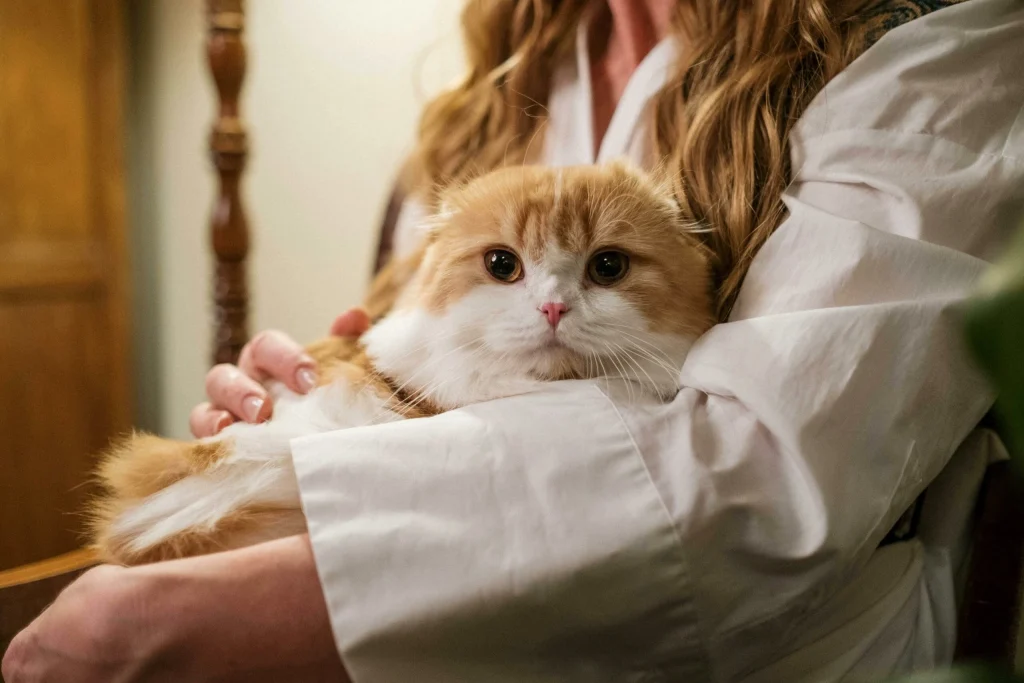
How Courts Evaluate Cat Custody
Courts can award joint custody of a cat to divorcing couples, with decisions based on the cat’s emotional attachment to both owners and their ability to provide care, considering evidence of who had been the primary caregiver and who could best meet the cat’s needs.
Courts may consider initial ownership and acquisition—who initially acquired the cat and whether it was obtained before or during the marriage—along with pre- or postnuptial agreements addressing pet custody.
What Factors Determine Who Gets the Cat?
Courts increasingly examine specific caregiving evidence beyond simple ownership documents when determining cat placement.
Primary Caregiver Status
Courts prioritize evidence showing which spouse provided daily care for the cat.
Key Caregiving Indicators:
- Who fed the cat daily and maintained feeding schedules
- Who cleaned litter boxes and maintained cat hygiene
- Who scheduled and attended veterinary appointments
- Who administered medications or special care
- Who provided enrichment activities and playtime
- Who monitored the cat’s health and behavior changes
Courts consider who was responsible for care and upkeep on a day-to-day basis, including who took the cat to the vet, who paid vet bills, and who bought things like food, treats, and toys.
Financial Responsibility
The spouse who assumes financial responsibility for the cat’s needs may be viewed favorably by the court, with documentation including vet bills and receipts serving as best evidence.
Financial Evidence Courts Examine:
- Veterinary bills for routine checkups and vaccinations
- Emergency veterinary care expenses
- Cat food and litter purchases
- Grooming and boarding costs
- Cat insurance premiums
- Toys, scratching posts, and enrichment supplies
- Microchip and registration fees
Bank statements and credit card records showing consistent cat-related purchases strengthen your claim as primary caregiver.
Adoption and Ownership Documentation
Who acquired the cat initially and who paid for it matters significantly, with courts examining who has been most fit to keep the pet.
Critical Documentation:
- Adoption contracts from shelters or rescue organizations
- Purchase receipts from breeders
- Microchip registration showing your name
- Veterinary records listing you as the owner
- Pet license registration
- Pet insurance policies in your name
Under California law, the court plays a pivotal role in determining who gets custody, considering not only legal ownership but the emotional bonds between owners and their animals.
Living Situation and Stability
Courts evaluate whether one spouse has the time and resources to provide more care—for example, whether one spouse works from home while the other is away for the majority of the day.
Housing Considerations:
- Whether current housing allows cats
- Size and suitability of living space for a cat
- Presence of outdoor access or safe windows for enrichment
- Stability of living arrangement (owned home vs. temporary housing)
- Moving plans that might stress the cat
- Presence of other pets that may conflict with the cat
Courts have considered living situations when awarding custody—in one Alabama case, the court awarded sole custody to the husband because the wife lived in an apartment that did not allow dogs, with the wife claiming she would find new homes but presenting no evidence.
Emotional Bonds and Attachment
California courts establish custody orders that best suit the cat’s needs, taking into account not only physical care but also emotional and psychological needs and the best environment.
Evidence of Emotional Connection:
- Photos showing daily interaction over time
- Videos demonstrating the cat’s comfort and affection with you
- Witness testimony from veterinarians or cat sitters
- Documentation of how the cat responds to you versus your spouse
- Evidence the cat seeks you out for comfort
- Behavioral changes when separated from you
Cats often bond more strongly with one person in a household. Documenting this bond through photos, videos, and professional observations strengthens your custody claim.
Work Schedules and Availability
Courts evaluate each spouse’s ability to provide adequate time and attention to the cat.
Availability Factors:
- Daily work hours and commute times
- Remote work arrangements
- Travel frequency for work or personal reasons
- Overnight or extended absences
- Ability to arrange appropriate care during absences
- Long-term commitment to cat care responsibilities
Cats require daily attention, feeding, litter maintenance, and companionship. Courts favor the spouse who can consistently provide hands-on care.
History of Care and Responsibility
Courts examine whether there are children in the relationship who have bonded with the cat, often ruling that pets would follow the children—possession of the pet coinciding with custody of the children.
Additional Considerations:
- Whether children have strong bonds with the cat
- Any history of neglect or inadequate care
- Threats involving the cat during the relationship
- Prior agreements about cat care responsibilities
- Which spouse initiated getting the cat
- Long-term plans for the cat’s care
Recent Cat Custody Cases
New York Cat Custody Battle (July 2024)
Manhattan Judge Wendy Li granted full custody of 15-year-old cat Liza to Aliya Zaydullina after a two-year legal battle, considering property rights, abandonment claims, and the cat’s welfare. Zaydullina adopted Liza from a Brooklyn shelter in 2013 and cared for her for 10 years before temporarily leaving her with friend Maria Senichkina, who refused to return the cat.
Judge Li found that while Senichkina and the cat formed an incredibly strong connection over two and a half years, Zaydullina shared at least a similar connection with the cat for the 10 years prior. The judge considered whether Zaydullina had abandoned the cat and found she hadn’t, remaining the legal owner the entire time, and when considering all parties’ wellbeing—including the cat’s—it came down to time spent together.
This case demonstrates how New York’s 2021 state law asking courts to consider an animal’s best interests examines whether animals have “prospered, loved and been loved,” finding Liza was loved under both women’s care but Zaydullina would be harmed more by losing the cat.
Ohio Cat Custody Dispute (December 2024)
The Eighth District Court of Appeals ruled that Chrisionna Graves didn’t prove she was the sole owner of orange tabby cat Marvin and entitled to keep him after her relationship with Jillian Solorzano ended. The couple got Marvin in February 2022 while in California, moved to Ohio together, and after their April 2023 breakup, Marvin went back and forth between them for 19 months before Solorzano blocked Graves’ phone number and refused access.
The record reflected that the couple obtained Marvin while living together and both cared for him physically and financially before the breakup, with both continuing to take care of Marvin after Solorzano moved out. Even though Graves may have provided a greater amount of care and support, it didn’t negate Solorzano’s ownership interest.
The court found Solorzano never intended to abandon Marvin and her actions didn’t indicate abandonment—Marvin resided in both homes and Solorzano continued to pay for food and pet health insurance, showing a lack of total desertion.
California Cat Custody Under New Law
Real-life cases offer insights into how California’s updated laws are applied—in one case involving a couple disputing custody of a cat, the court considered evidence of who had been the primary caregiver and who could best meet the cat’s needs going forward.
What Documentation Proves Cat Ownership?
Strong documentation significantly improves your chances of keeping your cat in divorce.
Essential Cat Ownership Documents
Adoption and Purchase Records:
- Shelter or rescue adoption contracts with your signature
- Breeder purchase agreements and receipts
- Foster-to-adopt paperwork
- Transfer of ownership documents
- Microchip registration showing your contact information
- Original registration paperwork
Veterinary Documentation:
- Complete veterinary history with your name as owner
- Vaccination records
- Spay/neuter certificates
- Dental cleaning records
- Emergency care documentation
- Prescription records for medications
- Laboratory test results
- Referral specialist reports
Financial Records:
- Monthly cat food purchase receipts
- Litter and litter box supplies
- Veterinary bills showing your payment
- Cat insurance policy documents
- Grooming service receipts
- Boarding or cat sitting payments
- Toys and enrichment supply purchases
- Cat tree and furniture receipts
Building Your Cat Custody Case
Create a Care Portfolio: Organize photos chronologically showing:
- Daily feeding and care routines
- The cat’s favorite spots in your living space
- Special moments and milestones
- Your bond with the cat over time
- The cat’s comfort level with you
- Any special care you provided during illness
Video Evidence: Videos are powerful evidence of:
- The cat responding to your voice
- Daily care routines like feeding and play
- The cat seeking you out for affection
- How the cat reacts when you return home
- Medication administration or special care
- The cat’s overall wellbeing in your care
Witness Statements: Gather statements from:
- Veterinarians who know you as the primary caregiver
- Cat sitters or pet care professionals
- Friends or family who observed your care
- Neighbors who recognize you as the cat owner
- Groomers or trainers who worked with you
- Rescue organizations you worked with
Pre-Divorce Planning for Cat Custody
Prenuptial and Postnuptial Agreements: If a couple has a prenuptial or postnuptial agreement addressing pet custody, courts will likely honor this agreement, with pet custody provisions helping prevent disputes during divorce.
“Pet-Nups” for Cats: A pet-specific agreement can outline:
- Who owns the cat legally
- Where the cat will live if you separate
- What access each party would have
- How veterinary expenses are divided
- Who makes medical decisions
- How the cat’s needs will be prioritized
When someone writes a will, they may designate a caretaker for their pet and set aside money for that care.
Can You Get Shared Custody of Your Cat?
Shared cat custody arrangements exist but legal enforceability varies dramatically by state.
States That Allow Shared Cat Custody
California Family Code Section 2605 allows courts to award full or joint ownership, with judges able to factor in the wellbeing and best interest of the cat and decide custody and visitation rights, awarding joint custody based on the cat’s emotional attachment to both owners and their ability to provide care.
Alaska also permits courts to grant joint custody based on the cat’s welfare under its “best interests of the pet” standard.
California courts can create custody orders that allow both parties to spend time with the cat, with shared custody arrangements where the cat spends time with each spouse on specific days or weeks.
States With Limited Options
Illinois only awards ownership of cats, not custody or visitation, with few judges ruling on visitation arrangements despite the state’s “best interest” consideration.
In states like Illinois, New York, and California, judges may order spouses to share time with their companion animals, either equally or with one spouse primarily housing the cat and the other having visitation rights.
Negotiated Agreements Outside Court
If a couple can agree on sharing custody or allowing visitation for a cat, they may make that part of their separation agreement, though sharing custody of cats remains a rare outcome with judges unlikely to award shared time in family property.
Creating a Cat Custody Plan: Details should include who will be responsible for the cat’s care in an emergency, how vet and other care expenses will be divided, and what happens if one of you wants to change the custody arrangement in the future.
Weekly or Bi-Weekly Schedules: Some divorced couples successfully share cat custody with:
- Week-on, week-off arrangements
- Weekday/weekend splits
- Monthly rotations
- Extended periods (e.g., 6 months each)
Financial Arrangements: Agreements can cover financial considerations such as vet bills, food, and insurance.
Challenges With Shared Cat Custody
Shared custody sometimes creates problems because there is no explicit legal authority for such verdicts and no agency to monitor or police such orders, with some couples returning to already-busy courts because they’re unable to get along in attempting to carry out the judge’s orders.
Cat-Specific Considerations:
- Cats are territorial and may struggle with frequent relocations
- Stress from moving between homes can cause health issues
- Litter box and routine disruptions affect cat wellbeing
- Older or anxious cats may not adapt well to shared custody
- Medical care coordination becomes complex
- Travel with cats is more stressful than with dogs
Finding an amicable joint custody arrangement is best done outside of court or through mediation—once you bring the case to court, you will likely have to live with the judge’s decision.
The Cat Custody Dispute Process
Timeline and Costs
Cat custody disputes can extend divorce proceedings and increase legal expenses significantly.
Uncontested Agreement:
- Timeline: Days to 2 weeks
- Costs: $500-$2,000 (attorney consultation fees for agreement drafting)
- Process: Direct negotiation between spouses with legal review
Mediation:
- Timeline: 1-3 months
- Costs: $2,000-$5,000 (mediator fees plus attorney consultations)
- Process: Neutral third-party facilitates agreement on cat custody terms
Litigation:
- Timeline: 6-18 months (added to divorce timeline)
- Costs: $5,000-$20,000+ (attorney fees, expert witnesses, evidence gathering, court costs)
- Process: Court hearings, evidence presentation, possible expert testimony, judge’s ruling
Steps in Resolving Cat Custody
1. Address Cat Custody Early: In California, you can address cat custody in your response to the divorce petition, and while the case is pending, you can file a Request for Order to get temporary custody/visitation orders for cats.
2. Temporary Orders: Similar to child custody cases, courts can enter temporary orders to be put in place until final arrangements are made at the end of divorce proceedings.
Temporary orders ensure:
- The cat has stable care during proceedings
- Neither spouse removes the cat from the jurisdiction
- Veterinary care continues
- Financial responsibility is clear
- The cat’s routine remains consistent
3. Gather Evidence: Documentation can be your best friend in these circumstances, with courts examining who was most fit to keep the cat based on evidence of care.
Compile comprehensive evidence of:
- Your role as primary caregiver
- Financial responsibility for cat care
- The cat’s bond with you
- Your suitable living situation
- Your ability to provide ongoing care
4. Consider Mediation: When cat custody is disputed, many couples choose to mediate issues outside of court, with mediation allowing parties to reach mutually agreeable solutions tailored to specific circumstances, often resulting in more creative and flexible arrangements.
Mediation benefits include:
- Lower costs than litigation
- Faster resolution
- More creative solutions possible
- Less adversarial process
- Greater control over outcomes
- Privacy (keeps matters out of public court)
5. Negotiate Settlement Terms: If you present a visitation arrangement to the judge as part of your mutual agreement, the court will generally acknowledge it.
Settlement negotiations should address:
- Primary custody assignment
- Visitation schedule (if any)
- Division of veterinary expenses
- Who maintains cat insurance
- Who makes medical decisions
- Food and supply cost sharing
- What happens if circumstances change
6. Court Hearing (If Necessary): If mediation and collaborative approaches are unsuccessful, the dispute must be resolved in court, with courts awarding sole ownership based on factors like primary caregiving and the cat’s best interests.
At trial, expect:
- Both parties to testify about cat care
- Presentation of documentary evidence
- Possible witness testimony from veterinarians or pet care professionals
- Cross-examination about care and ownership claims
- Judge’s evaluation of credibility and evidence
- Final ruling on cat custody

What Judges Consider
The answers to questions about who feeds the cat, who takes them to the vet, who provides daily care, and living situations help judges decide which spouse is a better fit to take care of the cat after marriage ends.
Judges evaluate:
- Credibility of testimony about caregiving
- Quality and quantity of documentary evidence
- Living situation suitability for the cat
- Financial ability to provide ongoing care
- Work schedules and availability
- Commitment to the cat’s wellbeing
- Any history of neglect or inadequate care
State-Specific Cat Custody Approaches
Community Property States (9 States)
In Texas and other states following community property law, cats acquired during marriage are community property belonging equally to both spouses.
Community property states: Arizona, California, Idaho, Louisiana, Nevada, New Mexico, Texas, Washington, Wisconsin
Separate property refers to cats acquired prior to marriage and therefore belongs solely to either spouse, while community property was acquired during marriage and belongs equally to both.
California is unique as both a community property state and a “best interest of the pet” state, giving judges broad discretion to consider cat welfare alongside property principles.
Equitable Distribution States (41 States + DC)
In equitable distribution states, courts divide marital cats based on fairness rather than automatic 50/50 splits.
Courts consider:
- Length of the marriage
- Each spouse’s financial situation
- Who primarily cared for the cat
- Each spouse’s living situation
- Ability to provide appropriate care
- The cat’s needs and wellbeing
- Contributions to acquiring and caring for the cat
Under North Carolina law, cats are considered property—like other property in divorce, it’s up to the couple to decide how to divide ownership, and if the separating couple cannot come to an agreement, the court may have to decide.
“Best Interest of the Pet” States (10 States)
These states have enacted legislation specifically recognizing that cats deserve special consideration:
Alaska was the first state (2017) to enact laws where courts must consider the well-being of cats in divorce proceedings, with courts able to grant sole or joint custody based on the cat’s welfare.
Complete List:
- Alaska (2017) – pioneered the approach
- Illinois (2018) – considers wellbeing, awards ownership only
- California (2018) – allows joint custody and best interest consideration
- New Hampshire (2019)
- Maine (2021)
- New York (2021) – asks courts to consider if animals have “prospered, loved and been loved”
- Washington DC (2023)
- Delaware (2023)
- Rhode Island (2024) – most recent addition
- Washington (recent addition)
Some jurisdictions may also have relevant cat custody case law in divorce, separation, or the end of other relationships, with examples including Massachusetts and Vermont.
Recent Legal Developments in Cat Custody
Expanding Legal Recognition (2024)
Rhode Island joined the growing list of jurisdictions recognizing animal interests in 2024, with it expected that this model will become more common—that more courts will choose to consider an animal’s interests when determining custody and more state legislatures will codify this practice.
The trend shows clear momentum toward recognizing cats as sentient beings deserving special consideration beyond mere property status.
Court Decisions Setting Precedent
Courts have begun developing precedent treating cats differently from standard property—Alabama courts have applied a “best interests of the cat” analysis paralleling the widely used “best interests of the child” analysis in child custody law.
Other states have opted to use custody law instead of property law, with courts ordering joint custody or visitation of a family cat after divorce or separation, though most courts have not allowed joint custody, stating that courts are not used in the most economic sense if cat custody cases were entertained.
“Petimony” Awards
Some courts have awarded “petimony,” an alimony-like payment for maintenance costs of the cat to the custodial owner from the non-custodial owner.
This emerging practice recognizes that ongoing cat care requires significant financial resources, with non-custodial owners sometimes ordered to contribute to:
- Veterinary care expenses
- Food and litter costs
- Grooming expenses
- Cat insurance premiums
- Emergency medical care
Petimony remains rare and lacks clear legal precedent in most jurisdictions, but represents courts’ growing willingness to treat cats differently from inanimate property.
Advocacy and Future Changes
The Animal Legal Defense Fund’s Litigation Program has long advocated through amicus briefs for judges to take into account the interest of the animal when determining custody.
Advocacy efforts focus on:
- Encouraging state legislatures to enact “best interest of the pet” laws
- Supporting courts in considering animal welfare
- Educating the public about pet custody rights
- Providing resources for custody disputes
- Promoting mediation and collaborative solutions
What You Should Do Now to Protect Your Rights
Immediate Actions During Divorce
Document Your Cat Care: Gather records of your involvement in your cat’s care, including vet visits, expenses, and daily routines.
Create a comprehensive file containing:
- All veterinary records
- Receipts for food, litter, and supplies
- Photos dating back to when you got the cat
- Videos showing daily care and bonding
- Cat insurance documents
- Microchip and license registration
- Adoption or purchase paperwork
- Witness contact information
Maintain Routine Care: Continue providing excellent care during divorce proceedings:
- Keep all veterinary appointments
- Maintain feeding and play schedules
- Document all care activities
- Save receipts for all cat-related expenses
- Take photos and videos regularly
- Address any health concerns promptly
Secure Important Documents: Keep original documents safe:
- Adoption contracts
- Microchip registration
- Veterinary history
- Cat license
- Insurance policies
- Purchase receipts
Consider Your Cat’s Best Interests
Once aware of relevant facts like who’s keeping the house with the yard and who’s moving to a city apartment, move toward a practical decision about who gets the cat, deciding as early as possible to help keep conversations focused on the cat’s welfare.
Assess Your Situation Honestly:
- Can you provide appropriate housing for the cat?
- Do you have time for daily care and attention?
- Can you afford veterinary care and supplies?
- Is your work schedule compatible with cat ownership?
- Will you have stability in the near future?
- Can you commit to the cat’s remaining lifespan (potentially 10-20 more years)?
Consider the Cat’s Needs:
- Cats are creatures of habit—routine disruptions cause stress
- Older cats may have special medical needs
- Anxious cats require stable environments
- Social cats need daily interaction and enrichment
- Indoor cats need appropriate space and stimulation
Explore Settlement Options
Direct Negotiation: If you cannot reach an agreement with your spouse, the issue will need to be decided by the court, making amicable solutions preferable.
It is usually best that you decide this issue with your spouse as amicably as possible, as a judge can potentially order the cat to be sold and the funds split, or order that you trade another contested asset for ownership.
Mediation Benefits: Mediation may help work out differences and find solutions if you’re having trouble reaching agreement about your cat or any other divorce issue.
Professional mediators can:
- Facilitate productive discussions
- Help find creative solutions
- Reduce emotional conflict
- Save time and money
- Keep decisions out of court
- Prioritize the cat’s welfare
Creative Solutions: Consider options like:
- Trading other marital assets for sole cat custody
- Agreeing to informal visitation without court enforcement
- One spouse keeping the cat with generous visitation for the other
- Delayed custody transfer if current housing is temporary
- Financial contributions from non-custodial spouse for cat care
Understand Your State’s Specific Laws
Research your state’s approach to cat custody:
In “best interest” states (Alaska, California, Illinois, New York, New Hampshire, Maine, Washington DC, Delaware, Rhode Island, Washington):
- Emphasize your caregiving evidence
- Document your bond with the cat
- Show how you meet the cat’s physical and emotional needs
- Demonstrate suitable living situation
- Prove financial ability to provide excellent care
In property-based states (40 other states):
- Focus on ownership documentation
- Prove you purchased or adopted the cat
- Show the cat was acquired before marriage (if applicable)
- Demonstrate the cat is separate property
- Present evidence of financial investment
In community property states (Arizona, California, Idaho, Louisiana, Nevada, New Mexico, Texas, Washington, Wisconsin):
- Understand cats acquired during marriage are presumed jointly owned
- Prove separate property status if applicable
- Focus on caregiving evidence even in property-based analysis
- Show practical reasons why you should have the cat
Consult a Family Law Attorney
Consulting with a knowledgeable family law attorney becomes crucial in divorce cases involving cat custody—just as one would seek a child custody attorney for matters involving children, cat owners can benefit from expertise of legal professionals well-versed in cat custody laws.
An experienced family law attorney can:
- Explain your state’s specific approach to cat custody
- Help gather and organize persuasive evidence
- Negotiate favorable settlement terms
- Draft enforceable cat custody agreements
- Present your case effectively if litigation becomes necessary
- Advise on temporary custody orders
- Protect your rights throughout the process
If concerned about who will get ownership of a family cat after divorce or separation, talk to experienced family law attorneys to make sure your cat will be protected.
Frequently Asked Questions
Are cats considered property in divorce?
In most states, cats are legally regarded as property during divorce, meaning courts typically consider the cat as an asset to be divided between parties. However, ten states (Alaska, California, Illinois, New York, New Hampshire, Maine, Washington DC, Delaware, Rhode Island, and Washington) now authorize courts to consider the cat’s best interests when determining custody.
Can I get shared custody of my cat?
In states like Illinois, California, New York, and Alaska with companion animal laws, judges may order spouses to share time with their cats, either equally or with one spouse primarily housing the cat and the other having visitation rights. In other states, shared custody requires negotiated agreements between spouses, though courts rarely award shared time for property. California and Alaska specifically allow courts to award shared cat custody.
What if my spouse paid for the cat but I took care of it?
Courts increasingly consider who provided daily care, not just who purchased the cat initially. Strong evidence of primary caregiving through documentation like veterinary records, feeding schedules, and photos can overcome initial ownership claims. In “best interest” states, caregiving evidence matters more than purchase documentation.
What happens if I move to another state with my cat after divorce?
If your divorce decree awards you sole custody or ownership of the cat, you can generally relocate with your cat. However, if you have a shared custody arrangement, moving out of state could trigger a custody modification dispute. The other party may petition the court to prevent relocation or modify custody terms. Always review your divorce decree’s specific provisions about relocation with pets.
Do prenups cover cat custody?
Yes, prenuptial or postnuptial agreements can include specific provisions about cat custody. If a couple has a prenuptial or postnuptial agreement addressing cat custody, courts will likely honor this agreement. “Pet-nups” can exist as standalone documents or as part of broader marital agreements, outlining ownership, living arrangements, and access rights.
How much does a cat custody battle cost?
Cat custody litigation costs $5,000-$20,000 or more in attorney fees, expert witnesses, and court costs. Mediation costs significantly less at $2,000-$5,000. Direct negotiation with legal consultation is most cost-effective at $500-$2,000. Many divorcing parties find shared custody or mediated settlements preferable to expensive litigation.
What evidence should I present to prove I’m the primary caregiver?
Present veterinary bills showing your payment history, receipts for cat food and supplies, daily care logs documenting feeding and litter maintenance, photos and videos of your interactions with the cat over time, witness statements from veterinarians or cat sitters who know you as the primary caregiver, microchip registration in your name, and adoption papers with your signature.
Can a judge force us to sell our cat?
Judges rarely opt to sell cats and divide proceeds, but they have the power to do so under property division principles. This outcome is extremely rare and typically only occurs in highly contentious cases where neither party will compromise. Courts generally prefer to award cats to one spouse rather than force a sale.
Will my cat go where my children go?
Courts often rule that cats should follow children, with possession of the cat coinciding with custody of the children. This approach recognizes the bond between children and family cats, ensuring continuity for kids during divorce. However, courts must also consider what happens when children grow up and leave home, and whether the custodial parent can properly care for the cat long-term.
Official Resources:
- Alaska Stat. § 25.24.160
- California Family Code § 2605
- Illinois 750 ILCS 5/503
- Animal Legal Defense Fund – Pet Custody
- New York Courts – Matrimonial Actions
About the Author

Sarah Klein, JD, is a former family law attorney with over a decade of courtroom and mediation experience. She has represented clients in divorce, custody cases, adoption, Alimony, and domestic violence cases across multiple U.S. jurisdictions.
At All About Lawyer, Sarah now uses her deep legal background to create easy-to-understand guides that help families navigate the legal system with clarity and confidence.
Every article is based on her real-world legal experience and reviewed to reflect current laws.
Read more about Sarah