
Boka Toothpaste Lawsuit Reality, Advertising Challenge, NARB Upholds Ruling Against Remineralization and Whitening Claims
Latest Update: On July 21, 2025, the National Advertising Review Board (NARB) upheld recommendations that Essor Group, Inc. discontinue advertising claims that Boka toothpaste remineralizes and whitens teeth, as well as prebiotic mouthwash claims. Essor announced it would comply with NARB’s recommendations despite disagreeing with the decision.
Critical Clarification: This is not a federal court lawsuit or class action. No federal court has ruled on liability, though consumer protection attorneys continue evaluating potential claims based on the self-regulatory proceedings.
What Happened in the Boka Advertising Case?
The Procter & Gamble Company (P&G), which manufactures Crest toothpaste, challenged Essor Group’s advertising claims for Boka oral care products through the BBB National Programs’ National Advertising Division (NAD) in spring 2025.
NAD issued its initial decision on May 1, 2025, finding that while Essor provided reasonable basis for claims that Boka toothpastes contain nano-hydroxyapatite (nHA), the company failed to substantiate stronger efficacy claims about remineralization and whitening.
Essor appealed to NARB, but on July 21, 2025, the appellate panel affirmed NAD’s recommendations.
Who Are the Parties Involved?
Challenger: The Procter & Gamble Company (P&G)
- Manufactures Crest brand fluoride toothpaste
- Brought the advertising challenge through NAD
Respondent: Essor Group, Inc.
- Manufactures and markets Boka oral care products
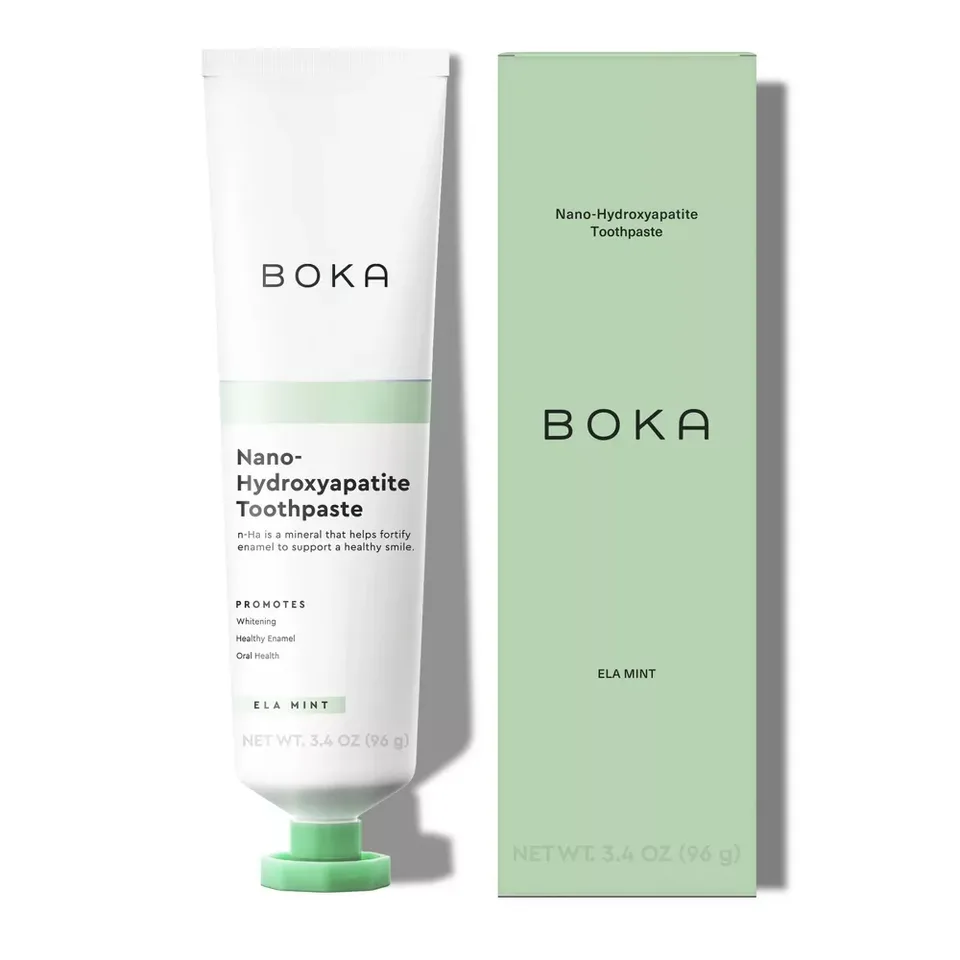
- Sells toothpaste, mouth rinses, and whitening kits containing nano-hydroxyapatite instead of fluoride as the primary ingredient
Regulatory Body: BBB National Programs
- National Advertising Division (NAD) – Case #7412
- National Advertising Review Board (NARB) – Appellate review
What Are the Specific Advertising Claims Challenged?
The challenge focused on three main areas: claims that Boka toothpaste “remineralizes” and “fortifies” teeth, assertions about whitening capabilities, and promises about prebiotic benefits for oral health and fresh breath.
Remineralization Claims
NAD reviewed evidence submitted by Essor supporting its remineralization claims. Because none of the evidence tested Boka toothpaste and there was no appropriate surrogate, NAD concluded Essor did not provide a reasonable basis to support the product claim.
NARB found that remineralization claims convey that Boka toothpaste products provide dental health benefits that will be achieved by consumers who purchase Boka varieties containing n-HA as the active ingredient. However, the panel found Essor lacks the requisite competent and reliable science to support that message and noted neither the FDA nor the ADA has concluded that n-HA remineralizes teeth.
Whitening Claims
While the whitening claim was not specifically challenged, NAD examined it upon request. Essor did not submit studies testing its product but argued the claim was supported by the brushing action, abrasive ingredients (silica and sodium bicarbonate), and nHA depositing hydroxyapatite crystals on enamel.
The NARB panel found that in the context of Essor’s website advertising and product labels, Boka’s whitens teeth claim is a product claim, not just a claim about how specific ingredients might whiten teeth. Because Essor provided no testing on its formulated oral care products, the panel found no reasonable basis for whitening claims.
Prebiotic Mouthwash Claims
Essor claimed its “Boka mouthwash has prebiotics to help maintain a healthy microbiome so you can have fresher breath,” explaining it contains a prebiotic called preBIULIN. Essor submitted one in vitro and three in vivo studies of preBIULIN, none of which tested the Boka mouthwash itself.
NARB found that Essor positions its prebiotic ingredient fresher breath claim alongside the Boka mouthwash product image. Because there is no testing on the product as formulated or studies providing causal connection that this prebiotic will provide fresher breath, the panel found the breath-freshening claim lacks a reasonable basis.
Related article: No “Ridgeline Heights Colorado Lawsuit” Exists—Here’s What You Actually Need to Know About Colorado Property Disputes
Legal Framework: Understanding NAD/NARB Proceedings
What Is NAD/NARB?
NAD (National Advertising Division) and NARB (National Advertising Review Board) are industry self-regulatory bodies, not courts. They are operated by BBB National Programs, a non-profit organization providing independent advertising review.
Key Differences from Court Lawsuits:
- No judge or jury
- No monetary damages awarded
- Focus on truthfulness in advertising
- Voluntary compliance system
- Companies can be referred to FTC for non-compliance
Legal Standards Applied
The heart of the dispute came down to what constitutes “competent and reliable scientific evidence” for advertising claims. P&G wasn’t questioning whether nano-hydroxyapatite has potential benefits—they were questioning whether Boka had specific evidence to support their bold marketing claims.
Critical Evidentiary Issue:
Essor submitted various studies about nano-hydroxyapatite as an ingredient, but none of these studies actually tested Boka’s finished product. This distinction is huge in advertising regulation—it’s one thing to show an ingredient has properties in isolation; it’s another to prove your specific formulation delivers those same benefits.
Applicable Federal Laws
While NAD/NARB proceedings are self-regulatory, they apply standards consistent with:
Federal Trade Commission Act (15 U.S.C. § 45)
- Prohibits unfair or deceptive acts or practices
- Requires advertisers have reasonable basis for claims
- NAD applies FTC standards for substantiation
Lanham Act (15 U.S.C. § 1125)
- Governs false advertising in commercial competition
- Provides basis for competitor challenges like P&G’s action
Current Status and Compliance
In its advertiser statement, Essor stated that while it “strongly disagrees with NARB’s conclusion,” it will comply with NARB’s recommendations. Essor believes its position is “underpinned by a comprehensive dossier of decades of peer-reviewed research and scientific analysis” and noted the company “remains deeply dedicated to science-backed innovation.”
Claims Essor Must Discontinue
During the proceeding, Essor voluntarily agreed to permanently discontinue several claims for its Boka oral care products. NAD will treat these, for compliance purposes, as though NAD recommended they be discontinued.
Potential for Federal Court Litigation
No Class Action Filed Yet
No federal court has ruled on liability as of today. Lawyers continue to evaluate consumer protection problems based on the self-regulatory record. Consumers should keep product packaging and receipts in case formal litigation or a settlement procedure begins.
Legal Theories for Potential Consumer Claims
If consumer lawsuits are filed, they could allege:
False Advertising Claims
- Violation of state consumer protection statutes
- Deceptive trade practices under UDAP laws
- Breach of express warranty
Consumer Fraud Claims
- Misrepresentation of product efficacy
- Omission of material facts about scientific support
- Price premium damages (paying more based on unsubstantiated claims)
Product Liability Claims
- Economic loss from purchasing ineffective product
- Reliance on false advertising
Jurisdiction and Venue
Potential federal lawsuits could be filed in:
- Federal courts under diversity jurisdiction
- States where plaintiffs purchased products
- California (common venue for consumer class actions)
Statute of Limitations Considerations
Most state consumer protection statutes have 3-4 year limitations periods from:
- Date of purchase
- Date consumer discovered or should have discovered misrepresentation
Regulatory Framework for Oral Care Products
FDA Classification
The FDA hasn’t approved hydroxyapatite toothpaste for cavity prevention, and it hasn’t received the ADA Seal of Acceptance either. This regulatory gap became crucial in the NAD decision.
Toothpaste Regulatory Categories:
- Drug if claims treat/prevent disease (cavities, gingivitis)
- Cosmetic if only claims to clean or beautify
- Fluoride toothpaste is FDA-approved OTC drug for cavity prevention
FTC Advertising Standards
The Federal Trade Commission requires:
- Substantiation: Reasonable basis before making claims
- Truthfulness: Claims must not be deceptive
- Clear disclosure: Material connections and limitations
Precedent Cases: Similar Consumer Product Challenges
Tom’s of Maine Natural Toothpaste
The Tom’s Natural Toothpaste lawsuit accused the brand of falsely marketing toothpaste as “all-natural” despite containing synthetic ingredients.
Charcoal Toothpaste Claims
Consumer lawsuits have challenged charcoal toothpaste brands over:
- Unsubstantiated whitening claims
- Safety concerns about enamel abrasion
- Lack of fluoride effectiveness disclosure
Hydroxyapatite Industry Impact
NARB’s decision was particularly significant because it sent a clear message to the entire industry about the level of evidence required for marketing claims. This ruling essentially raised the bar for what constitutes acceptable evidence in toothpaste advertising.
Financial Stakes and Damages
No Monetary Awards in NAD/NARB
Self-regulatory proceedings do not result in:
- Monetary damages
- Refunds to consumers
- Civil penalties
Potential Class Action Damages
If federal court litigation is filed, potential damages could include:
- Economic damages: Purchase price paid for products
- Price premium damages: Extra amount paid based on false claims
- Injunctive relief: Court order to change labeling
- Attorney fees: If prevailing under consumer protection statutes
Federal consumer-protection enforcement demonstrates active oversight across sectors. FY 2024 federal enforcement recovered more than two billion dollars under the False Claims Act across categories.
What This Means for Consumers Who Purchased Boka Products
Consumer Rights and Options
Document Your Purchase: Keep product packaging, receipts, order confirmations, or pictures of packages. Online buyers can use email records. Retail buyers can use bank or card statements. This documentation helps if refunds or settlements open.
Monitor Developments: Follow the Better Business Bureau and Federal Trade Commission for formal notifications. Consumers should follow official channels in case refund options become available.
Understand Eligibility: Purchasers who relied on Boka claims may qualify if lawsuits are filed. Proof of purchase within a specified time frame is typically required for eligibility. Class actions often focus on economic loss, not bodily injury.
Product Safety Considerations
Heavy Metal Testing Controversy:
Independent testing reported in June 2025 found lead, arsenic, and mercury in Boka Ela Mint toothpaste. However, Boka responded that products comply with California Proposition 65 limits and FDA guidelines for cosmetics, and questioned the testing methodology used.
This safety issue is separate from the advertising claims challenge.
Hydroxyapatite Concentration:
Social media discussions note that Boka toothpaste may contain only 2% nano-hydroxyapatite, while studies showing remineralization typically used 10% concentrations. However, Boka has not publicly disclosed the exact percentage.
Is Boka Toothpaste Safe to Use?
The NAD decision doesn’t mean these products are ineffective or unsafe—nano-hydroxyapatite toothpastes are generally considered safe to use, and many people report positive experiences with them.
The regulatory actions address advertising claims, not product safety or general usability.
Broader Implications for Consumer Protection
Impact on Fluoride-Free Toothpaste Marketing
The landmark NAD nano-hydroxyapatite toothpaste decision of 2025 has fundamentally changed how dental companies can market their fluoride-free products, creating a new standard requiring product-specific testing rather than ingredient studies.
Lessons for Health and Wellness Companies
The Boka case demonstrates:
- Ingredient studies ≠ product efficacy proof
- FDA/ADA lack of approval is material fact
- Self-regulatory compliance protects against FTC action
- Competitor challenges scrutinize comparative claims
Consumer Takeaways
Consumers should treat the Boka matter as a reminder to verify health-related claims. The case shows how crucial scientific proof is in marketing. Regulators found some Boka statements lacked enough evidence, highlighting consumers’ right to honest information before buying products.
Frequently Asked Questions
Is there a Boka toothpaste class action lawsuit?
No federal court class action has been filed as of December 2025. The current proceedings are through industry self-regulatory bodies (NAD/NARB), not courts. Consumer attorneys may evaluate potential claims based on the advertising challenge results.
What did NARB rule about Boka toothpaste?
On July 21, 2025, NARB recommended Essor discontinue claims that Boka toothpaste remineralizes and whitens teeth, and that Boka mouthwash provides fresher breath through prebiotics. The panel found Essor lacked competent and reliable science to support these product claims.
Can I get a refund for Boka toothpaste?
Currently, no formal refund program exists. NAD/NARB proceedings do not provide consumer refunds. If federal court litigation is filed and results in a settlement, refund opportunities may become available to class members. Consumers should preserve purchase documentation and monitor official announcements.
Does Boka toothpaste actually remineralize teeth?
NARB found Essor lacks scientific support for remineralization claims and noted neither the FDA nor ADA has concluded that nano-hydroxyapatite remineralizes teeth. While studies show n-HA has remineralization potential, Boka-specific product testing was not provided to substantiate advertising claims.
Is Boka toothpaste safe to use?
The NAD/NARB decisions address advertising claims, not product safety. Nano-hydroxyapatite is generally considered safe. However, independent testing raised heavy metal concerns, which Boka disputed. Consumers with safety concerns should consult their dentist.
What is nano-hydroxyapatite?
Nano-hydroxyapatite is a synthetic version of the mineral that makes up tooth enamel. Originally developed by NASA researchers in the 1970s to help astronauts maintain dental health in space, n-HA has become popular in fluoride-free toothpaste.
Will Essor Group comply with NARB’s recommendations?
Yes. Essor stated it will comply with NARB’s recommendations despite strongly disagreeing with the conclusions. The company noted it remains committed to science-backed innovation and will continue investing in research.
Could the FTC take action against Boka?
Companies that fail to comply with NAD/NARB recommendations can be referred to the Federal Trade Commission. Since Essor agreed to comply, FTC referral is unlikely unless the company fails to modify its advertising as recommended.
Disclaimer: This article provides a general overview based on publicly available information about the Boka advertising challenge proceedings and is intended for informational purposes only. It does not constitute legal advice. Consumers with specific questions about their rights should consult a consumer protection attorney. This article will be updated as new developments occur.
Last Updated: December 5, 2025
Sources:
- BBB National Programs NAD Case #7412 (May 1, 2025)
- BBB National Programs NARB Decision (July 21, 2025)
- Federal Trade Commission Act, 15 U.S.C. § 45
- Lanham Act, 15 U.S.C. § 1125
About the Author

Sarah Klein, JD, is a licensed attorney and legal content strategist with over 12 years of experience across civil, criminal, family, and regulatory law. At All About Lawyer, she covers a wide range of legal topics — from high-profile lawsuits and courtroom stories to state traffic laws and everyday legal questions — all with a focus on accuracy, clarity, and public understanding.
Her writing blends real legal insight with plain-English explanations, helping readers stay informed and legally aware.
Read more about Sarah