
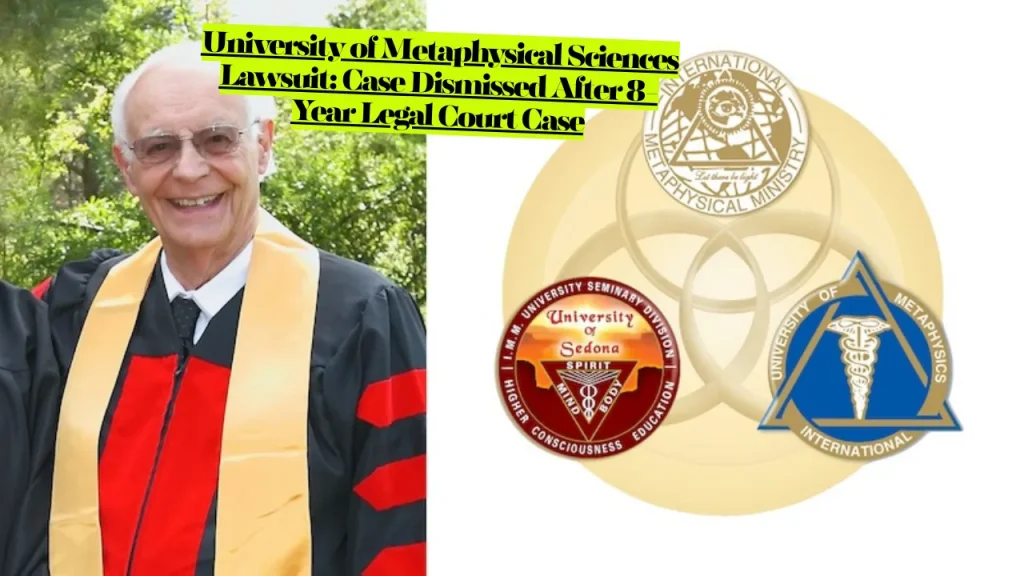
University of Metaphysical Sciences Lawsuit Case Dismissed After 8-Year Court Case
The University of Metaphysical Sciences lawsuit was dismissed on May 12, 2025, ending nearly eight years of trademark and advertising disputes between competing metaphysical education institutions. The case involved International Metaphysical Ministry (operating as University of Metaphysics and University of Sedona) filing claims against University of Metaphysical Sciences over Google advertising practices.
What Is the University of Metaphysical Sciences Lawsuit?
The most recent case, International Metaphysical Ministry, Inc. v. Wisdom of the Heart Church (Case No. 4:21-cv-08066-KAW), was filed October 14, 2021, in the U.S. District Court, Northern District of California. The verified complaint alleged breach of contract, breach of implied covenant, and sought injunctive relief.
The plaintiff accused UMS of running Google ads using the plaintiff’s name and directing traffic to UMS’s website. University of Metaphysical Sciences provided proof through its Google Adwords reports that it never ran such advertisements.
This marked the third lawsuit filed by the same plaintiff since 2017.
Who Are the Parties Involved?
Plaintiff:
- International Metaphysical Ministry, a 501(c)3 non-profit religious and educational organization headquartered in Sedona, Arizona, operating under trade names including The University of Metaphysics and The University of Sedona
Defendant:
- University of Metaphysical Sciences (UMS), a legally registered religious-exempt educational institution based in Arcata, California, founded in 2004 and operated by Wisdom of the Heart Church 501(c)3
The case was overseen by Magistrate Judge Kandis A. Westmore.
History of Legal Disputes Between the Schools
The 2021 case was not the first legal confrontation between these institutions.
First Case (2017): International Metaphysical Ministry Incorporated et al v. Schaefer et al, Case 3:17-cv-08280-JJT, filed December 28, 2017, initially in Arizona court before transferring to California
Second Case (2018): International Metaphysical Ministry Incorporated et al v. Schaefer et al, Case 4:18-cv-04524-SBA, filed July 26, 2018, settled in California court with both parties walking away, no liability on either side, no money exchanged
Third Case (2021): International Metaphysical Ministry, Inc. v. Wisdom of the Heart Church, Case 4:21-cv-08066-KAW, filed October 14, 2021
Related Article: Trajector Medical Lawsuit, Veterans Charged Millions Despite VA Warning Letters

What Were the Specific Allegations?
The lawsuit centered on alleged Google advertising conduct where ads appeared with International Metaphysical Ministry in the header but included a URL linking directly to the other school’s website.
The plaintiff sought:
- Prevention of comparative advertising
- Prohibition of using plaintiff’s trademarks in keyword advertising
- Court orders regarding website operations
The plaintiff filed a motion for preliminary injunction seeking to prevent defendants from comparative advertising and using plaintiff’s trademarks in keyword advertising. The defendants defeated the motion for preliminary injunction, successfully arguing that the plaintiff had not met its burden to show either a likelihood of success on the merits or irreparable harm.
Current Case Status: Dismissed
Final dismissal occurred on May 12, 2025, with prejudice—meaning the court barred the plaintiff from refiling the same claims.
A jury trial had been scheduled for June 16-20, 2025, at 9:00 AM in Oakland, but the trial was cancelled due to the dismissal.
The competitor dropped their claims against UMS, and UMS dropped its counterclaims, resulting in mutual dismissal.
What Laws Applied to This Case?
The case involved:
Trademark Law: Protection of business names and marks in commercial use
Contract Law: The complaint included allegations of breach of contract and breach of implied covenant
Unfair Competition: Claims related to advertising practices and consumer confusion
Federal Jurisdiction: The case was filed as a Commercial and Trade – Contract matter in U.S. District Courts, California Northern District Court
Impact on Students and School Operations
Throughout every stage of these proceedings, the University of Metaphysical Sciences continued to function normally, with classes delivered on schedule, faculty remaining steady, and student services going uninterrupted.
Key Facts for Current and Prospective Students:
- No accreditation claims were made in any lawsuit against UMS
- The validity of UMS degrees was never a topic of any UMS lawsuit
- No government agencies were suing UMS or trying to close UMS
- UMS’s registrations, accreditations, and nonprofit status were never threatened or questioned by any court or agency
University of Metaphysical Sciences Accreditation Status
UMS is accredited by the American Alternative Medical Association (AAMA) and the American Association of Drugless Practitioners (AADP), two of the largest professional associations for holistic and metaphysical education.
Religious degrees are not secular degrees requiring traditional accreditation, and there is no federally recognized accrediting agency in the USA for metaphysical degrees because they are religious exempt schools.
UMS is registered with the California Bureau of Private Post Secondary Education as a religious exempt school.
Legal Precedents in Educational Institution Disputes
Similar cases involving educational institutions and trademark disputes typically center on:
- Consumer Confusion: Whether advertising practices mislead prospective students
- Trademark Infringement: Unauthorized use of protected names or marks
- Comparative Advertising: Legal boundaries when mentioning competitor names
- Preliminary Injunctions: Courts require plaintiffs to demonstrate both likelihood of success and irreparable harm
In this case, the defendants successfully defeated the motion for preliminary injunction by arguing the plaintiff failed to meet required burdens.
What This Dismissal Means
The dismissal with prejudice carries specific legal implications:
For University of Metaphysical Sciences:
- No finding of liability
- No settlement payments
- No court orders restricting operations
- Protection from refiled claims on same issues
For Prospective Students:
- UMS maintains its legal status as a religious-exempt educational institution
- Accreditation status unchanged
- Degree programs continue without interruption
For the Metaphysical Education Field:
- Establishes boundaries for trademark disputes between competing institutions
- Demonstrates importance of documentation in advertising claims
- Clarifies standards for preliminary injunction in educational trademark cases
Frequently Asked Questions
Is the University of Metaphysical Sciences lawsuit still ongoing?
No. The case was dismissed on May 12, 2025. The trial scheduled for June 2025 was cancelled due to dismissal.
Who sued the University of Metaphysical Sciences?
International Metaphysical Ministry, a 501(c)3 non-profit religious and educational organization headquartered in Sedona, Arizona, operating as University of Metaphysics and University of Sedona.
What was the lawsuit about?
The lawsuit was about Google Ads, with the competitor accusing UMS of running ads using its name and pointing the ad at UMS’s site. UMS had proof with its Adwords reports that it never ran such ads.
Did University of Metaphysical Sciences lose the lawsuit?
No. All three cases were dismissed, with final dismissal occurring on May 12, 2025, with prejudice. No liability was established and no settlement was paid.
Is University of Metaphysical Sciences accredited?
Yes. UMS is accredited by the American Alternative Medical Association (AAMA) and the American Association of Drugless Practitioners (AADP). UMS is registered with the California Bureau of Private Post Secondary Education as a religious exempt school.
Were students or government agencies involved in the lawsuit?
No. No government agencies were suing UMS or trying to close UMS. The lawsuit involved only two competing metaphysical education institutions and related to advertising practices.
What is the difference between religious and secular accreditation?
Religious degrees are not secular degrees requiring traditional accreditation, and there is no federally recognized accrediting agency in the USA for metaphysical degrees because they are religious exempt schools. This means religious degree credits typically cannot be transferred to secular institutions or used for federal student loans.
Disclaimer: This article provides general information about the University of Metaphysical Sciences lawsuit based on public court records and verified sources. It is not legal advice. Readers should conduct independent research and consult with legal professionals for specific legal questions.
Sources: U.S. District Court Northern District of California public dockets (Cases 3:17-cv-08280-JJT, 4:18-cv-04524-SBA, 4:21-cv-08066-KAW), CourtListener.com, UniCourt, official university statements, and verified news publications.
About the Author

Sarah Klein, JD, is a licensed attorney and legal content strategist with over 12 years of experience across civil, criminal, family, and regulatory law. At All About Lawyer, she covers a wide range of legal topics — from high-profile lawsuits and courtroom stories to state traffic laws and everyday legal questions — all with a focus on accuracy, clarity, and public understanding.
Her writing blends real legal insight with plain-English explanations, helping readers stay informed and legally aware.
Read more about Sarah