
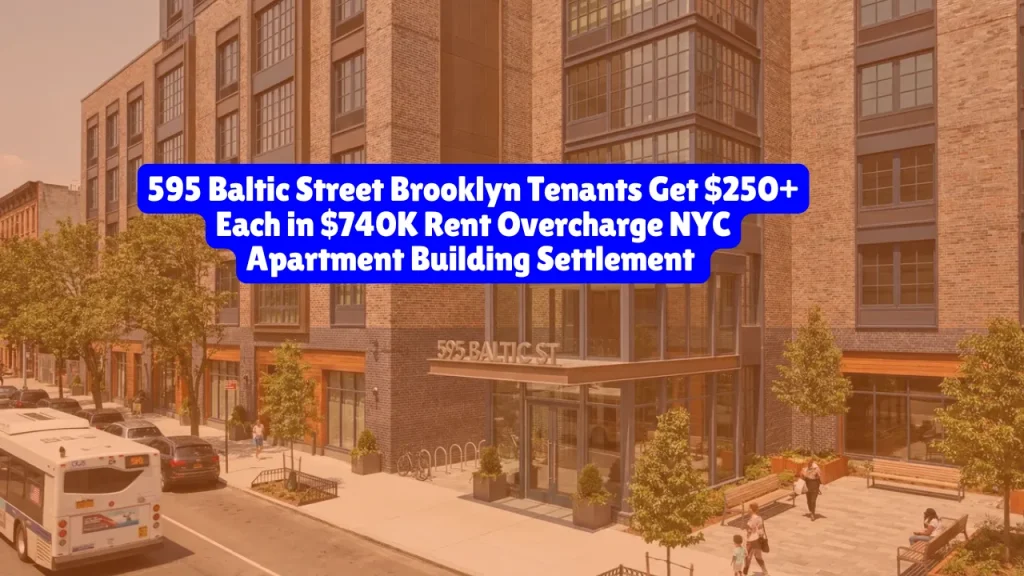
595 Baltic Street Brooklyn Tenants Get $250+ Each in $740K Rent Overcharge NYC Apartment Building Settlement
Tenants who rented at 595 Baltic Street in Brooklyn between February 27, 2016, and September 17, 2025, can claim at least $250 from a $740,000 class action settlement. The landlord, 595 Baltic Asset LLC, allegedly violated New York rent stabilization laws by improperly calculating legal rents.
Each eligible tenant will receive $250 or more based on how much they were overcharged. The deadline to file your claim is February 13, 2026.
Who Qualifies for the 595 Baltic Street Settlement?
You qualify if you signed a lease or were listed as a co-tenant at 595 Baltic Street, Brooklyn, NY 11217, at any time between February 27, 2016, and September 17, 2025.
This includes current tenants, former tenants, and anyone whose name appeared on a lease during this period. Co-tenants can file joint claims together or separately.
Pro Tip: Even if you moved out years ago, you still qualify for payment if you lived there during the class period. Don’t assume you’re not eligible—check your old leases and file a claim.
What the Lawsuit Alleged
The Rent Concession Problem
The lawsuit claimed 595 Baltic Asset LLC received 421-a tax benefits for the building. Under New York law, these tax breaks require all apartments to be rent-stabilized.
The 421-a program has specific rules about setting initial rents. Landlords must use the amount the first tenant actually “charged and paid”—meaning the rent after accounting for any concessions like free months or discounts.
The plaintiffs alleged the landlord failed to factor in rent concessions received by initial tenants when registering first rents. This caused rent amounts to be set too high from the start.
How This Hurt Tenants
When initial rents are registered too high, every subsequent rent increase is calculated from that inflated baseline. This means tenants paid more than the legal rent-stabilized amount month after month.
The lawsuit also claimed tenants were denied proper rent-stabilization benefits they were entitled to under New York law. Some tenants may have been charged market-rate rent when they should have been protected by rent stabilization.
The complaint alleged violations of New York rent stabilization laws, breach of lease agreements, and unjust enrichment by the landlord.
How Much Money Will I Get?
Each person who files a valid claim will receive at least $250. Many tenants will receive more depending on their specific overcharge amount.
The settlement administrator calculates your payment using this formula:
Your actual rent paid each month (starting February 27, 2016) minus your unit’s average rent after concessions plus 9% simple interest per year (calculated month by month through November 20, 2025) minus any unpaid rent or amounts you owe the landlord.
If you had co-tenants, the administrator divides the overcharge amount among everyone listed on the lease.
The final payment depends on how many total claims are filed. All approved claimants get a minimum of $250, but if your calculated overcharge is higher, you’ll receive more.
How to File Your Claim
How to File Online or By Mail
Visit 595balticsettlementclassaction.com to view settlement details and download the claim form.
You can download the official claim form PDF directly, print it, complete it, and mail it to the address below.
Alternatively, call the settlement administrator at 1-888-884-2386 to request a claim form by mail.
Mail Your Completed Form To:
Newman Ferrara LLP
Attn: 595 Baltic Settlement Claims
1140 Sixth Ave., 9th Floor
New York, NY 10036
Settlement Administrator:
595 Baltic Asset LLC Class Action Administration
P.O. Box 2894
Portland, OR 97208-2894
Phone: 1-888-884-2386
Claims Processing:
Newman Ferrara LLP
Attn: 595 Baltic Settlement Claims
1140 Sixth Ave., 9th Floor
New York, NY 10036
Related Article: U.S. Dermatology Partners Patients Get Cash Payments After June 2024 Ransomware Attack Exposed Medical Records
What You Need to File
You don’t need extensive documentation to file. The settlement administrator will verify your tenancy and calculate your overcharge using the landlord’s records.
However, having the following information ready helps:
- Your apartment number at 595 Baltic Street
- Dates you lived there (move-in and move-out if applicable)
- Lease agreements if you still have them
- Rent payment records if available
Tenants and co-tenants can submit joint claims together, but it’s not required. Each person can file separately if preferred.
Critical Deadlines
Claim Deadline: February 13, 2026
Opt-Out Deadline: February 13, 2026
Final Approval Hearing: February 25, 2026
You must postmark your claim form by February 13, 2026. Claims filed after this date won’t be accepted.
When Will I Receive Payment?
The settlement administrator will mail checks to the address you provide on your claim form after the court grants final approval and the defendant funds the settlement.
This may take up to 31 months from the final approval date or until the building sells, whichever comes first. While this timeline seems long, it’s standard for settlements tied to property transactions.
Most tenants can expect payment sometime in 2026 or 2027 depending on when the building transaction closes.
What NYC Rent Stabilization Laws Require
The 421-a Tax Program
The 421-a program provides property tax exemptions to building owners in exchange for keeping apartments rent-stabilized. This program was designed to encourage development while protecting affordable housing.
When landlords accept 421-a benefits, they must follow strict rules about setting and registering rents. The first rent must reflect what tenants actually paid, including any rent concessions.
How Rent Concessions Work
A rent concession is any discount from the asking rent—like one month free, reduced rent for the first year, or other promotional deals.
When setting the legal registered rent under rent stabilization, landlords must calculate the net effective rent—the actual average monthly amount the tenant pays after factoring in concessions.
For example, if the lease says $3,000/month but you got two months free on a 12-month lease, your net effective rent is $2,500/month ($30,000 total paid ÷ 12 months). That $2,500 should be your registered legal rent, not $3,000.
Your Tenant Rights
New York’s rent stabilization laws protect you from excessive rent increases. Landlords must follow strict rules set by the Rent Guidelines Board for annual increases.
You have the right to receive proper lease renewal offers at legal rent-stabilized amounts. You have the right to obtain your apartment’s rent history from the New York State Division of Homes and Community Renewal (DHCR).
You can file a rent overcharge complaint with DHCR within four years if you believe you’re being overcharged. If the overcharge was willful, you may be entitled to treble damages (three times the overcharge amount).
How This Settlement Compares
The $740,000 settlement is significant for a single building. Rent overcharge settlements typically range from hundreds of thousands to millions depending on the number of affected apartments and the severity of violations.
With payments of at least $250 per tenant and potentially much more for those with larger overcharges, this settlement provides meaningful compensation. Many class action settlements involving landlords result in far smaller per-person payments when spread across thousands of tenants.
The settlement also requires the landlord to correct rent rolls and comply with rent stabilization laws going forward, which benefits current tenants beyond the cash payment.
Your Options Under the Settlement
Accept the Settlement
File your claim by February 13, 2026, and receive your payment. This is the simplest option for most tenants. By accepting, you release claims against the landlord for overcharges during the class period.
Object to the Settlement
If you think the settlement amount is too low or the terms are unfair, you can file a written objection with the court by February 13, 2026. You can attend the February 25, 2026 hearing to voice concerns.
Even if you object, you’re still bound by the settlement if the court approves it unless you opt out.
Opt Out
You can exclude yourself from the settlement by sending a written opt-out request by February 13, 2026. This preserves your right to sue the landlord individually.
However, if you opt out, you receive nothing from this settlement. Opting out only makes sense if you have significant individual overcharges worth pursuing with your own attorney—like $10,000+ in illegal rent paid.
Do Nothing
If you take no action, you get nothing but are still bound by the settlement terms. This is the worst option—you give up your rights without receiving compensation.
What to Do If You’re Still a Current Tenant
If you currently live at 595 Baltic Street, this settlement should result in corrections to your rent amount.
Review your lease carefully after the settlement is finalized. Your rent should be adjusted to the legal rent-stabilized amount if it was previously set too high.
If your rent still seems too high after the settlement, obtain your rent history from DHCR and file a rent overcharge complaint for any ongoing violations not covered by the settlement class period.
Protecting Yourself Going Forward
Know your apartment’s legal rent-stabilized amount. You can get this information from DHCR’s rent history database.
Monitor DHCR rent history annually to ensure your landlord is registering your rent correctly. Keep copies of all lease agreements and rent payment records.
Understand the Rent Guidelines Board’s annual allowable increases. For example, the 2025 increases were 2.75% for one-year leases and 5.25% for two-year leases.
Question any rent increase that exceeds RGB limits or includes charges not legally permitted. Join your building’s tenant association if one exists, or consider forming one.
If You Need Additional Help
If you believe you’re still being overcharged after this settlement, you have options:
File an individual rent overcharge complaint with the New York State Division of Homes and Community Renewal for violations occurring after the settlement class period ends.
Contact the New York State Attorney General’s office for tenant assistance and consumer protection resources.
Consult a tenant rights attorney for individual legal action. Many tenant attorneys offer free consultations and work on contingency, meaning they only get paid if you win.
Consider organizing with other tenants if you suspect building-wide violations continue. There’s strength in numbers.
Where to Get More Information
Settlement Website: 595balticsettlementclassaction.com
Download the claim form here
Settlement Administrator:
595 Baltic Asset LLC Class Action Administration
P.O. Box 2894
Portland, OR 97208-2894
Phone: 1-888-884-2386
Claims Processing:
Newman Ferrara LLP
Attn: 595 Baltic Settlement Claims
1140 Sixth Ave., 9th Floor
New York, NY 10036
DHCR Resources: New York State Division of Homes and Community Renewal provides rent history, overcharge complaint forms, and tenant rights information at hcr.ny.gov.
Tenant Advocacy Organizations:
- Met Council on Housing
- Housing Rights Initiative
- Legal Aid Society
- TenantNet
Frequently Asked Questions
How much money will I get from this settlement?
You’ll receive at least $250. Your final payment depends on your specific overcharge amount calculated from your rent history, with 9% annual interest. Tenants with longer tenancies or higher overcharges will receive more.
When is the deadline to file my claim?
You must file your claim by February 13, 2026. Claims postmarked after this date will not be accepted.
Do I qualify if I moved out years ago?
Yes. If you lived at 595 Baltic Street any time between February 27, 2016, and September 17, 2025, you qualify even if you no longer live there.
What if I was a co-tenant with roommates?
Co-tenants can file joint claims together or file separately. If you had co-tenants, the settlement administrator will divide the overcharge amount among everyone listed on the lease.
Do I need to provide proof I was overcharged?
No extensive documentation is required. The settlement administrator will verify your tenancy and calculate overcharges using the landlord’s records. However, having lease agreements and rent payment records can be helpful.
What happens if I do nothing?
If you don’t file a claim, you receive nothing but are still bound by the settlement. This means you give up your right to sue for overcharges during the class period without getting any compensation.
When will I receive my check?
Checks will be mailed after final court approval and after the defendant funds the settlement. This may take up to 31 months from final approval or until the building sells, whichever comes first.
Last Updated: January 14, 2026 — We keep this current with the latest legal developments.
Disclaimer: This article provides information about the 595 Baltic Street rent overcharge settlement based on publicly available court documents and settlement notices. It is not legal advice, and AllAboutLawyer.com does not provide legal services. If you have specific legal questions about the settlement or your tenant rights, consult a qualified attorney. Information may change as the case proceeds.
Take Action Now: Don’t leave money on the table. Visit 595balticsettlementclassaction.com to download your claim form and file by February 13, 2026. Even if you moved out years ago, you’re entitled to compensation if you lived there during the class period.
Stay informed, stay protected. — AllAboutLawyer.com
About the Author

Sarah Klein, JD, is a licensed attorney and legal content strategist with over 12 years of experience across civil, criminal, family, and regulatory law. At All About Lawyer, she covers a wide range of legal topics — from high-profile lawsuits and courtroom stories to state traffic laws and everyday legal questions — all with a focus on accuracy, clarity, and public understanding.
Her writing blends real legal insight with plain-English explanations, helping readers stay informed and legally aware.
Read more about Sarah