
3M Earplug Lawsuit: $6 Billion Settlement Finalized—What Veterans Need to Know
The 3M earplug lawsuit—one of the largest mass tort cases in U.S. history—reached a critical milestone in 2024 when 3M finalized a $6 billion settlement to resolve approximately 260,000 claims from military veterans alleging the company’s Combat Arms Earplugs Version 2 (CAEv2) were defectively designed and caused permanent hearing damage and tinnitus. The settlement, approved by the bankruptcy court in August 2024, ends years of litigation involving product liability claims, fraudulent concealment allegations, and a controversial bankruptcy filing by 3M’s subsidiary Aearo Technologies.
What the 3M Earplug Lawsuit Is About
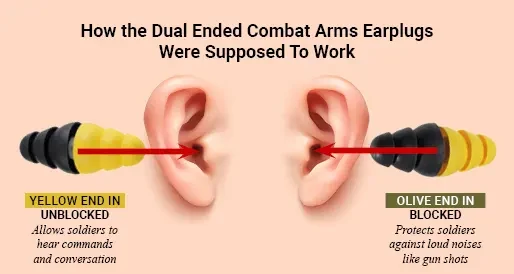
Between 2003 and 2015, the U.S. military issued CAEv2 earplugs manufactured by Aearo Technologies (acquired by 3M in 2008) to service members deployed in Iraq and Afghanistan. Veterans filed lawsuits claiming the dual-ended earplugs were too short to properly fit in users’ ear canals, causing them to imperceptibly loosen and fail to provide adequate hearing protection during combat and training exercises.
The core allegations include:
- Design defects: The earplugs were too short for proper insertion, causing them to loosen without the user’s knowledge
- Failure to warn: 3M knew about the defects as early as 2000 but failed to disclose them to the military or users
- Fraudulent concealment: Internal testing showed the earplugs failed to meet military standards, but 3M allegedly manipulated testing data and concealed the results
- Breach of contract: 3M violated its contractual obligations to provide safe, effective hearing protection to the U.S. government
Timeline: How the Litigation Unfolded
2016-2018: Whistleblower lawsuit reveals 3M allegedly manipulated testing data. The U.S. Department of Justice settles with 3M for $9.1 million under the False Claims Act—without admitting liability.
2019: First individual lawsuits filed. Cases consolidated into multidistrict litigation (MDL) in the Northern District of Florida under Judge M. Casey Rodgers.
2021-2022: Bellwether trials produce mixed results—some plaintiffs win multi-million-dollar verdicts, while 3M wins others. The company faces approximately 230,000 pending claims.
July 2022: Aearo Technologies files Chapter 11 bankruptcy, attempting to move all earplug claims into bankruptcy court. 3M proposes a $1 billion settlement offer, which veterans’ attorneys reject as inadequate.
June 2023: The bankruptcy court rules that Aearo’s bankruptcy cannot shield 3M from liability because 3M maintained financial control and the two companies were not sufficiently separate.
August 2023: 3M announces an increased settlement offer of $6 billion to be paid over 13 years (2023-2035).
August 2024: The bankruptcy court formally approves the $6 billion settlement after 98% of claimants vote to accept the terms.
Related article: Don Julio Lawsuit Update December 2025: Diageo Fights “100% Agave” Fraud Claims as Multiple Class Actions Advance
Latest Developments: 2024-2025 Settlement Status
As of December 2024, the settlement distribution process is underway:
Payment structure: 3M will pay $5 billion in cash and transfer 45 million shares of 3M common stock (valued at approximately $1 billion at the time of agreement) to a settlement trust.
Claim processing: A court-appointed claims administrator is reviewing and categorizing claims based on injury severity. Payments are expected to begin in early 2025.
Participation rate: Over 98% of eligible claimants voted to accept the settlement, meeting the threshold required for court approval.
Release of liability: Veterans who accept settlement payments release 3M and Aearo from future claims related to the Combat Arms Earplugs.
Ongoing monitoring: The settlement trust will operate independently to distribute funds according to approved allocation protocols that prioritize veterans with the most severe documented hearing loss and tinnitus.
Legal Claims and Theories Argued
The 3M earplug litigation centered on several product liability theories:
Strict liability for design defects: Under Florida and federal product liability law, manufacturers can be held liable when products are defectively designed—regardless of negligence—if the design creates unreasonable danger. Veterans argued the earplugs’ short stem design made proper fit impossible.
Negligent design: Plaintiffs claimed 3M failed to exercise reasonable care in designing a product intended to protect service members’ hearing in combat zones.
Failure to warn: Manufacturers have a legal duty to warn users of known dangers. Evidence showed 3M was aware of fitting problems as early as 2000 but never warned the military or individual users.
Fraudulent concealment: The most damaging allegations involved claims that 3M deliberately manipulated test data to hide the earplugs’ failures, submitting false certifications to the government that the product met military noise reduction standards.
Breach of express and implied warranties: Veterans claimed 3M breached warranties that the earplugs would provide adequate hearing protection as represented.
3M’s Defense Strategy: The Government Contractor Defense
3M initially argued it should be immune from liability under the “government contractor defense”—a legal doctrine that protects military contractors from state tort claims when:
- The government approved reasonably precise specifications
- The product conformed to those specifications
- The contractor warned the government about known dangers
Federal courts rejected this defense in the earplug cases, finding that 3M failed to warn the government about known defects and allegedly provided false testing data, disqualifying the company from immunity.
3M also argued:
- Veterans’ hearing loss resulted from noise exposure generally, not specifically from defective earplugs
- Proper fitting instructions were provided
- Some hearing damage was inevitable in combat environments regardless of hearing protection
These defenses proved insufficient as bellwether juries repeatedly found for plaintiffs based on evidence of concealed defects.
Who Qualifies for Compensation
Veterans may be eligible for settlement payments if they:
- Served in the U.S. military between 2003 and 2015
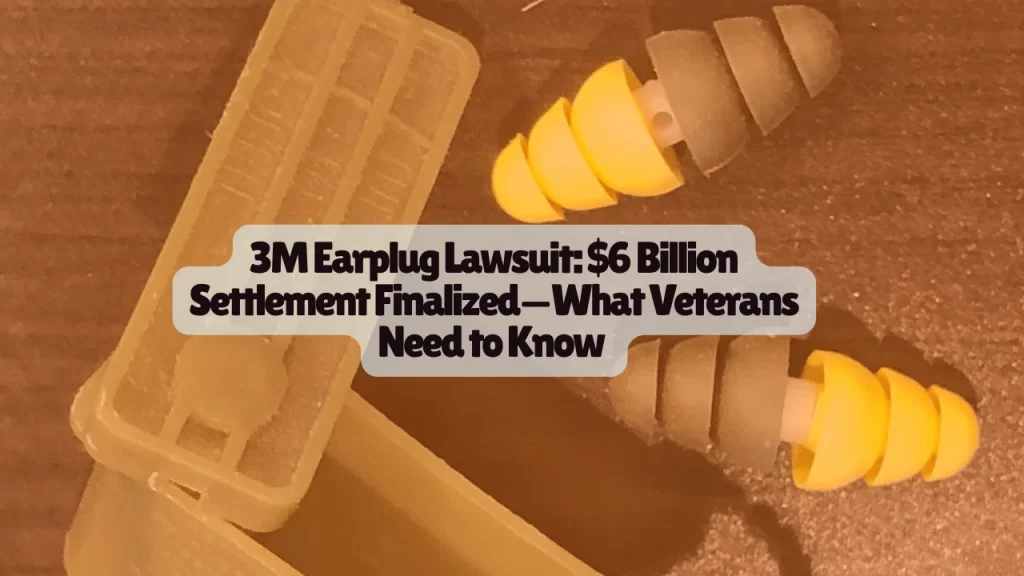
- Were issued and used Combat Arms Earplugs Version 2 (dual-ended, yellow on one side, green on the other)
- Suffered hearing loss, tinnitus, or both
- Filed claims before the settlement deadline (August 2024 for most claimants)
The settlement includes tiered compensation based on:
- Severity of hearing loss (documented through audiograms)
- Severity of tinnitus (measured through clinical assessments)
- Service connection (VA disability ratings)
- Age at time of injury (younger veterans receive higher awards)
- Quality of documentation (medical records, service records, statements)
Estimated individual payments range from approximately $5,000 to over $100,000 depending on injury severity and documentation quality.
What This Means for Veterans
No admission of liability: As part of the settlement, 3M did not admit wrongdoing or liability. The company maintains the earplugs were effective when properly used.
VA benefits unaffected: Settlement payments do not affect veterans’ existing VA disability benefits for hearing loss or tinnitus.
Tax implications: Veterans should consult tax professionals—portions of settlements for physical injuries are typically tax-free under federal law, but individual circumstances vary.
Future claims barred: Veterans who accept settlement payments cannot pursue additional claims against 3M or Aearo related to the Combat Arms Earplugs, even if hearing conditions worsen.
Claim verification required: The claims administrator requires documentation including military service records, medical records showing hearing loss or tinnitus, and evidence of Combat Arms Earplug usage.
Implications for Product Liability and Mass Tort Litigation
The 3M earplug settlement establishes several precedents:
Bankruptcy as settlement leverage: 3M’s strategy of placing its subsidiary into bankruptcy to force settlement negotiations—while controversial—proved effective. The bankruptcy stay halted all pending trials, creating pressure on plaintiffs to accept a global settlement rather than risk the uncertainty of continued litigation.
Mass tort settlement structures: The tiered compensation model based on injury severity and documentation quality provides a framework for future mass tort resolutions involving graduated harm levels.
Government contractor accountability: The courts’ rejection of 3M’s government contractor defense signals that military suppliers cannot hide behind immunity when they actively conceal defects or provide false information to the government.
Corporate subsidiary liability: The bankruptcy court’s initial ruling that Aearo’s bankruptcy could not automatically shield 3M demonstrates limits on corporate restructuring strategies designed to evade mass tort liability.
Bellwether trial impact: The mixed bellwether results—some large plaintiff verdicts, some defense wins—pushed both sides toward settlement rather than continuing to risk trial outcomes, showing how bellwether processes can facilitate resolution in massive MDLs.
What Legal Experts Say
Product liability attorneys monitoring the case emphasize several takeaways:
“The 3M earplug settlement represents the largest personal injury settlement involving a single product in U.S. history,” notes legal analyst Mark Lanier. “It demonstrates that even the most well-resourced defendants face enormous pressure to settle when confronted with hundreds of thousands of individual claims and clear evidence of concealed defects.”
Mass tort litigation experts point out that the case also highlights the challenges veterans face in mass litigation:
“While $6 billion sounds massive, when divided among 260,000 claimants, individual payments are modest—especially for veterans with severe, permanent hearing damage,” explains attorney Shelley Hutson, who represented earplug plaintiffs. “Many veterans would have recovered more at individual trials, but the settlement provided certainty and avoided years of additional litigation.”
The case also raises questions about corporate accountability:
“3M paid $6 billion but never admitted wrongdoing,” says veterans’ advocate John Feal. “That’s the unfortunate reality of mass settlements—justice becomes a financial transaction, and companies can treat massive harm as simply a cost of doing business.”
Comparable Cases: Precedents from Similar Litigation
The 3M earplug case shares characteristics with other major product liability mass torts:
Dalkon Shield IUD litigation (1970s-1980s): A.H. Robins Company’s defective intrauterine device injured thousands of women. The company filed bankruptcy to manage claims, ultimately settling for approximately $2.5 billion. Like 3M, Robins used bankruptcy to force a global settlement.
Vioxx pharmaceutical litigation (2000s): Merck faced approximately 60,000 lawsuits claiming its painkiller caused heart attacks and strokes. After mixed bellwether results, Merck settled for $4.85 billion—similar to how 3M’s mixed trial outcomes pushed settlement negotiations.
Takata airbag litigation (2010s): Defective airbags killed and injured vehicle occupants worldwide. Takata filed bankruptcy and established a settlement trust—a structure similar to the 3M earplug settlement administration.
Roundup herbicide litigation (2018-present): Bayer faces over 100,000 claims that glyphosate causes cancer. The company has paid over $11 billion in settlements while denying liability—mirroring 3M’s approach of settling without admission.
How Veterans Can File Claims or Check Status
For veterans who already filed claims before the August 2024 deadline:
- Claims administrator contact: Rust Consulting (www.3mcombatearplugclaimssettlement.com) manages the settlement program
- Documentation submission: Ensure all required military service records, medical records, and VA disability ratings are submitted
- Status updates: Claimants can check their claim status through the settlement website portal
- Payment timeline: Initial payments are expected to begin in early 2025, with full distribution extending through 2035
For veterans who did not file before the deadline:
- New claims: The settlement is now closed to new participants. Veterans who did not file claims before the deadline cannot participate in the $6 billion settlement.
- VA benefits: Veterans can still file for VA disability benefits for hearing loss and tinnitus through the Department of Veterans Affairs (www.va.gov)
- Alternative claims: Consult with a veterans’ benefits attorney about other potential avenues for compensation
Current Status and What Happens Next
2025: Claims administrator reviews and categorizes submitted claims based on injury severity and documentation quality. Initial payments distributed to veterans with the most severe, well-documented injuries.
2025-2035: 3M makes annual payments totaling $6 billion to the settlement trust according to the approved payment schedule.
Ongoing: The claims administrator continues processing claims, resolving documentation disputes, and distributing funds according to the court-approved allocation protocol.
Monitoring: The bankruptcy court retains jurisdiction to resolve disputes about claim eligibility, payment amounts, or settlement administration.
Finality: Once all payments are distributed and the settlement trust is dissolved (expected around 2035), the litigation will be formally concluded.
Implications for Military Equipment Safety and Corporate Accountability
The 3M earplug litigation exposes systemic issues in military equipment procurement and contractor oversight:
Inadequate testing protocols: The Department of Defense relies heavily on contractor certifications of product safety. The earplug case revealed that manufacturers could manipulate testing data with limited oversight.
Profit over safety: Internal 3M documents showed the company was aware of defects but prioritized the lucrative military contract over user safety—a pattern seen in other defense contractor scandals.
Limited accountability for military contractors: Despite causing harm to hundreds of thousands of service members, 3M faced no criminal charges. The $6 billion settlement, while substantial, represents less than 5% of 3M’s annual revenue.
VA claims backlog: Thousands of veterans face years-long delays obtaining VA disability benefits for hearing loss and tinnitus, even when the injuries clearly resulted from defective equipment issued by the military.
Need for reform: Veterans’ advocates argue the case demonstrates the need for stronger whistleblower protections, independent testing of military equipment, and enhanced contractor accountability mechanisms.
Lessons for Future Product Liability Cases
The 3M earplug litigation offers insights for similar mass tort cases:
Early evidence preservation: Plaintiffs’ attorneys successfully obtained internal 3M documents showing knowledge of defects—emphasizing the importance of aggressive discovery in product liability cases.
Bellwether trial strategy: Mixed trial results created settlement pressure on both sides, demonstrating how strategic selection of bellwether cases can facilitate global resolutions.
Bankruptcy limitations: While 3M initially attempted to use subsidiary bankruptcy to cap liability, courts limited this strategy—signaling skepticism toward corporate restructuring designed to evade mass tort responsibility.
Expert testimony impact: The litigation featured battles over expert testimony regarding hearing loss causation, emphasizing how expert evidence quality determines outcomes in complex product liability cases.
Class action vs. individual claims: The earplug litigation proceeded as multidistrict litigation with individual claims rather than as a class action, allowing personalized claim evaluation but requiring extensive case management resources.
FAQ: 3M Earplug Lawsuit
Is the 3M earplug lawsuit still open?
No. The $6 billion settlement was finalized in August 2024, and the deadline to file new claims has passed. Veterans who did not file claims before the deadline cannot participate in the settlement.
How much will veterans receive from the 3M settlement?
Individual payments vary based on injury severity and documentation quality, ranging from approximately $5,000 to over $100,000. Most claimants will receive between $5,000 and $50,000.
When will 3M earplug settlement payments be made?
Initial payments are expected to begin in early 2025. The full settlement amount will be distributed over a 13-year period ending in 2035.
Do I have to pay taxes on my 3M earplug settlement?
Portions of settlements compensating for physical injuries are generally tax-free under federal law, but consult a tax professional for your specific situation.
Will my 3M settlement affect my VA disability benefits?
No. Settlement payments do not affect existing VA disability benefits for hearing loss or tinnitus.
What if my hearing gets worse after I accept the settlement?
Veterans who accept settlement payments release 3M from future claims related to the Combat Arms Earplugs, even if hearing conditions worsen. However, veterans can still seek increased VA disability ratings.
Can I still file a VA claim for hearing loss?
Yes. Veterans can file for VA disability benefits for hearing loss and tinnitus regardless of whether they participated in the 3M settlement. Visit www.va.gov for information on filing claims.
Did 3M admit the earplugs were defective?
No. As part of the settlement agreement, 3M did not admit liability or wrongdoing. The company maintains the earplugs were effective when properly used.
What was 3M’s defense in the lawsuit?
3M argued it should be immune under the government contractor defense, that proper fitting instructions were provided, and that veterans’ hearing loss resulted from general noise exposure rather than defective earplugs.
How do I check the status of my claim?
Visit www.3mcombatearplugclaimssettlement.com or contact Rust Consulting, the claims administrator, for status updates.
What evidence do I need to support my claim?
Required documentation includes military service records showing deployment dates, medical records documenting hearing loss or tinnitus, evidence of Combat Arms Earplug usage, and VA disability ratings if applicable.
Can family members file claims on behalf of deceased veterans?
Yes. Surviving family members can file wrongful death claims if the veteran passed away before the settlement. Contact the claims administrator for specific requirements.
How many veterans were affected by the defective earplugs?
Approximately 260,000 veterans filed claims as part of the settlement, though the total number of service members who used the earplugs and suffered hearing damage may be significantly higher.
What other compensation options exist for veterans with hearing loss?
Veterans can apply for VA disability benefits, which provide monthly compensation ranging from approximately $165 to over $3,700 depending on disability rating and dependents.
References and Resources:
- 3M Combat Earplug Claims Settlement: www.3mcombatearplugclaimssettlement.com
- U.S. Department of Veterans Affairs: www.va.gov/disability
- Court documents: U.S. District Court, Northern District of Florida (MDL No. 2885)
- Consumer Product Safety Commission: www.cpsc.gov
- Department of Justice False Claims Act Information: www.justice.gov/civil/false-claims-act
For additional articles on product liability law, mass tort litigation, and veterans’ rights, visit AllAboutLawyer.com’s legal resources.
About the Author

Sarah Klein, JD, is a licensed attorney and legal content strategist with over 12 years of experience across civil, criminal, family, and regulatory law. At All About Lawyer, she covers a wide range of legal topics — from high-profile lawsuits and courtroom stories to state traffic laws and everyday legal questions — all with a focus on accuracy, clarity, and public understanding.
Her writing blends real legal insight with plain-English explanations, helping readers stay informed and legally aware.
Read more about Sarah