
NERDS and Ferrara Candy Arsenic Lawsuit, What Parents Need to Know Right Now
A proposed class action lawsuit filed on February 4, 2026, in the U.S. District Court for the Northern District of Illinois accuses Ferrara Candy Company of failing to warn consumers that several of its most popular candy brands contain toxic levels of arsenic. The lawsuit covers NERDS, Laffy Taffy, Sweet Tarts, Sweet Tarts Ropes, Trolli gummy candies, and Black Forest Gummy Bears. No recall has been issued. Ferrara has not yet responded to the complaint in court.
Case Overview
Case Name: Anstett v. Ferrara Candy Company Docket Number: 1:26-cv-01304 Court: U.S. District Court for the Northern District of Illinois, Chicago Filed: February 4, 2026 Plaintiff: Christina Anstett Defendant: Ferrara Candy Company
The 38-page lawsuit contends that several popular Ferrara candies — including certain Black Forest Gummy Bears, Laffy Taffy, NERDS, Sweet Tarts, Sweet Tarts Ropes, and Trolli gummy candies — are contaminated with toxic levels of arsenic that greatly exceed recommended consumption limits.
The lawsuit was filed just days after Florida’s state government released testing results that set off a wave of consumer concern. A January 2026 investigation by the Florida Department of Health, conducted under the “Healthy Florida First” initiative, confirmed that certain candies contain alarming levels of arsenic, a known health hazard especially for young children. Out of 46 candy products tested from 10 major manufacturers, state investigators detected arsenic in 28 of them — more than 60 percent.
Armed with these results, plaintiff Christina Anstett’s lawsuit says consumers would not have bought Ferrara’s Laffy Taffy, NERDS, and Sweet Tarts, or would have paid less for them, had they known about the levels of arsenic in them.
What the Testing Found
The Florida Department of Health tested candy samples purchased from common retailers across the state. The results for Ferrara products were among the most concerning in the entire study.
The highest arsenic levels found in Ferrara products included: Nerds Gummy Clusters at 500 parts per billion (ppb), Laffy Taffy Banana at 480 ppb, Nerds Strawberry at 450 ppb, and Trolli Sour Brite Crawlers at 430 ppb.
The practical meaning of those numbers is what makes the lawsuit compelling in plain terms. Children are getting a year’s supply of arsenic in just 16 gummy bears, four pieces of Laffy Taffy, and 96 Nerds, according to the Florida testing.
Florida’s Department of Health determined that a child could safely eat roughly 96 pieces of Nerds candy in a year with no health concerns. “But 96 Nerds, as we well know, is not typically what comes in a box. When you think about it, a typical smaller box can contain about 2,000. If you get one of those big boxes that you get, like a movie theater, that’s about 8,000 Nerds,” a Florida health official said. “Asking families to stop at 96 pieces over a year is not realistic when it’s viewed against how the product is packaged, marketed, and then consumed.”
According to the lawsuit, eight out of ten Ferrara candy varieties tested positive for toxic levels of arsenic, with some of the worst offenders being Sweet Tart Ropes, which exceed yearly arsenic levels in less than half of the package, and Banana Laffy Taffy, which exceeds yearly arsenic levels in just four pieces.
Which Candies Are Not Affected
Not every popular candy tested positive, and that distinction matters. Several products tested free of elevated arsenic, including Hershey Milk Chocolate Bars, Reese’s Peanut Butter Cups, Whoppers, M&Ms, Twix, Milky Way, and organic alternatives from brands like Yum Earth, Unreal, and Annie’s — demonstrating that safer sourcing and manufacturing practices are possible.
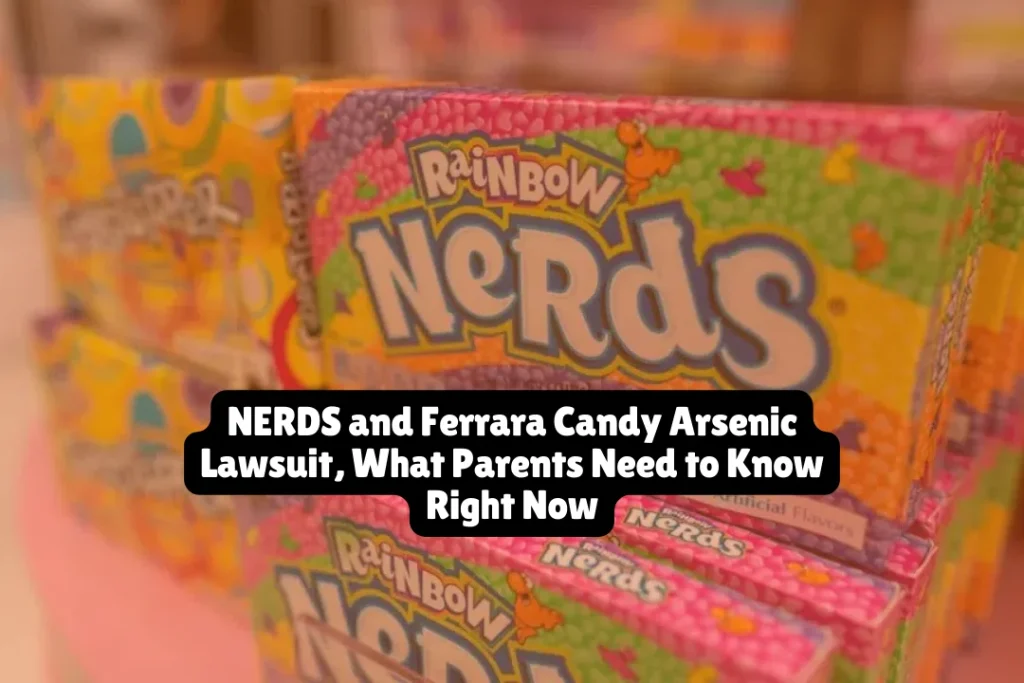
The Legal Claims Explained
Failure to Warn
The core of this lawsuit is not that the candy was manufactured defectively in a traditional sense. The class action lawsuit stresses that the labels of Ferrara candies have no mention or disclosure about potential arsenic contamination and, the suit claims, are marketed in a way that undoubtedly appeals to children. “With colorful and cartoonish designs and fun product names, Defendant knows that its target demographic for consumption is children,” the complaint argues.
Under consumer protection law, a company that sells a product it knows — or should know — contains dangerous contaminants has an obligation to disclose that information on the label. Failure to do so can constitute deceptive or unfair trade practice, even if the product’s presence on store shelves is otherwise legal.
Florida Deceptive and Unfair Trade Practices Act (FDUTPA)
The complaint asserts: “Toxic contaminants find their way into the food supply through a failure to monitor and eliminate them.” The lawsuit relies on FDUTPA, which prohibits unfair and deceptive acts or practices in Florida’s commerce and gives consumers the right to seek damages when companies fail to disclose material information that would affect a purchasing decision.
Why Arsenic in Candy Is a Legal Issue
The lawsuit highlights concerns from major health agencies, including the Food and Drug Administration and the World Health Organization, which consider arsenic to be a known carcinogen and link exposure to nausea, vomiting, diarrhea, muscle weakness, cramping, skin rashes, and increased risk of infections. Both the FDA and WHO have classified arsenic as a Group 1 carcinogen — meaning there is sufficient evidence it causes cancer in humans.
Arsenic occurs naturally in soil and water and can be absorbed by ingredients used in candy production such as fruit-derived dyes, flavorings, and certain sweeteners. The lawsuit does not allege Ferrara intentionally added arsenic to its products — it alleges Ferrara failed to monitor, test for, reduce, and disclose the contamination that resulted from its supply chain and ingredient sourcing.
For a look at how courts have handled similar toxic contamination claims against consumer food brands, see our article on the Kerrygold butter PFAS lawsuit, where a federal court allowed a contamination failure-to-warn theory to proceed before the case was ultimately dismissed.
Ferrara’s Response and the Industry Pushback
Ferrara Candy Company has not yet filed a formal response to the complaint in court. When Florida’s test results were released in January 2026, Ferrara declined to comment directly and referred media inquiries to the National Confectioners Association.
The National Confectioners Association took exception to Florida’s testing methods, saying they would only cause confusion for consumers and regulators. The FDA’s Closer to Zero initiative is already working on reducing arsenic in food, the NCA said. “Florida has chosen sound bites over science — ignoring this science-based program in favor of publishing unsourced materials that amount to little more than a scare tactic,” the NCA said.
The NCA Senior Vice President of Public Affairs blasted the Florida announcement, calling it “misguided” and said it “will result in confusion among consumers, regulators, and lawmakers,” pointing to the FDA’s Closer to Zero Initiative as the appropriate channel for arsenic action levels in foods consumed by children.
The NCA’s central defense — that arsenic is naturally occurring and the FDA has not yet set a uniform limit for candy — is factually accurate but legally uncertain. Plaintiffs’ attorneys argue that the absence of a federal limit does not eliminate a company’s common law and statutory duty to warn consumers of known health risks in its products.
What the Proposed Class Covers
The Ferrara candy class action looks to represent all consumers in the United States who purchased any of the covered products — Black Forest Gummy Bears, Laffy Taffy, NERDS, Sweet Tarts, Sweet Tarts Ropes, and Trolli gummy candies — at any time from the beginning of any applicable statute of limitations period through the date of judgment, or until the alleged conduct stops.
No claim form exists yet. The class has not been certified by the court. The lawsuit was filed on February 4, 2026, and is in its earliest stage. Ferrara has not yet answered the complaint, and no hearings have been scheduled.
Is There a Recall?
Despite the Florida lab test results, no recall has been issued for any Ferrara candies. The FDA has not issued a warning letter or enforcement action against Ferrara in connection with these test results as of February 19, 2026. The FDA’s Closer to Zero program continues to develop action levels for arsenic in food products consumed by children, but no binding standard applies to candy at this time.
Current Case Status
The case is in its earliest possible stage. No scheduling order has been entered, no class has been certified, and Ferrara has not yet filed an answer or motion to dismiss. The next expected steps in the case are Ferrara’s formal response to the complaint, followed by early discovery and eventually a motion for class certification — a process that typically takes a year or more in federal court.
There is no settlement, no claim form, and no payment available from this case as of February 2026. If the case progresses and a settlement is reached or a class is certified with an open claim period, this article will be updated with verified deadlines and filing instructions
What Parents Should Know Right Now
If your child regularly eats any of the covered Ferrara products — NERDS, Laffy Taffy, Trolli gummies, Sweet Tarts, Sweet Tarts Ropes, or Black Forest Gummy Bears — the testing results are worth taking seriously while also keeping the science in perspective. Here is what is verified versus what is still disputed:
Verified: Florida’s Department of Health testing found elevated arsenic levels in these products, with some levels exceeding recommended annual child exposure limits in a single serving.
Disputed: The NCA and Ferrara dispute the testing methodology and argue it does not align with federal standards.
Not yet resolved: The FDA has not set a binding arsenic limit for candy, so no legal threshold has been crossed under federal food safety regulations — which is precisely why this case is proceeding in civil court rather than as a regulatory enforcement action.
If you are concerned about your child’s arsenic exposure from candy, the Florida Department of Health’s Healthy Florida First test results are publicly available. Consulting your pediatrician about dietary arsenic exposure is advisable if your child consumes these products in large quantities.
Key Dates
| Date | Event |
| January 2026 | Florida DOH releases candy arsenic test results |
| February 4, 2026 | Anstett v. Ferrara Candy Co. filed in N.D. Illinois |
| February 5, 2026 | Law360 confirms filing; court docket confirms case no. 1:26-cv-01304 |
| February 19, 2026 | No Ferrara response filed; no recall; no class certified |
| TBD | Ferrara’s formal response to complaint due |
| TBD | Class certification motion expected |
Frequently Asked Questions
What is this lawsuit about?
It is a proposed class action alleging that Ferrara Candy Company failed to disclose that several of its popular candy products contain arsenic levels that exceed what health agencies consider safe annual exposure for children.
Which Ferrara products are named in the lawsuit?
Black Forest Gummy Bears, Laffy Taffy, NERDS (multiple varieties), Sweet Tarts, Sweet Tarts Ropes, and Trolli gummy candies.
Is there a recall?
No. As of February 19, 2026, no recall has been issued by Ferrara or the FDA for any of the covered products.
Can I file a claim right now?
No. The case was filed on February 4, 2026 and is in its earliest stage. No class has been certified and no claim form exists. If a settlement or class certification with an open claim period is announced, this article will be updated.
My child eats these candies regularly. Should I be concerned?
Florida’s testing found that children could safely consume only 96 NERDS pieces, 16 gummy bears, or four pieces of Laffy Taffy per year before exceeding recommended arsenic exposure limits. The candy industry disputes the testing methodology. Speak with your child’s pediatrician if you have specific health concerns.
Has Ferrara responded to the lawsuit?
Not yet. The complaint was filed on February 4, 2026. Ferrara has not filed an answer or motion to dismiss as of February 19, 2026.
Where did the arsenic come from?
The lawsuit does not allege Ferrara intentionally added arsenic. Arsenic is naturally occurring in soil, water, and certain food ingredients. The complaint alleges Ferrara failed to monitor and eliminate it from its supply chain and failed to disclose its presence to consumers.
Were any candies tested that did not have elevated arsenic?
Yes. Hershey Milk Chocolate Bars, Reese’s Peanut Butter Cups, M&Ms, Twix, Milky Way, and several organic candy brands tested free of elevated arsenic levels in Florida’s testing.
Last Updated: February 19, 2026
Disclaimer: This article is for informational purposes only and does not constitute legal advice. Legal claims and outcomes depend on specific facts and applicable law. For advice regarding a particular situation, consult a qualified attorney.
About the Author

Sarah Klein, JD, is a licensed attorney and legal content strategist with over 12 years of experience across civil, criminal, family, and regulatory law. At All About Lawyer, she covers a wide range of legal topics — from high-profile lawsuits and courtroom stories to state traffic laws and everyday legal questions — all with a focus on accuracy, clarity, and public understanding.
Her writing blends real legal insight with plain-English explanations, helping readers stay informed and legally aware.
Read more about Sarah